
Sheffield Scientists Crack 1,600-Year-Old Recipe for Roman Color-Shifting Glass
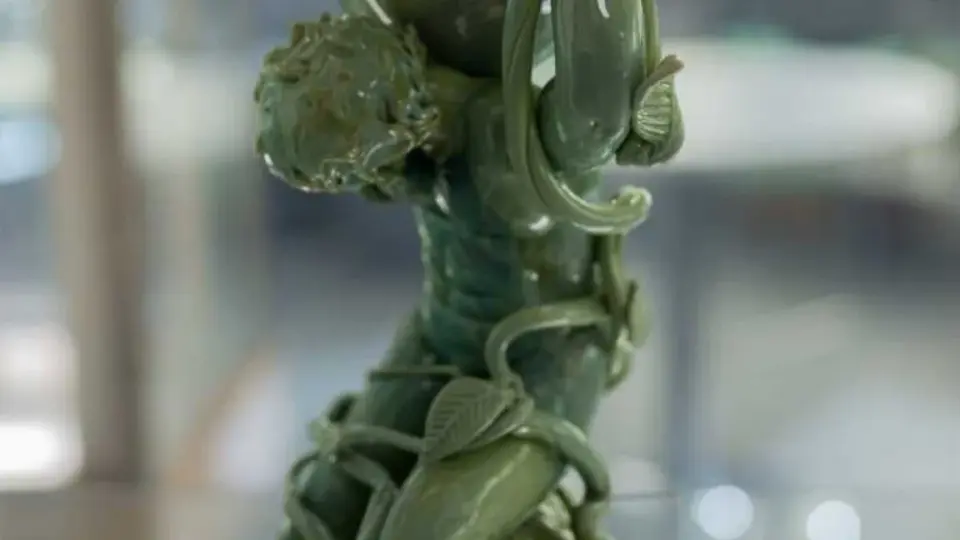
University of Sheffield researchers have successfully recreated the optical properties of the 4th-century Lycurgus Cup, a Roman artifact that shifts from green to red depending on lighting. By replicating an ancient recipe involving gold and silver nanoparticles, scientists produced a modern glass sculpture that mimics this effect. The new piece, created by artist Elliot Walker, will be displayed at the university's Festival of Mind in November before joining the Turner Museum of Glass collection.
Key points
- Lisa Hollands and Caroline Jackson at the University of Sheffield developed a repeatable recipe for dichroic glass, solving a mystery that had puzzled experts for centuries.
- The original Lycurgus Cup, housed in the British Museum, changes color due to nanoparticles of gold and silver embedded in the glass, which alter how light interacts with electrons.
- The new recipe involves melting glass in a gas-fired furnace and annealing it to grow nanocrystals, avoiding complex heat treatments used in previous failed attempts.
- Glass artist Elliot Walker, a winner of Netflix's Blown Away, created a contemporary sculpture using the new glass, blending the Lycurgus myth with the Farnese Atlas form.
- The project began as a public outreach effort but evolved into a significant scientific achievement, demonstrating that Roman artisans likely used specific furnace conditions to achieve the color shift.
Background
The Lycurgus Cup, dating to around 400 CE, is one of only 40 surviving Roman cage cups and was named one of the seven glass wonders of the world in 2022. Previous attempts to replicate its color-changing effect, including a 2020 3D-printed nanocomposite, lacked a consistent, reproducible recipe. The cup's optical properties were first explained in 2007 when scientists identified the role of nanoparticles in shifting colors based on light direction.
How outlets are covering it
Ars Technica emphasizes the technical breakthrough of creating a consistent recipe, highlighting the collaboration between Hollands and Jackson. The Guardian focuses on the artistic and historical significance, noting that Ian Freestone of UCL believes the color sensitivity to furnace position suggests Roman craftsmen had limited control over the final hue. ARTnews underscores the mystery solved after centuries, while Gizmodo details the specific nanoparticle structure, noting a 3:7 gold-to-silver ratio and the presence of copper, which previous studies had not fully replicated. All sources agree on the success of the Sheffield team but differ in emphasis: some highlight the scientific method, others the artistic homage, and others the historical implications for Roman craftsmanship.
Why it matters
This achievement bridges ancient history and modern materials science, providing insight into Roman glassmaking techniques and the behavior of nanoparticles in glass. It also offers a new avenue for sustainable technologies that harness light, as part of the Molecular Photonic Breadboards project. The public display of the new sculpture allows audiences to experience the optical effects firsthand, connecting modern viewers with ancient craftsmanship.
What to watch
The new sculpture will be unveiled at the Millennium Gallery during the University of Sheffield's Festival of the Mind from November 6-15, 2026. It will then be permanently displayed at the Turner Museum of Glass. Hollands plans to continue researching to refine the recipe further, aiming to match the original cup's color more precisely.
- Sculpture recreates odd optical effects of famed Lycurgus Cup Ars Technica
- ‘It’s magic’: scientists rediscover how to make ancient Roman colour-changing glass The Guardian
- Scientists Say They’ve Rediscovered How the Romans Made the British Museum’s Color-Shifting Lycurgus Cup ARTnews.com
- Romans Created Color-Changing Glass 1,600 Years Ago, And Scientists Have Just Cracked The Recipe IFLScience
- Ancient Roman Nanotech Made This Cup Change Color. Scientists Finally Cracked the Formula Gizmodo
Want the full story? Read the original reporting
Read on Ars Technica