
Healey's First Budget: £100 Energy Aid and Bank Tax Amid Fiscal Strain
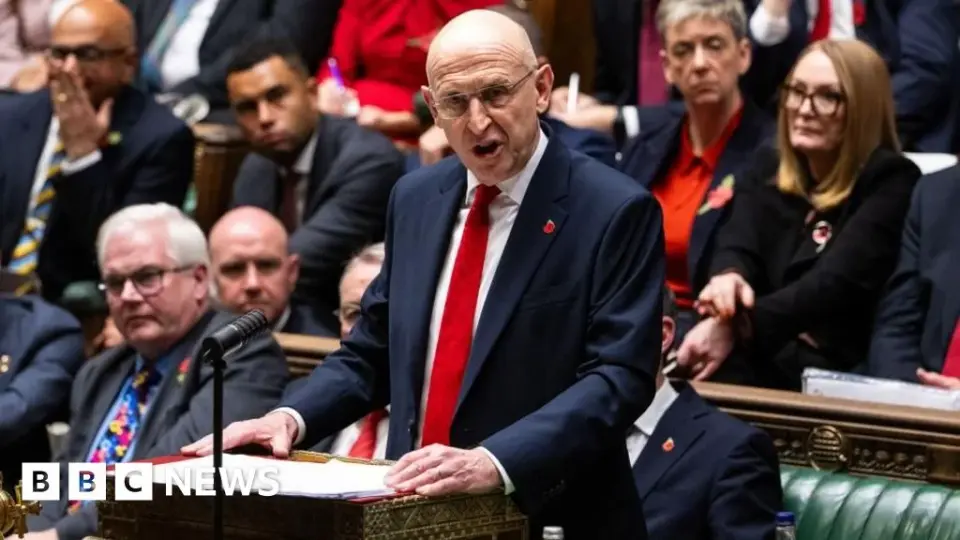
Chancellor John Healey announced a £100 energy payment for households in council tax bands A to D, funded by doubling the bank profits tax to 6%. The Budget includes scrapping gas standing charges and raising the minimum wage, but defers major welfare and defence decisions to 2027.
Key points
- A one-off £100 energy payment will be provided to households in England, Wales, and Scotland in council tax bands A to D.
- The bank profits tax increases from 3% to 6% between January 2026 and April 2028 to fund the energy support.
- Gas standing charges will be abolished in 2027, shifting fixed daily fees into unit prices, which may increase bills for heavy users.
- The minimum wage rises by 3.9% in April 2026, while the cash ISA allowance cut is reversed.
- The Office for Budget Responsibility downgraded the 2026 growth forecast to 1%, noting households may remain poorer than pre-pandemic levels by 2035.
Background
Prior to this Budget, Chancellor Healey faced pressure to restore £11bn in fiscal headroom without raising income tax or VAT. Earlier reports indicated expectations of an 8% bank surcharge, which was ultimately set at 6%. The UK government has also been exploring membership in the Canada-led Defence Bank to address military spending constraints.
How outlets are covering it
Conservative leader Kemi Badenoch criticized the Budget as insufficient, arguing the government is overtaxed and failing to address welfare costs. She claimed Healey should have outlined a plan for 3% defence spending. In contrast, business owners expressed mixed views; while some welcomed business rate relief, others like James Nye of Anglian Country Inns argued that minimum wage increases and National Insurance contributions outweigh the benefits. The Institute for Fiscal Studies described the measures as fiddly but lacking impact on growth, while the Lib Dems criticized the lack of action on EU trade relations.
Why it matters
The Budget highlights the tension between immediate cost-of-living relief and long-term fiscal stability. By deferring major welfare and defence decisions, the government aims to manage current deficits, but critics argue this approach fails to address structural economic challenges and leaves households and businesses vulnerable to rising costs.
What to watch
Major decisions on defence spending and welfare reforms, including reviews by Alan Milburn and Stephen Timms, are expected in 2027. The government will also detail how it plans to meet 3% of national income for defence by 2030 during the next spending review.
- John Healey unveils £100 for energy bills and bank tax in first Budget BBC
- ‘There has to be a bolder shift’: retail and hospitality businesses assess relief in budget The Guardian
- UK budget: Healey accepts smaller fiscal buffer after global shocks hit economy Reuters
- U.K. Budget Keeps Government on Track to Stay Within Rules WSJ
- How will John Healey’s energy support package affect you? The Guardian
Want the full story? Read the original reporting
Read on BBC