
Latvia's October Vote Tests Pro-Ukraine Consensus Amid Russian Hybrid Threats
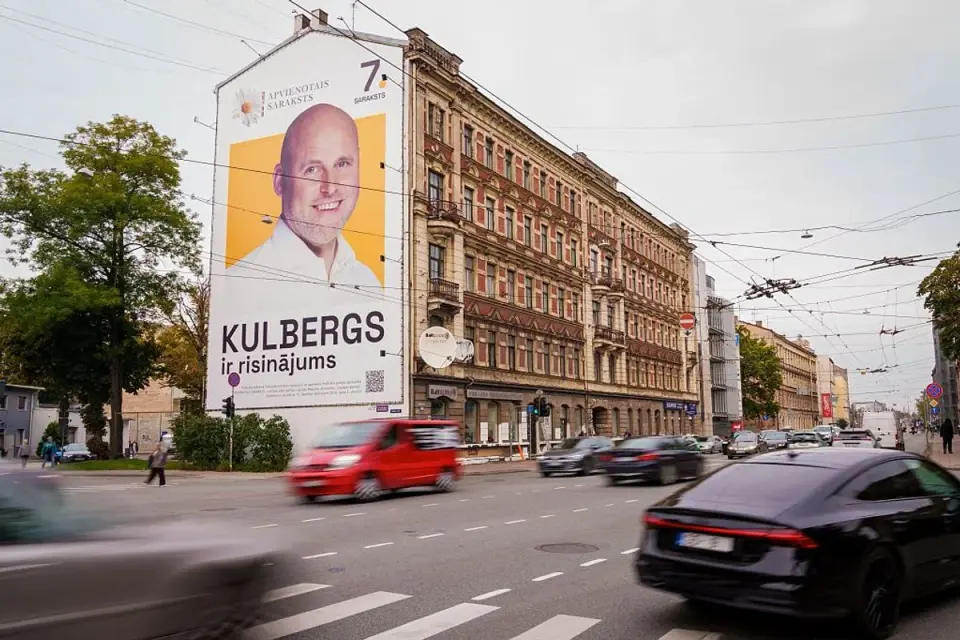
Latvians vote on October 3 for a new parliament, with Prime Minister Andris Kulbergs' United List leading polls at 22.7%. The election is defined by security fears regarding Russia and a cost-of-living crisis. While Kulbergs promises continued support for Ukraine, coalition formation remains uncertain as key allies may fail to clear the 5% threshold, potentially forcing a compromise with populist rival Ainārs Šlesers.
Key points
- The October 3 election for the 100-seat Saeima is the second since Russia's 2022 invasion of Ukraine.
- Kulbergs' United List leads polls but faces a fragmented field, with seven parties expected to win seats.
- Two incumbent coalition partners, New Unity and Union of Greens and Farmers, are polling below the 5% threshold.
- Latvia recently blocked an EU move to delist two Russian oligarchs, maintaining a hawkish stance on Moscow.
- Roughly 35% of Latvia's population speaks Russian, creating a fragmented political landscape for that demographic.
Background
Latvia has maintained a pro-European, pro-Ukraine stance since 2022, supporting Kyiv against Russia's invasion. Recent months have seen heightened tensions, with Latvia warning of potential Russian hybrid attacks and drone incursions. The country recently imposed unilateral sanctions on two Russian billionaires after they were removed from the EU list, a move that highlighted Riga's hardline position. This election follows a period of political instability, including the collapse of the previous cabinet in May 2026 over a Ukrainian drone incident.
How outlets are covering it
The Kyiv Independent emphasizes the security dimension, noting that Kulbergs' hawkish stance on Russia, including blocking the delisting of oligarchs, may outlast the election. Meduza highlights the collapse of traditional Russian-speaking parties like Harmony, leaving a vacuum that populist groups like Latvia First and Sovereign Power are filling, though these parties have inconsistent stances on Ukraine. Politico focuses on the coalition arithmetic, suggesting Kulbergs may be forced to negotiate with controversial businessman Ainārs Šlesers if his center-right allies fail to enter parliament. While all sources agree on Kulbergs' likely victory, they differ on the stability of his future government, with Politico and Meduza stressing the risk of a fragmented coalition.
Why it matters
The outcome will determine whether Latvia maintains its current pro-Ukraine, pro-EU course or shifts toward a more populist, economically focused agenda. A failure of Kulbergs' current allies could lead to a coalition with parties that have ties to Russian oligarchs or inconsistent views on sanctions, potentially weakening the Baltic security posture. The election also signals the broader fragmentation of Russian-speaking political representation in the Baltics, impacting domestic cohesion and EU relations.
What to watch
Polling stations open at 8 a.m. and close at 8 p.m. on October 3. Coalition negotiations will begin immediately after results are tallied. Kulbergs must secure a majority, potentially requiring unexpected alliances if New Unity and ZZS fail to cross the 5% threshold. The new government will face immediate pressure to maintain EU sanctions and manage security concerns as Russia's hybrid threats continue.
- Latvia votes with Russia threat looming large The Kyiv Independent
- Latvians head to the parliamentary elections with Russia on their minds DW.com
- Latvians vote in election in shadow of drone incursions and war in Ukraine Reuters
- Russian-speaking Latvians who back Ukraine and value their language are heading into an election without an obvious political home Meduza
- Latvian PM faces bittersweet victory in election backdropped by Russia politico.eu
Want the full story? Read the original reporting
Read on The Kyiv Independent