
Polish President Halts Senegal Trip as Protests Erupt Over Court Chief's Suspension
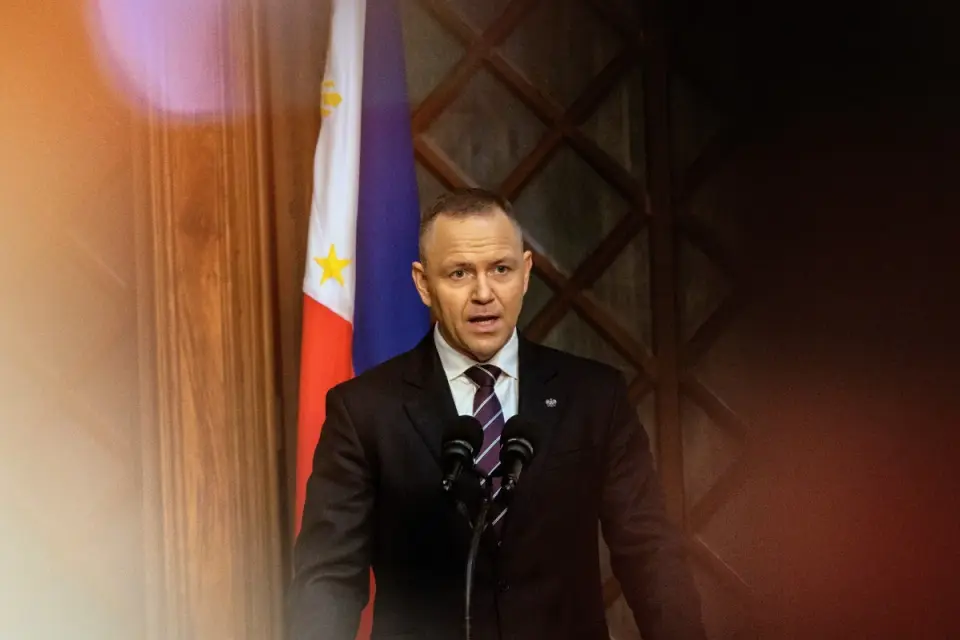
Polish President Karol Nawrocki aborted a flight to Senegal on Friday after protesters clashed with police near the Constitutional Tribunal. The unrest followed the reported suspension of Tribunal President Bogdan Święczkowski by Prime Minister Donald Tusk's government. Nawrocki stated he was returning to Poland to address the situation, while Tusk defended the move as necessary to restore judicial independence. Opposition leaders condemned the action as an attack on the constitutional order, and police detained three individuals after some demonstrators breached the tribunal's perimeter.
Key points
- President Karol Nawrocki cut short a trip to Senegal, stating on X that the President must be in Poland during the crisis.
- Police detained three people after protesters breached the Constitutional Tribunal fence and threw objects at officers.
- The suspension of Tribunal President Bogdan Święczkowski was announced via the court's website around 6 p.m. local time, after which the site went offline.
- Prime Minister Donald Tusk described the action as a difficult but necessary step to restore the rule of law after years of PiS-led judicial control.
- Former Justice Minister Zbigniew Ziobro labeled the suspension a 'criminal attack' and called for loud, fearless resistance.
Background
This incident escalates a long-standing conflict between Poland's pro-European government and the national-conservative Law and Justice (PiS) party. Since taking power in 2023, Prime Minister Tusk has sought to restore judicial independence, a goal previously blocked by PiS-aligned presidents. The PiS government (2015-2023) faced EU fines for imposing political control over courts, including the Constitutional Tribunal. Święczkowski, appointed under PiS, has been accused by Tusk of blocking judges elected by the parliamentary majority from taking office. The current standoff highlights the unresolved tensions regarding the legitimacy of judicial appointments and the role of the presidency in the Polish legal system.
How outlets are covering it
AP News provides the primary account of the physical unrest, detailing police detentions and the president's immediate reaction. It frames the suspension as a contested move within a broader struggle over judicial independence. The secondary source, Demócrata, was inaccessible due to a 403 error, offering no additional perspective. The AP report notes that the official reasons for Święczkowski's suspension could not be independently verified because the tribunal's website went down shortly after the announcement. While Tusk emphasizes the necessity of decisive action to end 'lawlessness,' PiS figures like Ziobro characterize the event as a 'blatant, criminal attack' on the constitutional order, highlighting the deep polarization between the government and the opposition.
Why it matters
The suspension of the Constitutional Tribunal president and the subsequent protests signal a critical escalation in Poland's ongoing battle for judicial sovereignty. It tests the limits of the current government's authority to override previous PiS-era appointments and challenges the stability of the rule of law. The president's decision to return from abroad underscores the severity of the political crisis, while the opposition's call for resistance suggests potential for further unrest. This event may influence EU relations and domestic political dynamics as Poland navigates its transition from PiS-led governance to a pro-European administration.
What to watch
The immediate focus will be on the legal and political fallout from Święczkowski's suspension, including whether the government can successfully install new judges. The opposition is expected to continue protests and legal challenges, potentially leading to further clashes or international scrutiny. The status of the Constitutional Tribunal's website and the official justification for the suspension will be key indicators of the government's next steps. Additionally, the EU may monitor the situation closely, given previous fines related to judicial reforms, potentially influencing Poland's standing within the bloc.
- Police secure Poland’s Constitutional Tribunal as protests erupt over court chief’s suspension AP News
- Polish president turns back from Senegal trip as top court chief suspended Reuters
- Poland Moves Against Top Court in a Showdown With the Opposition Bloomberg.com
- Extension | The Police surrounds the Polish Constitutional Court amid the crisis over control of the court Demócrata
- Polish riot police deployed after court chief suspended Yahoo
Want the full story? Read the original reporting
Read on AP News