
Pyongyang publishes revised constitution, formally defining South Korea as separate state
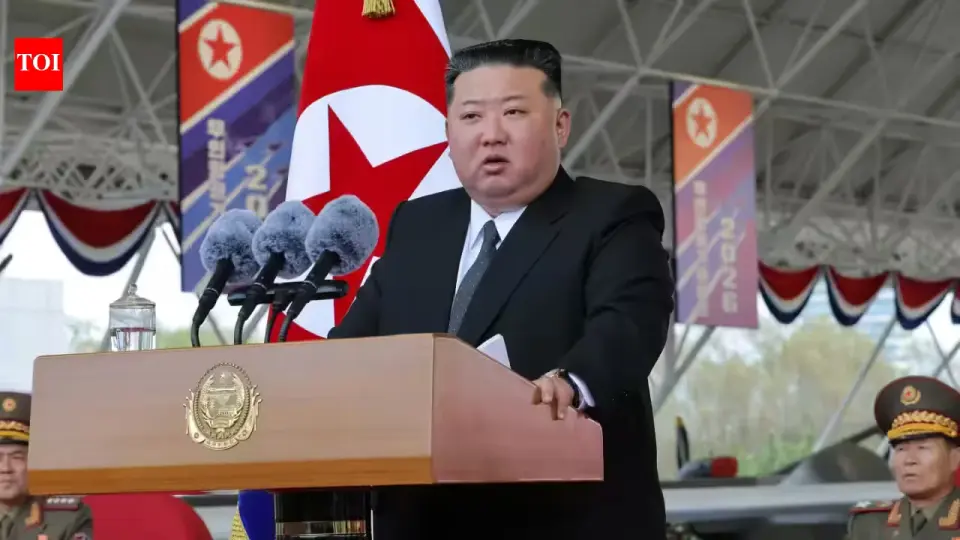
North Korea has published the full text of its revised constitution, formally recognizing South Korea as a separate neighboring country and removing all references to reunification. The document, amended in March 2026, expands Kim Jong Un's authority over nuclear forces and alters the national flag's proportions. This move institutionalizes the regime's stance that the two Koreas are hostile states, while tensions persist along the border and in the Yellow Sea.
Key points
- The revised constitution was published on the state website Naenara on November 11, 2026, after being amended at the Supreme People's Assembly on March 23, 2026.
- Article 2 now defines North Korean territory as extending to the Republic of Korea in the south, explicitly naming it as a separate country sharing a border, though precise boundaries are not specified.
- All provisions regarding national reunification have been removed from the text, reflecting Kim Jong Un's 2023 declaration that the two Koreas are hostile states.
- The revision expands the chairman of the State Affairs Commission's power, placing nuclear forces under his command and allowing him to delegate the use of nuclear weapons to the state nuclear command organization.
- The constitution also changes the national flag's aspect ratio from 1:2 to 1:1.65, a change first seen on Naenara in late October and used by North Korean athletes at the Asian Games in September and October.
Background
This constitutional change follows a period of heightened tensions, including land mine explosions in the Demilitarized Zone in September 2026 that wounded three South Korean soldiers. It also occurs amid diplomatic friction, where US, South Korean, and Japanese officials reaffirmed denuclearization goals in October 2026, a stance Pyongyang rejected by declaring its nuclear arsenal permanent. The new text aligns with a version South Korea's Ministry of Unification obtained in May 2026, though the public release omits two specific articles regarding cabinet resolutions and lay judges.
How outlets are covering it
The Times of India and UPI focus on the constitutional shift as a formalization of hostility, noting the removal of reunification goals and the definition of South Korea as a separate entity. NK News emphasizes the symbolic break with the past, highlighting the change in the national flag's proportions and the shift in propaganda language away from ethnic solidarity toward loyalty to the current leader. While all sources confirm the text's publication, UPI notes that the constitution does not explicitly label South Korea a 'hostile state,' despite Kim's earlier rhetoric, and highlights ongoing disputes over the Northern Limit Line and military communications.
Why it matters
The publication of the revised constitution marks a definitive legal and symbolic break from the historical goal of reunification, solidifying the division of the Korean peninsula. By expanding Kim Jong Un's control over nuclear weapons and altering national symbols, the regime reinforces its sovereign identity and nuclear posture. This move complicates diplomatic efforts, as it institutionalizes a stance of hostility that contradicts international calls for denuclearization and dialogue, potentially escalating tensions along the border and in the Yellow Sea.
What to watch
South Korea has proposed military talks to verify the location of the Military Demilitarized Zone and restore communication lines to prevent accidental clashes. North Korea is expected to continue expanding its naval capabilities, including the deployment of a high-speed torpedo in early 2027. The international community will likely monitor whether the new constitutional framework leads to further escalations or if diplomatic channels remain open despite the formalized separation.
- North Korea revises constitution, calls South Korea separate state & drops reunification goal The Times of India
- Kim Jong Un Remakes North Korea’s Flag, Ditching Soviet-Era Version WSJ
- North Korea unveils revised constitution reflecting 'two hostile states' policy Korea JoongAng Daily
- North Korea modifies national flag in break with decades-old design NK News
- North Korea posts revised constitution dropping reunification goal upi
Want the full story? Read the original reporting
Read on The Times of India