
Rubio’s Uneasy Demeanor Draws Scrutiny After Trump’s China-Putin-Xi Summit Briefing
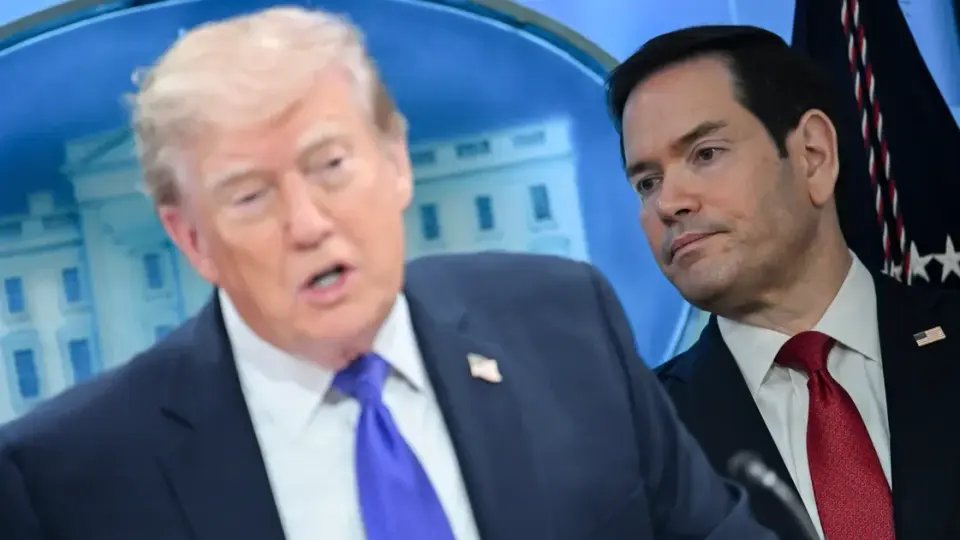
Secretary of State Marco Rubio faced online mockery and expert analysis for his visible discomfort during a White House press conference following President Trump’s summit with Russian and Chinese leaders. While Trump discussed trade deals and praised his relationship with Vladimir Putin, Rubio stood behind the podium exhibiting signs of unease. Experts noted his shifting posture and lack of eye contact, though Rubio later defended the diplomatic engagement as necessary for global stability.
Key points
- Rubio stood behind President Trump and Vice President JD Vance during a Friday press conference discussing the recent three-leader summit in China.
- Social media users mocked Rubio’s demeanor, with some describing him as 'dying a slow death' or looking like he wanted to be elsewhere.
- Body language expert Susan Constantine noted Rubio’s repeated shifting, shoulder shrugs, and tightened mouth, interpreting these as signs of heightened physical activation.
- Behavioral scientist Abbie Maroño pointed to Rubio’s darting eye movements and lack of sustained visual attention toward Trump, suggesting heightened vigilance or unease.
- Rubio later stepped up to the podium to defend the summit, arguing that regular engagement between the US, Russia, and China is essential to prevent dangerous nuclear risks.
- The State Department responded to inquiries by stating that Rubio is a human who moves and has expressions, dismissing the focus on his body language as a 'cognitive malfunction' by reporters.
Background
This event follows a period of diplomatic tension and internal political division within the administration. Recent archive coverage highlights a rift between Trump and Vice President JD Vance over the Iran conflict, with Rubio aligning with Trump in defending the war despite public opposition. Additionally, Trump has recently issued contradictory signals on Iran, declaring the war 'militarily over' while warning of new strikes, creating a stalemate in Gulf diplomacy. The current press conference occurred after Trump returned from a historic meeting with Putin and Xi, which produced a 'Declaration toward Peace' but yielded no breakthroughs on the Russia-Ukraine war or the conflict with Iran.
Why it matters
The scrutiny of Rubio’s demeanor highlights the intense public and media focus on the internal dynamics of the Trump administration, particularly regarding foreign policy decisions. While the three-leader summit failed to produce immediate breakthroughs on major conflicts, Rubio’s public defense of the engagement underscores the administration’s strategy of prioritizing high-level diplomatic contact to manage nuclear risks. The incident also reflects the broader tension between the White House and critics who question the efficacy and transparency of Trump’s foreign policy approach, especially amid ongoing disputes over the Iran war and trade deals with Southeast Asian nations.
What to watch
The administration is expected to continue pushing forward with trade deals with Thailand and the Philippines, as mentioned by Trump. Rubio will likely remain a key figure in defending the administration’s foreign policy stance, particularly regarding nuclear risk management and relations with Russia and China. The State Department’s dismissive response suggests the administration may continue to deflect criticism of internal dynamics, focusing instead on the substantive outcomes of the summit, such as the 'Declaration toward Peace.'
Want the full story? Read the original reporting
Read on HuffPost