
Serbia's Record Turnout Tests Vučić's Grip as Student List Challenges 12-Year Rule
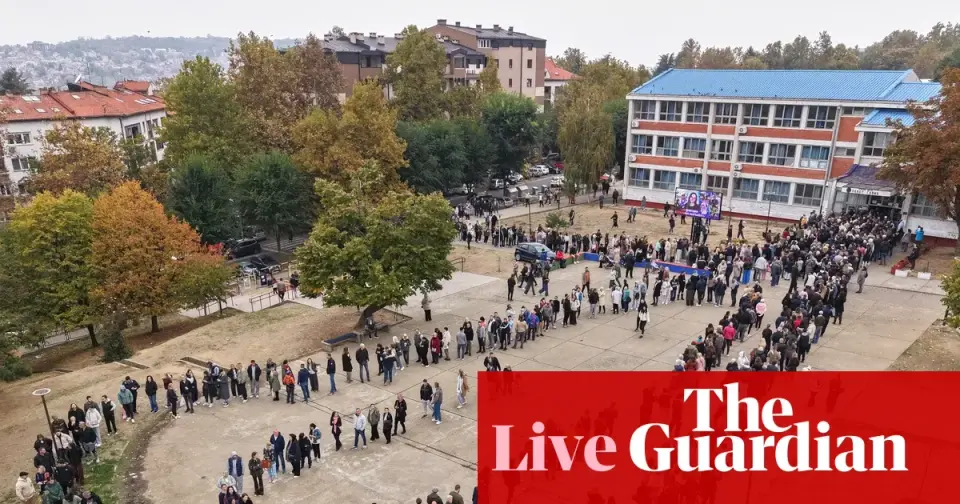
Serbian voters are casting ballots in record numbers for a snap parliamentary election, with early turnout reaching 56.4% by 4 PM, significantly higher than the 2023 vote. The election pits incumbent leader Aleksandar Vučić against the grassroots Student List, a leaderless movement born from protests over a fatal 2024 train station collapse. While Vučić emphasizes economic stability and infrastructure, the Student List focuses on purging corruption and restoring rule of law. International observers are monitoring the process closely amid concerns over electoral integrity and potential post-vote instability.
Key points
- Turnout is at record levels, with 56.4% voting by 4 PM, nearly 14 percentage points higher than the same time in 2023.
- The Student List, a leaderless coalition of 250 candidates including cardiologist Ilija Srdanović, is challenging Vučić's 12-year rule with a focus on anti-corruption and media freedom.
- Vučić, who resigned as president to run for prime minister, is campaigning on economic growth, infrastructure, and higher public sector salaries.
- International observers, including the OSCE and European Parliament, are monitoring the election amid concerns over voter intimidation, media bias, and procedural irregularities.
- The election is seen as a referendum on Vučić's authoritarian rule and Serbia's future relationship with the EU and Russia.
Background
The Student List movement emerged from two years of protests following the 2024 Novi Sad train station collapse, which killed 16 people and exposed widespread corruption. Vučić, who has been in power since 2012, resigned as president in September 2026 to run for prime minister, calling snap elections in an attempt to catch the students off guard. Serbia's EU accession process has been stalled for five years, with concerns over rule of law, media freedom, and close ties with Russia and China.
How outlets are covering it
The Guardian and BBC highlight the record turnout as a potential boost for the Student List, while The Washington Post's opinion piece emphasizes the students' potential to oust Vučić. The Telegraph's access issue prevents analysis, but its absence is noted. The Guardian and BBC both report on concerns over electoral fraud and media bias, with the Guardian noting that public media gave 94% of talking time to the ruling party. The BBC reports on tensions in Belgrade and the potential for post-vote instability, while The Washington Post's opinion piece focuses on the students' anti-corruption agenda.
Why it matters
The outcome of this election could determine whether Serbia continues its authoritarian trajectory under Vučić or shifts toward a more democratic, anti-corruption path under the Student List. It also has implications for Serbia's relationship with the EU and Russia, as well as the broader stability of the Balkans region.
What to watch
Results are expected within two hours of polling stations closing at 8 PM. International observers will present preliminary conclusions on Monday. The outcome could lead to weeks or months of political instability if the result is close or contested.
- Serbia votes as strongman Vučić faces grassroots challenge to 12-year rule – Europe live The Guardian
- Serbia votes in historic election as students seek to end Vucic's long grip on power Reuters
- Early reports suggest record high turnout in Serbia elections BBC
- Putin’s last friend in Europe battles for survival after student uprising The Telegraph
- Opinion | How a leaderless student movement could topple Serbia’s autocrat The Washington Post
Want the full story? Read the original reporting
Read on The Guardian