
Serbia’s Student List Landslide Forces EU to Abandon Its Bet on Vučić
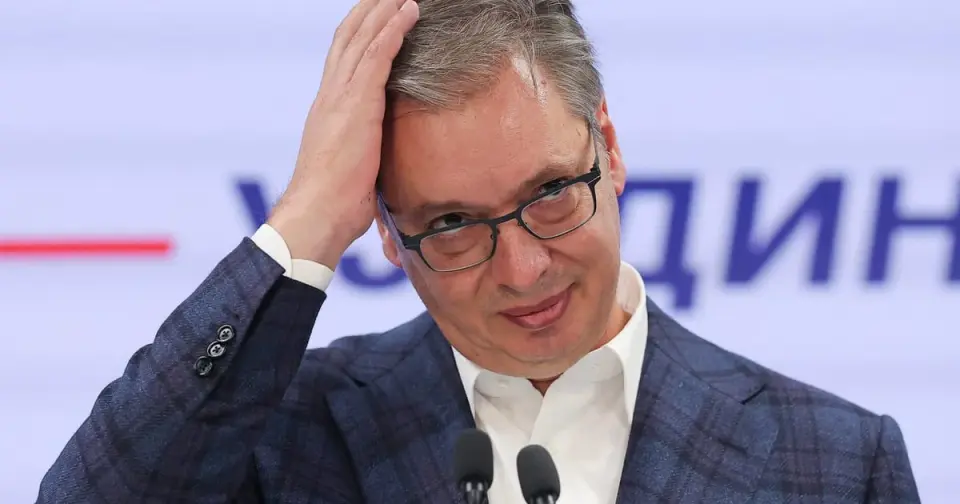
Serbian voters delivered a decisive landslide victory to the Student List on October 25, 2026, ending Aleksandar Vučić’s 14-year rule. The EU, which relied on Vučić as its primary interlocutor for over a decade, now faces a skeptical new government led by political novices. While the new administration pledges to prioritize Serbia’s interests and deepen ties with specific EU members, it has not explicitly committed to immediate EU membership. Brussels must now navigate a reset in relations, balancing its desire for democratic consolidation with the new leadership’s transactional approach to European integration.
Key points
- The Student List won an outright parliamentary majority, securing 141 of 250 seats with 52.9% of the vote, while Vučić’s Serbian Progressive Party retained 103 seats.
- The movement emerged from protests following a November 2024 railway station collapse in Novi Sad that killed 16 people, which exposed corruption in state construction contracts.
- Vučić conceded defeat on October 25, ending his tenure as the EU’s key contact in Belgrade, a role he held for over a decade.
- The new leadership, composed largely of professors and doctors, plans to reverse rule-of-law rollbacks and reset Serbia’s relationship with Brussels.
- Foreign direct investment in Serbia grew from €750 million in 2012 to over €30 billion under Vučić, a figure exceeding the rest of the Western Balkans combined.
- The Student List’s election program emphasizes deepening ties with Greece, Italy, Hungary, and France but does not explicitly name EU membership as an immediate goal.
Background
Serbia’s political landscape had been dominated by Vučić since 2012, with the EU treating him as indispensable for regional stability. Previous tensions included the September 2026 funeral of Ratko Mladić, which highlighted the gap between Serbia’s EU ambitions and its domestic political reality. The Student List’s rise followed a two-year protest movement that began after the 2024 Novi Sad tragedy, during which the EU largely avoided criticizing Vučić directly.
How outlets are covering it
Politico emphasizes the EU’s loss of credibility and its need to rethink its engagement with Serbia, noting that 41.6% of citizens believe the EU prioritizes its own interests over democracy. The Guardian highlights the personal risks faced by civil society under Vučić, including cyber-attacks and exile, and argues that Europe must now support the new government to consolidate democracy. Foreign Policy praises the students’ nonviolent discipline and suggests their model offers a template for youth engagement elsewhere, while Le Monde compares the victory to Viktor Orbán’s defeat in Hungary, warning that pro-European aspirations may clash with pro-Russian nationalism. All sources agree that the new government lacks governing experience but possesses a mandate for reform.
Why it matters
The outcome signals a potential shift in EU strategy in the Western Balkans, moving away from reliance on authoritarian strongmen toward supporting democratic transitions. It tests whether the EU can maintain influence without a single point of contact and whether Serbia’s new leadership will prioritize domestic institutional repair over immediate accession. The result also serves as a benchmark for other regions where youth-led movements are challenging established power structures.
What to watch
The Student List will focus on undoing Vučić’s legacy, including reversing rule-of-law rollbacks and rationalizing security agencies. A presidential election is expected in December to choose Vučić’s successor. The EU is expected to engage with the new government to support democratic consolidation, while the new leadership will likely prioritize Serbia’s economic interests in its dealings with Brussels.
- Serbian opposition landslide exposes cost of EU’s bet on ousted Vučić POLITICO.eu
- Serbia’s students achieved the impossible. Europe must not fail them now | Srđjan Cvijić The Guardian
- Serbia’s Student Protesters Deserve a Nobel Prize Foreign Policy
- The banker, the basketball star, the cardiologist and the chemist: meet Serbia's potential new leaders Reuters
- Serbia's exemplary anti-corruption victory Le Monde.fr
Want the full story? Read the original reporting
Read on POLITICO.eu