
Shenzhen Summit: Trump’s ‘Friendship’ with Autocrats Yields No Substance
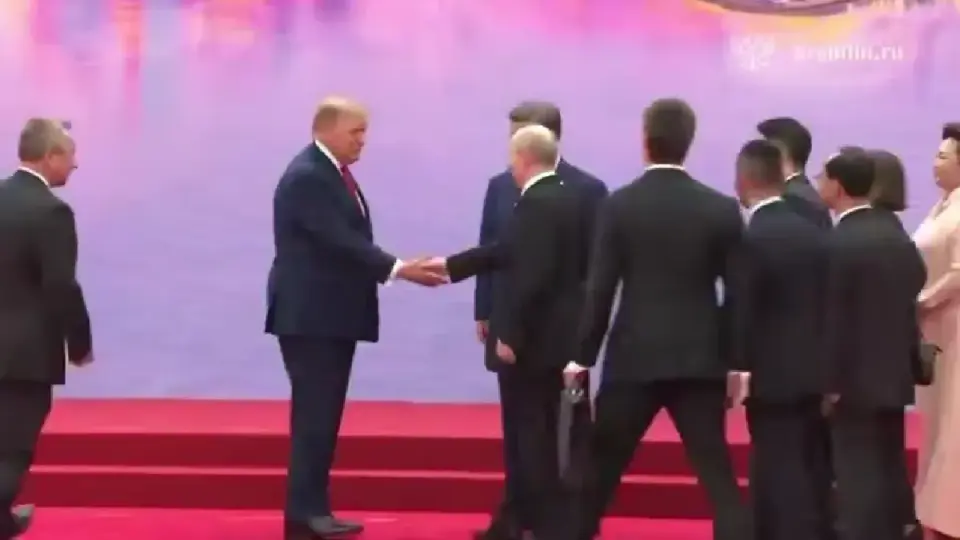
Donald Trump’s first trilateral meeting with Chinese President Xi Jinping and Russian President Vladimir Putin in Shenzhen concluded with a joint statement that omitted key global conflicts. While Trump celebrated the event as a personal victory, critics and allies noted the lack of substantive outcomes and the diplomatic isolation it signaled.
Key points
- The trilateral summit took place at the Kylin Villa in Shenzhen, China, during the APEC summit.
- The leaders issued a four-point 'Declaration Toward Peace' that did not mention the wars in Ukraine or Iran.
- Xi Jinping greeted Trump personally at the airport but relegated Putin to a separate table, signaling a hierarchy among the leaders.
- Trump described Putin as 'my friend' and praised the meeting as a '12 out of 10' success.
- The meeting followed a humiliating midterm election defeat for Trump in the United States.
Background
This summit occurred shortly after Trump’s midterm election losses, which reduced his domestic political capital. Previous coverage noted that US-China trade truces were expiring without extension, and tensions over AI chip access remained high. The meeting was part of a broader APEC summit where leaders discussed nuclear risks and regional conflicts.
How outlets are covering it
The i Paper and The Atlantic emphasized the strategic ignorance of Trump’s approach, arguing that he was being manipulated by adversaries who were actively undermining US interests. The New Yorker highlighted the lack of substance, noting that the meeting was a 'bad photo op' that served no national interest. The Guardian focused on the optics, describing the event as a 'low point' for American moral authority and a sign of Trump’s desperation to regain relevance. All sources agreed that the summit failed to produce tangible results, with The New Yorker and The Guardian specifically noting the omission of the Ukraine and Iran wars from the final statement. The i Paper and The Atlantic also highlighted the economic disparity between Russia and the other two powers, suggesting that Trump was overestimating Putin’s influence.
Why it matters
The summit demonstrated a shift in US foreign policy, with Trump prioritizing personal relationships over traditional alliances. The lack of substantive outcomes and the exclusion of key allies raised concerns about the stability of the US-led international order. The event also highlighted the growing influence of China and Russia in global diplomacy, as they positioned themselves as arbiters of 21st-century diplomacy.
What to watch
European leaders and NATO officials are expected to reinforce their support for Ukraine and resist any high-level partitioning of European security. The US-China trade truce is set to expire in January, and new restrictions on AI chip access remain contentious. The long-term impact of the summit on US alliances and global stability remains uncertain.
- The moment that showed Trump exactly who has the upper hand The i Paper
- Two Autocrats and an American President with Autocrat Envy The New Yorker
- Trump’s Axis of Ignorance The Atlantic
- Friend zone: rejected by US voters, Trump enjoys autocrats’ warm embrace The Guardian
- Trump’s world stage ‘triumph’ is turning into a domestic disaster The Times
Want the full story? Read the original reporting
Read on The i Paper