
Trump frames UN address as choice between Iran deal or annihilation, signs Greenland security pact
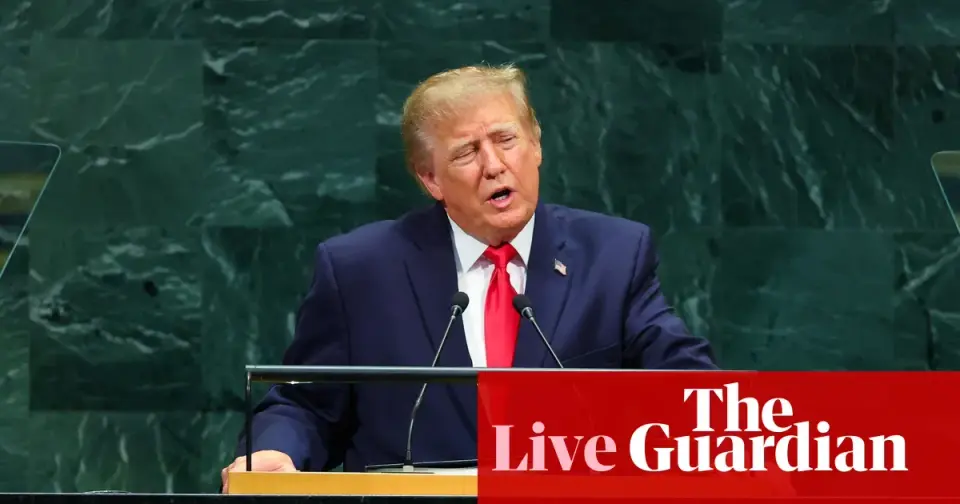
President Trump used his UN General Assembly address to frame the ongoing conflict with Iran as a binary choice between a post-election deal or total annihilation. He signed a security agreement with Denmark and Greenland, defended the capture of Venezuelan leader Nicolás Maduro, and rejected international AI regulation, while other world leaders warned against unilateralism and division.
Key points
- Trump stated he faces a 'big decision' on Iran, threatening to 'annihilate' the regime if no deal is reached after US midterm elections.
- He signed a security deal with Denmark and Greenland, granting the US permanent control over security and two new military bases, though it stops short of territorial transfer.
- Trump defended the US military raid that arrested former Venezuelan president Nicolás Maduro and a new oil deal with interim leader Delcy Rodríguez.
- He rejected calls for international AI regulation, urging the US to lead in 'superintelligence' development.
- Other leaders, including Lula da Silva and Emmanuel Macron, warned against unilateral action and the 'law of the jungle,' while Turkey and Qatar condemned Israel's actions in Gaza.
Background
This address follows weeks of escalating tensions, including a US naval blockade of the Strait of Hormuz and failed mediation efforts in Switzerland. Trump had previously teased a potential historic meeting with Iranian President Masoud Pezeshkian, though no such summit has been confirmed. The UN General Assembly session also follows a period of strained relations with European allies, particularly over Greenland and the Iran conflict.
How outlets are covering it
The Guardian and CNN emphasized Trump's aggressive rhetoric regarding Iran, focusing on his threats to 'annihilate' the country and his framing of the conflict as a necessary defense against a nuclear threat. The New York Times highlighted the diplomatic retreat on Greenland, noting that while Trump claimed a 'tremendous' deal, it fell short of his earlier demands for full ownership, and that European allies were wary of his unilateralism. Al Jazeera focused on the broader UN context, noting that while Trump threatened Iran, other leaders like Lula da Silva and Macron explicitly warned against US hegemony and unilateral action, and several leaders condemned Israel's actions in Gaza. All sources agreed on the signing of the Greenland security deal, but differed on its significance: Trump hailed it as a major victory, while the New York Times described it as a moderate improvement achieved at high political cost.
Why it matters
Trump's address signals a continuation of aggressive US foreign policy, potentially escalating the Iran conflict or forcing a post-election deal. The Greenland deal reshapes Arctic security and US-Europe relations, while the Venezuela oil deal and AI stance reflect a broader push for US dominance in strategic resources and technology. The divergence between Trump's unilateralism and other leaders' calls for multilateralism highlights deepening global divisions.
What to watch
Iranian President Pezeshkian is scheduled to address the UN on Wednesday, with his remarks closely watched for any response to Trump's threats. A potential meeting between Trump and Iranian officials may occur, though its outcome is uncertain. The US midterm elections in November will likely influence the timing of any Iran deal, as Trump has suggested. The implementation of the Greenland security deal and the PACT fund for Middle East energy infrastructure will also be key developments.
- Trump defends actions in Iran and Venezuela in UN General Assembly address amid rising tensions with allies – live The Guardian
- Live updates: Trump says he faces a decision on Iran to make a deal or ‘annihilate’ the country CNN
- Trump calls on allies to enforce ‘complete economic isolation of Iran’ in UN speech The Guardian
- U.N. Live Updates: ‘Annihilate’ Iran or Strike a Deal, Trump Says to General Assembly The New York Times
- UN General Assembly live: Trump warns Iran, Qatar and Turkiye slam Israel Al Jazeera
Want the full story? Read the original reporting
Read on The Guardian