
UK-EU Summit Focuses on Incremental Trade and Mobility Deals Amid Broader Strategic Shifts
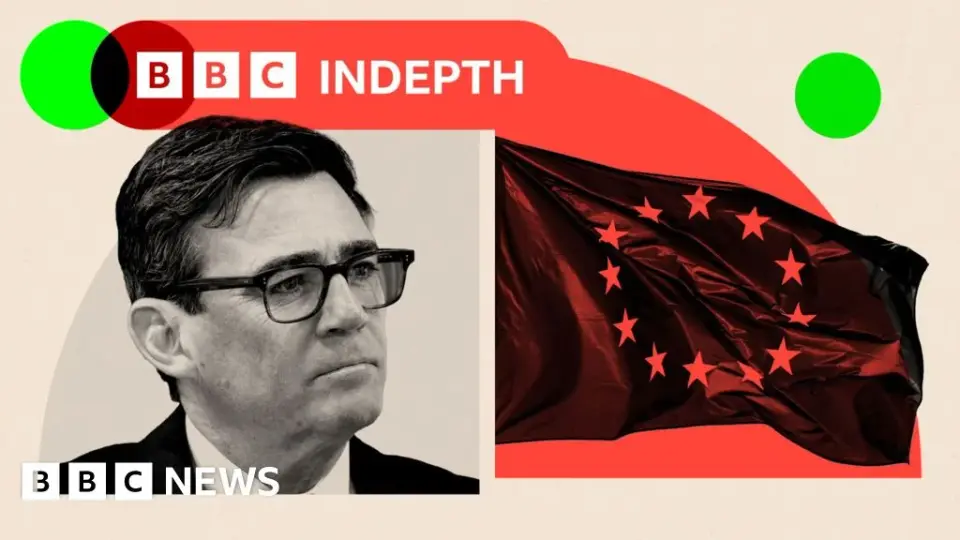
The upcoming UK-EU summit in Brussels focuses on limited agreements regarding youth mobility, carbon pricing, and food trade, rather than immediate reintegration. While Prime Minister Andy Burnham frames these as steps toward closer ties, the EU has evolved significantly since Brexit, becoming more protectionist and centralized. Experts warn that political instability in France could delay deeper negotiations, urging the UK to act before the next French presidential election.
Key points
- The Friday summit in Brussels will address a limited youth work scheme, cross-channel carbon emissions pricing, and food trade facilitation, with some details remaining unresolved.
- Prime Minister Andy Burnham describes these measures as 'steps' toward a closer working relationship, explicitly ruling out immediate rejoining of the EU or a new referendum before the next general election.
- The EU has shifted toward greater self-reliance and protectionism since 2016, driven by supply chain shocks, the Ukraine war, and reduced reliance on the US, contrasting with the UK's historical free-trade stance.
- EU officials express reticence about the UK's commitment, citing domestic political instability and the threat of Conservative opposition to tear up agreements, echoing concerns from the Brexit era.
- A window of opportunity exists before the French presidential election, as a potential rise of Eurosceptic leadership in France could deprioritize UK-EU negotiations and complicate Brussels's internal cohesion.
Background
This development follows recent domestic economic pressures in the UK, where households report limited capacity for further cost cuts, and ongoing debates within the Labour party regarding welfare and devolution. The current diplomatic push contrasts with the 2016 referendum outcome and subsequent Brexit negotiations, where the UK lacked a clear post-departure strategy. The archive notes that UK households are facing chronic cost-of-living issues, which may influence the political calculus behind seeking new trade arrangements with Europe to stabilize economic conditions.
Why it matters
The outcome of these negotiations will determine the trajectory of UK-EU relations in a rapidly changing geopolitical landscape. If the UK fails to secure meaningful agreements before French political shifts, it may find itself isolated between major powers. The success of these 'small steps' could pave the way for deeper integration in defense and energy, or conversely, highlight the risks of an increasingly fragmented European bloc.
What to watch
Following the summit, the UK may propose rejoining the EU customs union or single market, though no referendum is planned before the next general election. The EU will likely continue to prioritize internal cohesion and defense borrowing, potentially delaying UK-related discussions if French elections produce a Eurosceptic government. The UK is advised to increase diplomatic visibility and emphasize mutual benefits to secure a favorable position before political winds shift in Brussels.
Want the full story? Read the original reporting
Read on BBC