
UK to Publish EU Reset Treaties Amid Renewed Political Clash
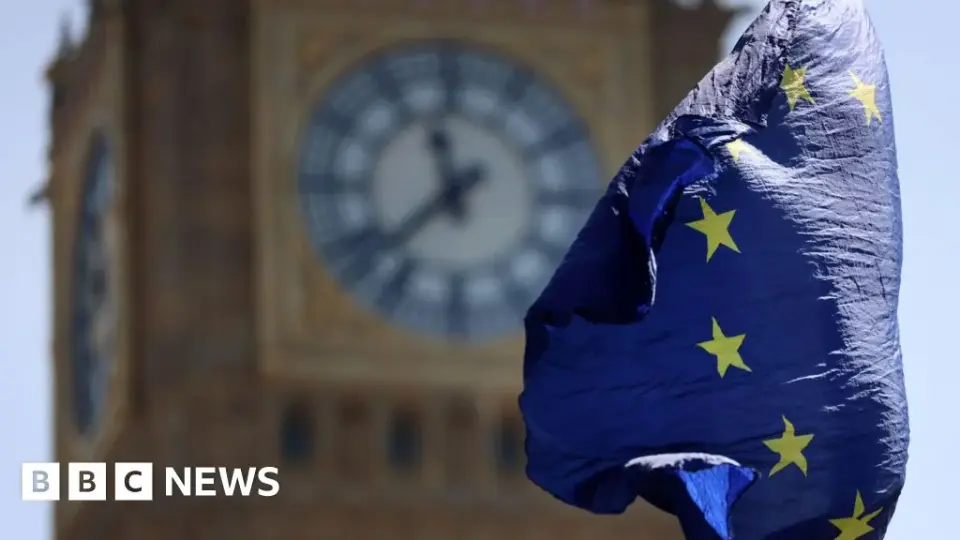
The UK government and the European Union are scheduled to release the formal texts of two treaties agreed last week, covering food trade and emissions trading, alongside new legislation to implement them. While Prime Minister Andy Burnham frames the deal as a pragmatic economic reset that will boost exports and lower costs, opposition figures and some former leaders warn it risks reversing Brexit and could lead to EU reintegration without a referendum. The agreements include a 10-year termination clause requiring financial penalties for ending the deal, a point of contention for critics.
Key points
- Two treaty texts regarding food trade and emissions trading are set to be published on Thursday afternoon, accompanied by the 'Cutting Costs Bill' to enact the deal.
- The agreements include a 10-year termination clause; the BBC reports that ending the deal would require the exiting party to pay for the reconstruction of border check infrastructure.
- An internal analysis forecasts a 16% boost to agricultural exports due to reduced red tape and dismantled border facilities, though industry insiders note global energy shocks may limit visible consumer price drops.
- The legislation grants ministers 'Henry VIII powers' to align UK and EU laws with minimal parliamentary scrutiny, specifically regarding food, agriculture, and carbon markets.
- A youth mobility scheme for 100,000 people annually is part of the broader deal, though its implementation is not expected until between 2028 and 2030.
Background
The current treaties follow a 'reset' deal agreed at a Brussels summit on November 20, 2026, between Prime Minister Andy Burnham and EU leaders. This marks a significant shift from the post-Brexit status quo, with Burnham previously stating he would like the UK to rejoin the EU in his lifetime. The deal was negotiated largely by his predecessor, Keir Starmer, but Burnham has taken credit for the final agreement, emphasizing economic benefits over political symbolism.
How outlets are covering it
The New York Times frames the deal as a 'Brexit rollback' driven by geopolitical shifts, including US policy changes and Russian aggression, suggesting a return to closer European ties. The Guardian offers a more critical, satirical view, highlighting the contrast between the warm reception in Brussels and the fierce opposition from Nigel Farage and the Conservatives, who view the deal as a betrayal of the 2016 referendum. The Financial Times focuses on the political risk, noting Burnham's insistence that EU reintegration is 'unthinkable' without a referendum, while acknowledging that the deal aligns UK tariffs with EU industrial policies. The BBC provides the technical details of the treaties and the legislative mechanism, noting the controversy over the termination clause and the use of secondary legislation to bypass full parliamentary scrutiny.
Why it matters
The publication of these treaties signals a potential long-term shift in UK-EU relations, moving from a post-Brexit separation to a more integrated economic partnership. The use of 'Henry VIII powers' to align laws could reduce parliamentary oversight of EU regulations, raising concerns about democratic accountability. The economic implications, particularly for the food and agriculture sectors, could significantly impact British exports and consumer prices, while the political debate over the deal's trajectory may influence future elections and the UK's strategic orientation in Europe.
What to watch
The UK government and EU are expected to publish the treaty texts and the 'Cutting Costs Bill' on Thursday afternoon. Further assessments of the deal's impact on different sectors and regions are anticipated. Burnham has promised a national debate on future options, with informal discussions with Brussels expected to continue, leading up to another UK-EU summit at the end of 2027. The implementation of the youth mobility scheme is not expected until between 2028 and 2030.
- UK government set to publish new treaties agreed with EU BBC
- Britain and Brussels Have Begun a Brexit Rollback. How Far Will It Go? The New York Times
- Andy, António and Ursula: the joyful Euro throuple break Nigel’s bitter heart The Guardian
- ‘Unthinkable’ for Britain to rejoin EU without referendum, says Burnham Financial Times
- Europe Tonight: EU and UK strike post-Brexit reset deal as Russian missiles hit Poland Euronews.com
Want the full story? Read the original reporting
Read on BBC