
US Tariffs and Diplomatic Pressure Fuel Allegations of Cold War-Era Meddling in Brazil’s 2026 Election
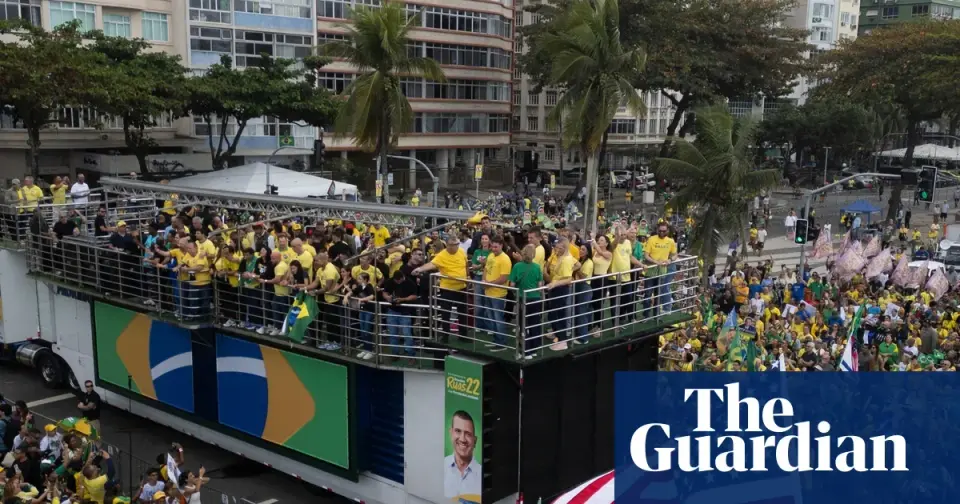
Brazil’s October 4, 2026, presidential election is defined by allegations of overt US interference, with Washington accused of using economic pressure and diplomatic tactics to favor far-right candidate Flávio Bolsonaro against incumbent Luiz Inácio Lula da Silva. While the US State Department denies meddling, critics argue that 25% tariffs and the designation of Brazilian crime groups as foreign terrorist organizations are designed to weaken Lula’s government and boost Bolsonaro’s 'tough on crime' image. This confrontation echoes Cold War-era CIA operations in the 1960s, though analysts note the current interference is open rather than covert. The race also tests Brazil’s 'active non-alignment' foreign policy, as a Lula victory would preserve strategic autonomy from US and Chinese powers, while a Bolsonaro win could shift Brazil toward closer US alignment and open its mineral reserves to American interests.
Key points
- The US has imposed 25% tariffs on most Brazilian imports and designated Rio’s Red Command and São Paulo’s First Command of the Capital as foreign terrorist organizations, a move Brazilian officials say is intended to make Lula appear soft on crime.
- In July 2026, Brazil denied entry visas to two US officials suspected of planning to meet Flávio Bolsonaro to sow doubt about the integrity of Brazil’s voting system, leading to the revocation of the Brazilian ambassador’s visa in Washington.
- Historians draw parallels between current US tactics and the 1962 CIA funding of opposition candidates against left-wing President João Goulart, which helped pave the way for the 1964 military coup, though current interference is described as open and larger in scale.
- Political scientist Celso Rocha de Barros argues the US campaign is driven by Secretary of State Marco Rubio, who aims to 'deliver' Latin America to American interests ahead of a potential 2028 presidential run, while activist Chico Rubens Paiva fears US social media algorithms may further boost Bolsonaro.
- The election is viewed as a test of Brazil’s 'active non-alignment' strategy; a Lula victory would maintain Brazil’s balanced relations with both US and Chinese powers, while a Flávio Bolsonaro win could end this autonomy and align Brazil with US geopolitical goals.
Background
This election follows a period of escalating tensions between Brazil and the US, including a public feud between Lula and Rubio in August 2026, during which Lula sought to leverage a cordial call with President Trump to counter interference concerns. The current conflict builds on historical patterns of US involvement in Brazilian politics, most notably the 1964 coup that overthrew the left-wing government of João Goulart. Additionally, the 2026 race mirrors the 2022 election, where Lula narrowly defeated Jair Bolsonaro, with Flávio Bolsonaro now carrying his father’s political mantle despite his father’s 27-year sentence for plotting a coup.
How outlets are covering it
The Guardian emphasizes the direct parallels between current US actions and Cold War-era covert operations, highlighting the 'heavy-handed' nature of the interference and the potential for US social media companies to influence the outcome. In contrast, Geopolitical Monitor frames the election less as a simple left-right battle and more as a test of Brazil’s 'active non-alignment' foreign policy, focusing on how the outcome will determine Brazil’s strategic autonomy in a multipolar world. While The Guardian notes that US interference is 'open' and 'on an incomparably larger scale' than the 1960s, Geopolitical Monitor suggests that the doctrine of non-alignment may survive the election regardless of the winner, though its strength is contingent on whether it becomes an institutional practice or remains tied to Lula’s personal leadership. Both sources agree that the US is actively backing Flávio Bolsonaro, but The Guardian attributes this primarily to Trump and Rubio’s desire to expand US influence, while Geopolitical Monitor views it as part of a broader regional shift toward US alignment seen in Argentina and Chile.
Why it matters
The outcome of Brazil’s 2026 election will determine the future of Latin America’s largest democracy and its role in the global economy. A Flávio Bolsonaro victory could lead to a closer alignment with the US, potentially opening Brazil’s critical mineral reserves to American firms and reducing economic ties with China, while a Lula victory would reinforce Brazil’s strategic autonomy and its position within BRICS. The election also serves as a bellwether for the 'orange wave' of right-wing populism in Latin America, with implications for US foreign policy in the region and the stability of democratic institutions in the Global South.
What to watch
Brazilians will vote on October 4, 2026, to decide between Lula da Silva and Flávio Bolsonaro. In the lead-up to the election, attention will focus on whether US social media platforms alter algorithms to favor Bolsonaro, as warned by activist Chico Rubens Paiva. The US State Department has denied meddling, but Brazilian officials continue to monitor diplomatic and economic pressures, including the potential impact of tariffs on the Brazilian economy. The result will also determine the future of Brazil’s 'active non-alignment' foreign policy and its relationships with global powers like China and the US.
- Echoes of cold war as US accused of meddling in another Brazilian election The Guardian
- This Right-Wing Stronghold in Brazil Is Getting Pummeled by Trump’s Tariffs WSJ
- Brazil’s 2026 Elections: A Test of Active Non-Alignment geopoliticalmonitor.com
- If Brazil falls, all of South America falls into the imperial clutches radiohc.cu
- Brazil’s Right Is Reeling As Tariffs Hurt a Stronghold | The Wall Street Journal - newspaper Magzter
Want the full story? Read the original reporting
Read on The Guardian