Brazil summoned Argentina’s charge d’affaires after Flavio Bolsonaro fled to the US following his election loss, straining ties with Argentina and the US. While Trump welcomed Bolsonaro, US officials denied direct involvement in his escape, and Brazilian media mocked his brief claim to be 'president-elect.'
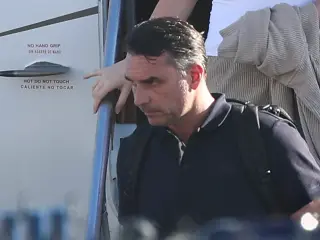
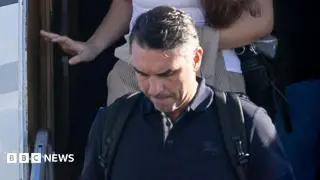
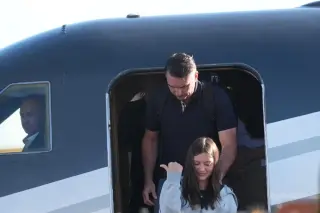
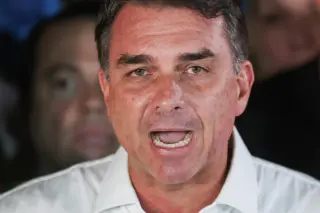
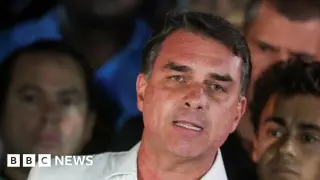
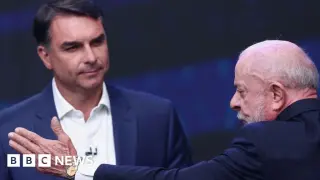
Brazilian Senator Flávio Bolsonaro arrived in South Florida on Wednesday after fleeing his home country following his defeat in the presidential runoff to Luiz Inácio Lula da Silva. The move occurred despite a Brazilian Supreme Court order to surrender his passports, which he defied, leading to their cancellation by federal police. The Trump administration approved visas for Bolsonaro and his family, with the president citing the election as 'strange.' Bolsonaro faces corruption and money-laundering investigations in Brazil, including links to a collapsed bank and illegal betting platforms. His departure mirrors his father’s 2022 exit to Florida after losing to Lula, and he joins other Brazilian conservatives in US exile.
Flávio Bolsonaro arrived in Miami, Florida, with his family after losing Brazil's presidential runoff to Luiz Inácio Lula da Silva. He defied a Supreme Court order to surrender his passports, which were subsequently cancelled by Brazilian authorities. The US State Department confirmed it would issue visas for him and his family, with President Donald Trump indicating approval of their entry. Lula condemned the departure as 'shameful,' while Bolsonaro's allies expressed surprise at the move, which mirrors his father's 2022 exit after losing the presidency.
Defeated Brazilian presidential candidate Flávio Bolsonaro arrived in Miami on Wednesday with his family after fleeing Brazil. He defied a Supreme Court order to surrender his passports, traveling through Argentina and Ecuador to reach the US, where he was granted visas. President Lula da Silva called the departure 'shameful,' while Donald Trump approved the entry, criticizing the election results.
Flávio Bolsonaro, the defeated candidate in Brazil’s presidential election, has arrived in the United States after fleeing Brazil to evade a Supreme Court travel ban. He landed in Florida on Tuesday evening following a route through Argentina and Ecuador. The US administration granted visas for him and his family, while Brazilian authorities cancelled his passports after he missed a deadline to surrender them. Lula da Silva, the winning incumbent, condemned the departure as 'shameful.'
Flavio Bolsonaro arrived in Miami on Tuesday night, defying a Brazilian Supreme Court order to surrender his passports. He fled after losing the presidential election to Luiz Inacio Lula da Silva, who called the departure 'shameful.' Trump approved the move, while Bolsonaro faces a money-laundering investigation and potential loss of Senate immunity in 2027.
Brazilian police have cancelled the passports of defeated presidential candidate Flávio Bolsonaro after he failed to surrender them within a 24-hour deadline set by the Supreme Court. The move follows an investigation into alleged money laundering and corruption. Federal officers are checking border crossings to determine if Bolsonaro fled to Argentina, though Argentine authorities deny he entered the country. Bolsonaro, who lost the runoff to Lula by 4.4 million votes, has refused to concede and called for the election to be annulled, citing a two-hour polling extension as a 'dirty trick.'
Brazilian President Luiz Inácio Lula da Silva won re-election in a runoff, triggering a 14% plunge in the Bovespa stock index and a sharp devaluation of the real. Flávio Bolsonaro refused to concede, citing a Supreme Court-ordered voting extension as evidence of fraud. President Donald Trump and prominent MAGA influencers echoed these claims, with some urging the U.S. to sever ties with Brazil or pressure the government, while others warned of similar tactics in U.S. midterms.
Supreme Court Justice Alexandre de Moraes ordered defeated presidential candidate Flávio Bolsonaro to surrender all passports and barred him from leaving Brazil within 24 hours of his loss to Luiz Inácio Lula da Silva. The ruling stems from a money-laundering investigation involving lawyer Willer Tomaz and a suspected £680m scheme. Bolsonaro, who lost 48.25% to 51.75%, claims the move is political intimidation, while his party acknowledges the result but demands clarification. He faces potential prosecution once his Senate immunity expires in January 2027.
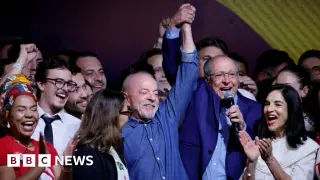
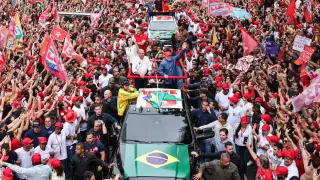
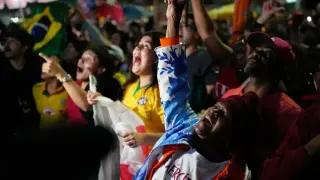
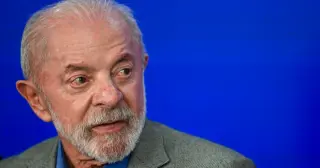
Brazilian President Luiz Inácio Lula da Silva has won a historic fourth term, defeating right-wing Senator Flávio Bolsonaro in a dramatic runoff. Lula secured 51.79% of the vote, reversing a first-round deficit and becoming the first president since 1985 to win after losing the initial vote. The victory halted a regional trend of right-wing gains but triggered a severe sell-off in Brazilian stocks and intensified tensions with the United States. Flávio Bolsonaro refused to concede, calling the result invalid, while Lula vowed to defend democracy and national sovereignty.
Luiz Inácio Lula da Silva has won an unprecedented fourth term as Brazil’s president, triggering a severe market sell-off. The iShares MSCI Brazil ETF dropped over 20% overnight, with major local firms like Petrobras and Itaú Unibanco falling between 19% and 30%. Simultaneously, Elon Musk’s warning about 'guppy-level death' for neocloud companies sent shares of CoreWeave, Nebius, and IREN lower in premarket trading. While Lula’s victory challenges market-friendly fiscal expectations, the neocloud sector faces ongoing distress due to high debt levels and skeptical credit investor yields.
Brazilian President Luiz Inácio Lula da Silva won a fourth nonconsecutive term, defeating Senator Flávio Bolsonaro with over 51% of the vote. The result reversed a first-round deficit and halted a regional trend of right-wing victories, though Lula faces a hostile Congress and strained US relations.
Ahead of Sunday's Brazilian presidential runoff, incumbent President Luiz Inacio Lula da Silva has petitioned the Superior Electoral Court to disqualify rival Flavio Bolsonaro. Lula's campaign alleges that Meta, the parent company of WhatsApp and Instagram, artificially boosted Bolsonaro's content while suppressing Lula's reach. Bolsonaro has counter-accused Lula of abusing state resources for mass messaging. The dispute follows UN warnings about unequal platform access and a recent court order requiring Meta to ensure a level playing field.
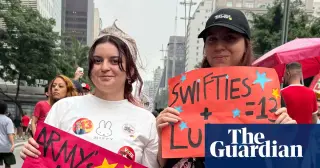
In a pivotal shift for Brazilian politics, over 600 fan communities for global and local pop stars have united to support President Luiz Inácio Lula da Silva in his bid for a fourth term. After Flávio Bolsonaro led the first round on October 4, these groups launched an intense digital campaign to counter the right-wing candidate’s momentum. The initiative, branded as Fandoms Pelo Brasil, leverages the high engagement of pop culture followers to mobilize voters for the October 25 runoff. Lula’s government has actively courted these groups through policies like a new 'fan decree' targeting ticket scalping, creating a symbiotic relationship between the administration and its most vocal online supporters. While some fanbases remain politically neutral or aligned with the right, the majority of progressive-leaning fandoms are treating the election as a priority over celebrity news, aiming to win over undecided voters through social media and street protests.
A Brazilian judge ruled that Meta must ensure equal algorithmic treatment for presidential candidates Lula and Flávio Bolsonaro ahead of the October 25 runoff, imposing a daily fine for non-compliance. The ruling follows complaints that Meta’s AI tools and content distribution favored Bolsonaro while suppressing Lula’s reach. While Meta denies bias, citing technical glitches, critics argue the platform engaged in systematic censorship, prompting international legal actions and detailed audits of over 1,000 affected accounts.