
Zambia inaugurates Hichilema for second term amid court closures and treason charges
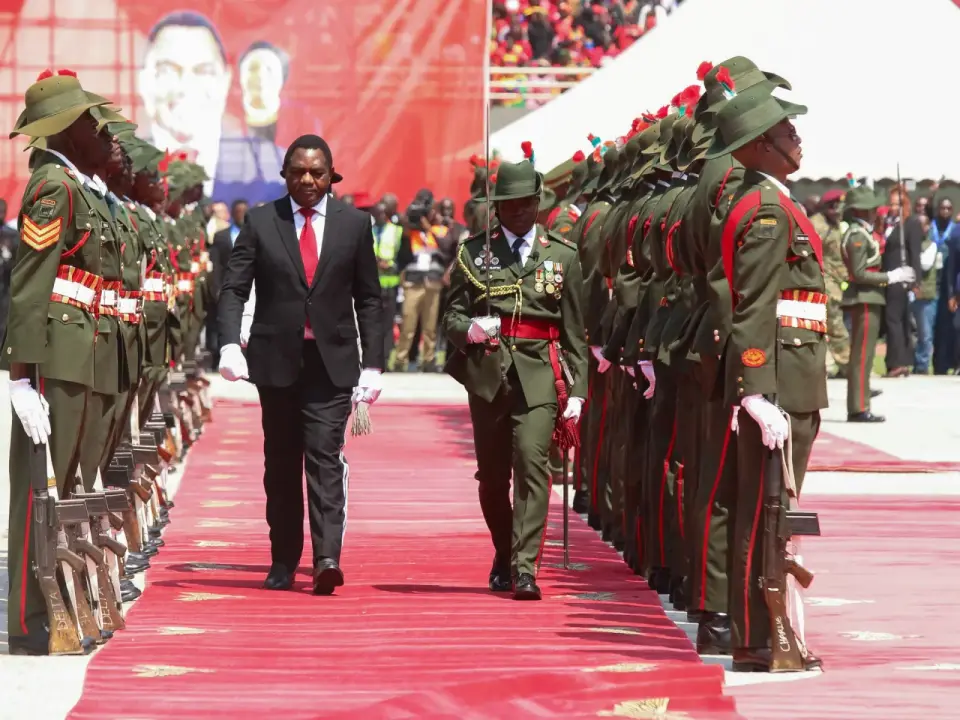
Zambian President Hakainde Hichilema was sworn in for a second term on September 1, 2026, following a disputed August 13 election. The inauguration occurred while his main rival, Brian Mundubile, was detained on treason charges and the country’s courts were closed, preventing legal challenges to the vote. Hichilema won with 60% of the vote, while Mundubile claimed the result was rigged after receiving 38%.
Key points
- Hichilema was inaugurated at the National Heroes Stadium in Lusaka, pledging to shift the country’s focus from economic stabilization to growth.
- Opposition leader Brian Mundubile and his running mate, Makebi Zulu, were arrested and charged with treason after seeking refuge with a human rights organization.
- Zambia’s courts were abruptly closed last week, which Human Rights Watch criticized as a move to block legal challenges to the election results.
- A post-election raid on Mundubile’s home killed a former cabinet minister and led to the arrest of approximately a dozen other opposition figures.
- International leaders, including those from the US, China, and several African nations, attended the ceremony, though some raised concerns about the tallying process.
Background
Hichilema first took office in 2021 after a landslide victory, inheriting a country that had recently defaulted on international debt and faced inflation above 24%. During his first term, he restructured national debt and attracted foreign investment. The current election followed a period of political tension, including a dispute over the burial of late former president Edgar Lungu, which had influenced the campaign landscape.
How outlets are covering it
Al Jazeera and the Associated Press emphasized the procedural irregularities, noting that Mundubile was jailed and courts were shuttered, effectively barring legal recourse. BBC highlighted the economic context, noting that while Hichilema credited his first term with stabilizing the economy, inflation remains a concern for many citizens. Capital FM Africa focused on the regional diplomatic dimension, reporting that Kenyan President William Ruto used the event to warn against political division in Africa ahead of Kenya’s own 2027 elections. While all sources agreed on the official vote share (60% to 38%), they differed in emphasis: Al Jazeera and BBC focused on the suppression of opposition rights, while Capital FM framed the event as a broader test of African democratic stability.
Why it matters
The closure of courts and the treason charges against the opposition leader raise significant concerns about democratic backsliding in Zambia. The inability to challenge the election results legally undermines the legitimacy of the new term. Furthermore, the post-election violence and arrests signal a potential escalation in political repression that could affect investor confidence and regional stability in Southern Africa.
What to watch
The immediate focus will be on the legal status of Mundubile and other detained opposition figures. International observers, including the EU, have already raised concerns about the integrity of the vote tallying process. Investors are currently monitoring the situation, with some appearing willing to overlook the political unrest due to rising copper prices, but sustained instability could impact the promised shift toward economic growth.
- Hakainde Hichilema sworn in as Zambia’s president after disputed election Al Jazeera
- Zambia president inaugurated for second term after disputed vote and opposition arrests apnews.com
- Zambia's president sworn in for second term while opponent detained BBC
- Ruto invokes 2027 election in Lusaka, says polls must not divide country Capital FM Africa
- Zambia's Hichilema sworn in for a second term after tense vote africanews.com
Want the full story? Read the original reporting
Read on Al Jazeera