
Vatican Commission Defines 'Sin Against Creation' in New Theological Document
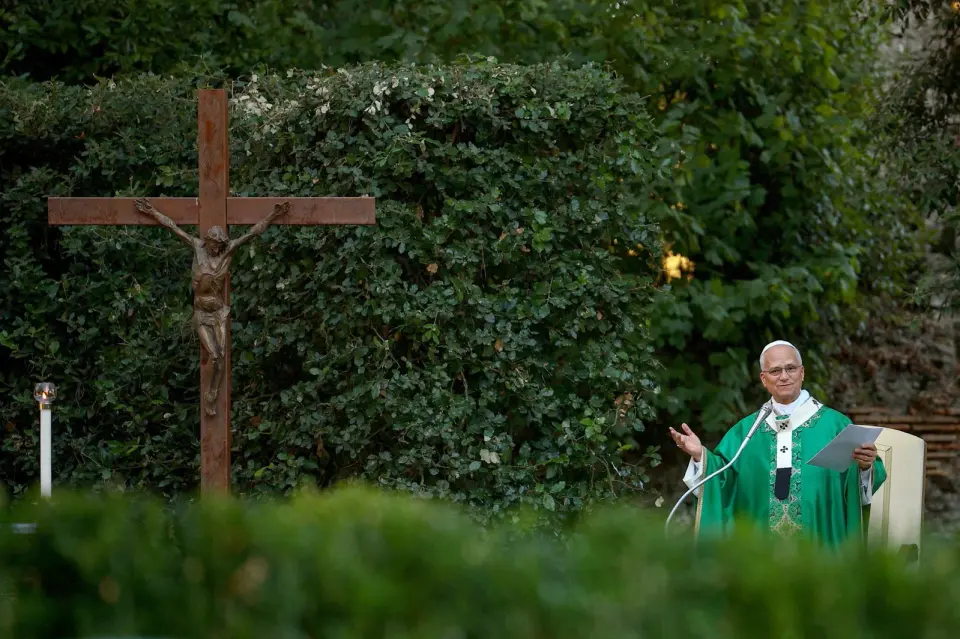
The International Theological Commission released a 29,000-word document on September 2, 2026, titled 'Caring for Our Common Home.' Approved by Pope Leo XIV, the text redefines 'ecological sin' as a 'sin against creation and the Creator,' arguing that environmental harm violates God's plan. The document calls for an 'ecological conversion' through spiritual and practical changes, emphasizing stewardship over exploitation. It was published during the Church's Season of Creation, building on Pope Francis's 2015 encyclical 'Laudato Si'.'
Key points
- The International Theological Commission published a 29,000-word document on September 2, 2026, titled 'Caring for Our Common Home: A Responsible and Fraternal Response to the Triune God.'
- The document was approved by a majority vote in July and authorized by Cardinal Víctor Manuel Fernández after review by Pope Leo XIV.
- It proposes the term 'sin against creation and the Creator' to replace 'ecological sin,' arguing that environmental damage violates God's plan for creation.
- The text is divided into three chapters: the Trinitarian imprint on creation, humanity's role as stewards, and practical guidelines for ecological conversion.
- It calls for a 'threefold transformation' in culture's relationship to nature, addressing the loss of nature as God's creation, predatory anthropocentrism, and planetary ecological crisis.
- The document rejects 'predatory anthropocentrism' and 'radical biocentrism,' advocating for 'situated anthropocentrism,' where humans are stewards and servants of creation.
Background
This document follows Pope Francis's 2015 encyclical 'Laudato Si', which introduced the concept of 'ecological sin.' The current text expands on that idea, providing a more precise theological framework for environmental responsibility. It also aligns with Pope Leo XIV's recent encyclical 'Magnifica Humanitas,' which addressed the 'universal destination of goods' and the limits of private property.
How outlets are covering it
America Magazine and The Good Newsroom emphasize the theological and spiritual dimensions of the document, highlighting its Trinitarian framework and call for 'ecological conversion.' National Catholic Reporter focuses on the practical and political implications, noting the document's critique of the 'technocratic paradigm' and its call for differentiated responsibilities between wealthy and poor nations. TheCatholicSpirit.com, in a related essay, explores the Trinitarian theology of creation, linking environmental stewardship to prayer and contemplation, but does not directly analyze the new document's policy recommendations. All sources agree on the document's significance but differ in emphasis: some focus on spiritual conversion, others on socio-economic justice.
Why it matters
The document provides a new theological framework for environmental ethics within the Catholic Church, potentially influencing policy and public discourse. By defining environmental harm as a sin against God, it elevates ecological issues to a moral and spiritual priority, urging both individuals and political leaders to act. It also promotes interreligious cooperation, suggesting that environmental stewardship is a shared human responsibility beyond Christian boundaries.
What to watch
The document is expected to influence Catholic social teaching and environmental policies. It may inspire further discussions in the Church and among other religious groups about the moral dimensions of environmental crisis. The call for 'ecological conversion' could lead to new initiatives in parishes and communities focused on sustainable living and social justice.
- Vatican theological commission defines ‘sin against creation and the Creator’ in new document America Magazine
- Vatican body develops concept of 'ecological sin' in spiritual salvo on the environment National Catholic Reporter
- Care for Creation Is a Theological Question The Good Newsroom
- Eucharist is ‘ecological school’ says new Vatican climate text The Catholic Herald
- Integral ecology and praying to the Trinity TheCatholicSpirit.com
Want the full story? Read the original reporting
Read on America Magazine