
Romania ends five-month political deadlock with fragile six-month government
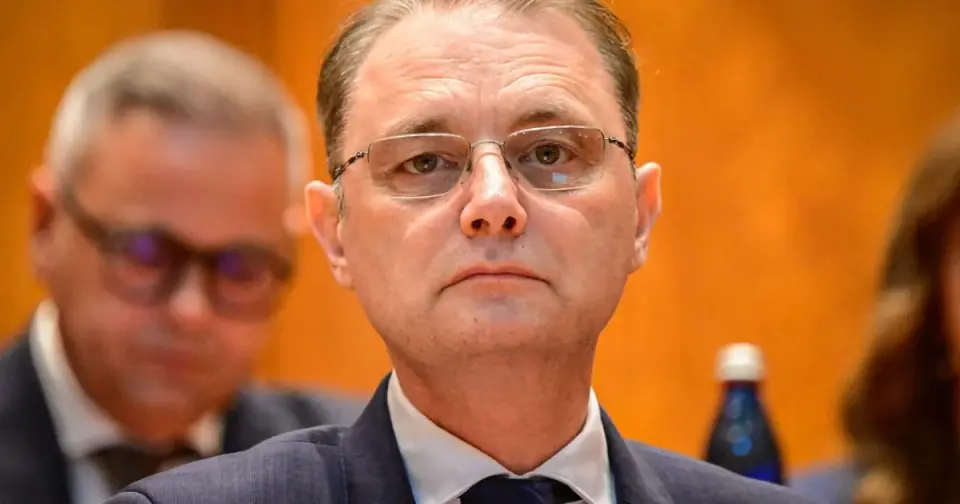
Romania has ended five months of political paralysis by installing Luca Niculescu as prime minister, but the new government is a temporary stopgap with a six-month deadline. The center-left Social Democrats (PSD) will join the cabinet, while the center-right National Liberal Party (PNL) will remain in opposition, forcing the government to seek vote-by-vote support. The immediate priority is passing an investment-focused 2027 budget by the end of November, a move that pits the PSD’s anti-austerity stance against the PNL’s fiscal restraint. The deal was driven by fears that snap elections would boost the far-right Alliance for the Union of Romanians (AUR).
Key points
- Luca Niculescu, a former journalist and diplomat, was voted in as prime minister on October 20, 2026, after three failed attempts to form a government.
- The new government is a minority cabinet; the Social Democrats (PSD) will participate, but the National Liberal Party (PNL) will stay out of the cabinet and refuse to sign a detailed coalition program.
- The arrangement is a six-month truce, after which parties must renegotiate or face the risk of snap elections, which could benefit the far-right AUR party.
- PSD leader Sorin Grindeanu aims to pass a 2027 budget by the end of November that prioritizes economic recovery, public investment, and protecting purchasing power over austerity.
- Grindeanu rejected a €300 million social spending package offered by the far-right AUR, citing deep disagreements over Europe and national security, and vowed no formal agreement with AUR during his tenure.
Background
Romania has faced significant political instability and a growing budget deficit in recent years, which fueled a surge in support for hard-right nationalist politics. The country is strategically important to NATO and the EU, hosting a major military base and a U.S. missile shield site. In May 2026, the PSD allied with the far-right AUR to topple the previous centrist-liberal coalition, a move driven by unpopular debt-cutting reforms. This new government is an attempt to stabilize the political landscape without triggering snap elections that could empower the far right.
How outlets are covering it
Politico emphasizes the strategic necessity of the six-month truce to prevent a surge in support for the far-right AUR party and highlights the immediate challenge of passing a budget by the end of November. AP News focuses on the procedural aspect, confirming the swearing-in of the minority government and the end of the month-long stalemate. The Bluefield Daily Telegraph provides minimal coverage, primarily featuring the event as a headline without detailed analysis, reflecting the limited international focus on the specific mechanics of the Romanian political deal compared to the deeper analysis offered by Politico and AP.
Why it matters
The formation of this government is critical for Romania’s stability as a key NATO ally and EU member. The six-month deadline creates a high-stakes environment where the success of the budget and the ability to avoid snap elections will determine whether the far-right AUR gains power. The clash between the PSD’s anti-austerity agenda and the PNL’s fiscal restraint could lead to further political fragmentation if a lasting agreement is not reached by April 2027.
What to watch
The immediate next step is the passage of the 2027 budget by the end of November. The PSD will also aim to revise the 2026 budget by the end of October and fast-track EU projects to unblock funds. The parties will need to renegotiate a more lasting agreement before the six-month deadline expires in April 2027, or face the risk of snap elections.
- Romania’s political crisis gets 6-month truce as new government formed POLITICO.eu
- Romanian parliament confirms new prime minister after months of deadlock Reuters
- Romania Approves New Cabinet to Break Months-Long Crisis Bloomberg.com
- Romanian lawmakers back a minority government to end monthslong stalemate AP News
- Romania Politics Government Bluefield Daily Telegraph
Want the full story? Read the original reporting
Read on POLITICO.eu