
August 2026 Eclipse: From Iceland’s Shadow Chase to Spain’s First Total Event Since 1999
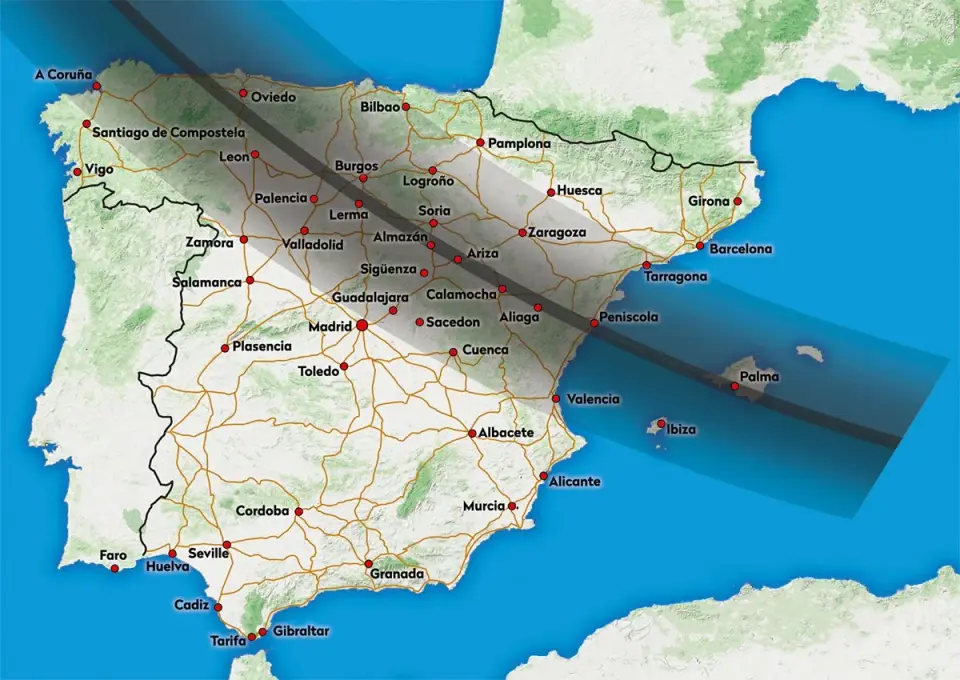
On August 12, 2026, a total solar eclipse will sweep across Greenland, Iceland, Spain, and northern Portugal, marking the first such event in mainland Europe since 1999. While observers in these regions will experience up to two minutes of totality, much of Europe and North America will see a partial eclipse. The event coincides with the peak of the Perseid meteor shower, offering a rare celestial double. NASA is conducting a specialized aerial mission to study solar phenomena, while global audiences can watch via multiple livestreams.
Key points
- The path of totality crosses Greenland, Iceland, Spain, and a small area of northern Portugal, with maximum duration of 2 minutes 18 seconds.
- NASA’s WB-57 aircraft will fly at 50,000 feet to capture high-resolution data on solar prominences and nanoflares, extending observation time to nearly three minutes.
- The eclipse occurs just before the peak of the Perseid meteor shower, creating a unique opportunity for both daytime and nighttime astronomical observation.
- Partial eclipse visibility extends across the UK, Ireland, and parts of North America, with coverage varying from 9% to 99% depending on location.
- Multiple organizations, including NASA, ESA, and the Royal Observatory Greenwich, are offering livestreams for those unable to view the event in person.
Background
This event follows the 2023 North American eclipse and precedes the 2028 eclipse in South America. It is the first total solar eclipse visible in mainland Europe since 1999, a gap of 27 years that has fueled significant public interest. Previous coverage highlighted regional viewing guides and safety protocols for using ISO-certified eclipse glasses. The 2026 event is notable for its alignment with the Perseid meteor shower, a combination not frequently seen in recent decades.
How outlets are covering it
BBC Sky at Night emphasizes practical preparation, providing maps, charts, and video guides for both the eclipse and the Perseids. The Guardian focuses on the scientific mission, detailing NASA’s aerial chase to study solar nanoflares and the corona’s temperature anomaly. BBC News highlights the human element, profiling enthusiasts who traveled across Europe to witness the event, comparing the experience to a 'World Cup' for astronomy fans. Sky & Telescope targets those unable to travel, listing numerous livestream options from global institutions. While all sources agree on the path and timing, they differ in emphasis: Sky at Night on preparation, The Guardian on scientific data, BBC News on personal experience, and Sky & Telescope on accessibility.
Why it matters
The August 2026 eclipse provides a critical window for solar physics research, particularly in understanding the heating of the solar corona through nanoflares. It also serves as a major cultural event, drawing global attention and tourism to Iceland and Spain. The coincidence with the Perseid meteor shower offers a rare educational opportunity for the public to engage with both solar and stellar phenomena in a single evening. For space weather forecasting, improved data from such events enhances our ability to predict solar storms that could impact satellites and power grids.
What to watch
Following the eclipse, attention will shift to the Perseid meteor shower peak later that night. Scientists will analyze the data collected by NASA’s WB-57 mission to refine models of solar activity. In the coming months, public interest may turn to the 2028 total solar eclipse in South America. For now, observers are encouraged to review safety guidelines for solar viewing and monitor weather conditions in the path of totality.
- Eclipse path maps, animations, charts and video guides – all the info you need for the August 2026 solar eclipse skyatnightmagazine.com
- Solar eclipse to occur next week. Here is what to know NPR
- ���You’re hit with a slam of shadow’: Nasa’s air mission to capture rare eclipse data The Guardian
- What it's like to chase solar eclipses around the world BBC
- Where to See the August 12th Solar Eclipse Online Sky & Telescope
Want the full story? Read the original reporting
Read on skyatnightmagazine.com