
Bolivian Cloud Forest Yields First New Wild Cat Species in Over a Century
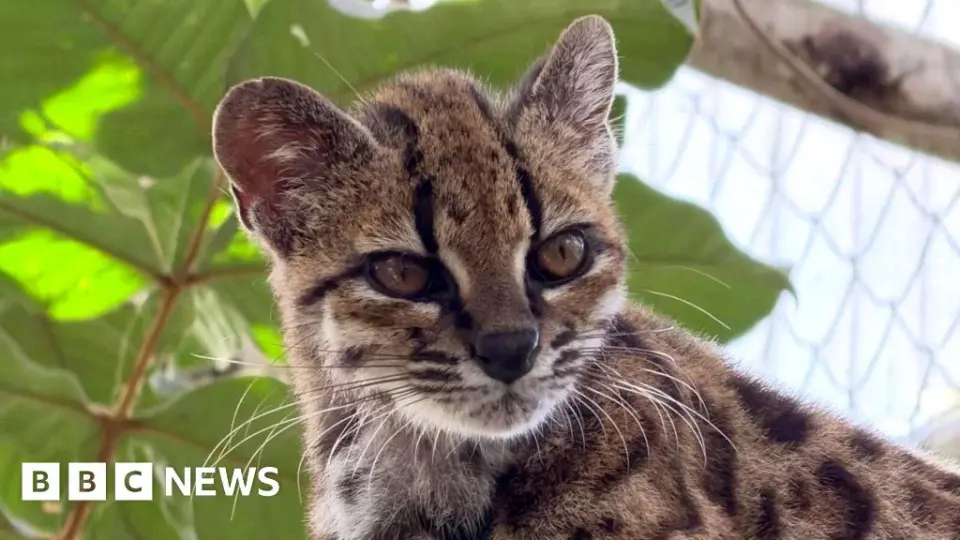
Scientists have confirmed a new wild cat species, Leopardus tilcayo, in Bolivia's Yungas cloud forests. The discovery, based on DNA analysis of a 10-year-old cat named Tigrino, reveals that tiger cats comprise five distinct species rather than three. This finding, the first new feline species in over a century, highlights significant gaps in biodiversity knowledge and underscores the urgent need to protect vulnerable habitats in South America.
Key points
- Leopardus tilcayo is a small, spotted wild cat about the size of a domestic cat, native to Bolivia's Yungas region.
- The species was identified through genetic studies of 38 cats, including museum specimens and living animals, revealing five distinct tiger cat lineages.
- Only one confirmed living individual, a 10-year-old male named Tigrino, is currently known, though scientists believe others exist in the wild.
- The discovery was accidental; a local resident brought the cat to a sanctuary, where volunteer Paola Nogales-Ascarrunz noticed its unusual appearance.
- The finding expands the known Felidae family from 41 to at least 44 species and emphasizes the need for conservation in less-studied regions.
Background
Previous coverage in September 2026 established that Leopardus tilcayo is the first new living feline species described in over a century. Earlier reports noted that the cat, approximately 46 cm long and 1.4 kg in weight, has light brown fur with rosettes. The IUCN is expected to reassess conservation status after treating the five tiger cat lineages separately. Indigenous communities in Bolivia had long known of the animal, but scientific validation only occurred recently.
How outlets are covering it
BBC and Scientific American both highlight the rarity of discovering a new mammal species, particularly a cat, after more than a century. BBC emphasizes the conservation implications, noting that tiger cats receive less public attention than larger predators like lions or tigers. Scientific American focuses on the genetic analysis, describing the study as the most complete yet, involving 26 Leopardus cats. Both sources agree that the discovery underscores the need to protect the Yungas forests, but BBC stresses the 'taxonomic nightmare' of distinguishing similar-looking species, while Scientific American highlights the accidental nature of the discovery and the potential for further biodiversity findings.
Why it matters
The identification of Leopardus tilcayo reveals that significant biodiversity remains undiscovered in less-studied regions like Bolivia's Yungas cloud forests. It challenges the assumption that all small wild cats are well-known and highlights the urgent need for conservation efforts to protect vulnerable species from deforestation and habitat loss. The finding also expands the global cat family, impacting scientific understanding and conservation strategies for Felidae.
What to watch
Scientists plan to install camera traps in the Yungas region to estimate the population of Leopardus tilcayo and other tiger cats. The IUCN will reassess conservation status for the five distinct tiger cat species. Researchers will continue to study the ecology and behavior of the new species to inform protection efforts and prevent potential endangerment.
- Spotted wildcat from Bolivian forest revealed as new species BBC
- Meet the First New Cat Species Discovered in 100 Years National Geographic
- Bolivia: New cat species discovered by scientists dw.com
- First new feline species in 100 years discovered in Bolivian forest abcnews.com
- See the first new species of cat discovered in more than a century—it’s adorable scientificamerican.com
Want the full story? Read the original reporting
Read on BBC