
Drone captures fourth-ever humpback birth off Australia, challenging migration theories
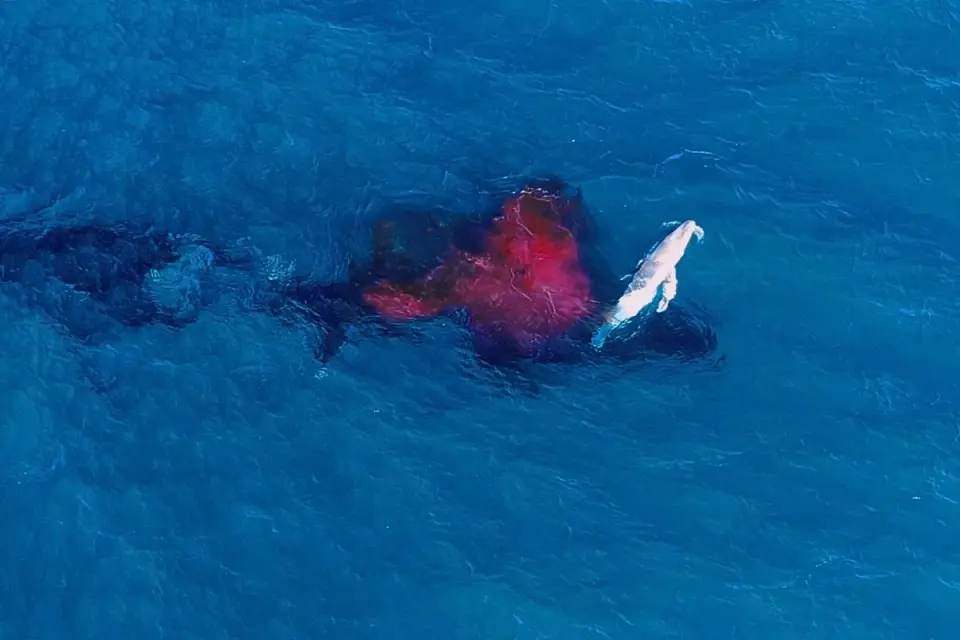
A drone pilot in New South Wales, Australia, captured the fourth complete humpback whale birth ever filmed and the first recorded via drone. The footage, obtained during the northbound migration, provides rare data on maternal behavior and calf survival, potentially challenging existing assumptions about breeding locations.
Key points
- Alexander Forrest, a volunteer for ORRCA, filmed the birth on July 28 near Kingscliff, NSW, while monitoring the annual migration.
- The calf, estimated at 1.5 tonnes, surfaced for its first breath within moments of the mother’s labor, a behavior known as 'logging'.
- Researchers plan to publish the findings in a peer-reviewed journal to analyze maternal support and newborn survival rates.
- The event occurred approximately 700 meters offshore, complying with New South Wales biodiversity regulations.
Background
This event follows a 2025 study indicating that humpback calving zones extend further south than previously thought, with some births occurring during migration. The current footage adds to a growing body of evidence that humpbacks may breed in mid-migration rather than exclusively in tropical waters.
How outlets are covering it
ORRCA head of research Annie Post emphasized the scientific value of the footage for understanding reproduction, noting the mother was alone during labor, unlike other documented births. Macquarie University scientist Vanessa Pirotta highlighted the calf’s immediate ability to surface as a 'magical' survival trait. Meanwhile, UNSW researcher Jane McPhee-Frew suggested the sighting challenges the traditional view that whales must reach the tropics to give birth, attributing the shift to population growth and better technology. USA Today noted the initial confusion regarding the blood plume, while the Sydney Morning Herald detailed the presence of sharks nearby, which Post clarified were likely drawn to the afterbirth rather than the calf.
Why it matters
The footage offers critical data on humpback reproduction and maternal behavior, helping scientists refine models of migration and breeding. As humpback populations recover from historical whaling, such observations are vital for conservation strategies and understanding how these animals adapt to changing environments.
What to watch
ORRCA will analyze the footage and behavioral data for a peer-reviewed publication. Researchers expect to compare this birth with other documented cases to identify trends in maternal support and calf survival, potentially leading to revised guidelines for marine mammal protection during migration.
- Drone pilot spots humpback whale acting strangely. What happens next is breathtaking BBC Wildlife Magazine
- A Whale Gave Birth. A Drone Was There to Capture the Spectacle. The New York Times
- Drone captures rare footage of humpback whale giving birth USA Today
- First drone footage of a humpback birth shows mum and bub thriving SMH.com.au
- Drone captures rare video of 'magical' whale birth ABC News & Headlines – Australian Broadcasting Corporation
Want the full story? Read the original reporting
Read on BBC Wildlife Magazine