
Zambian Wild Dog Brothers Set Record with 2,564-Mile Trek Across Human-Dominated Land
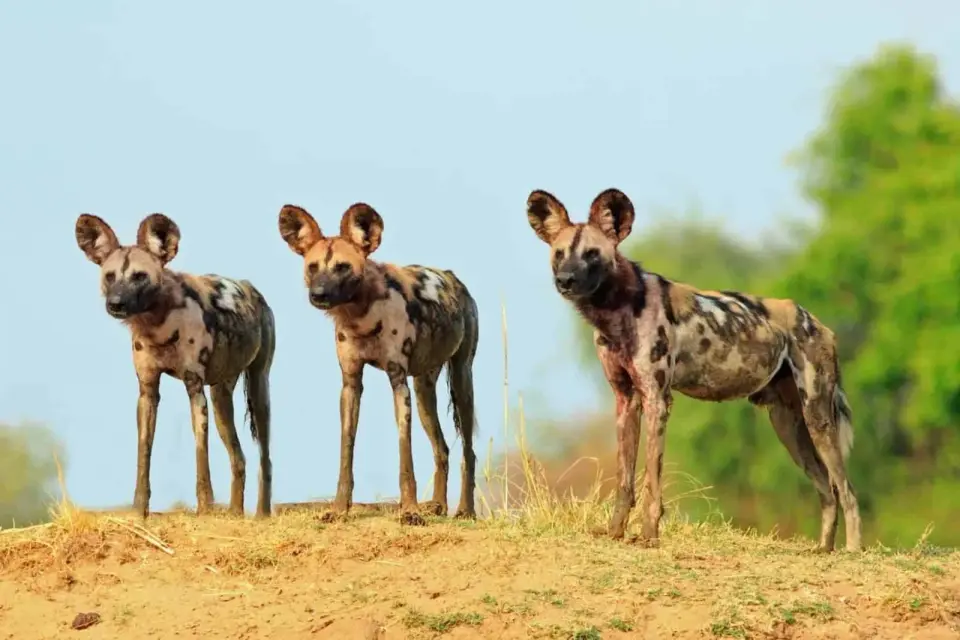
Three male African wild dogs from Zambia's Kafue National Park completed a 4,126-kilometer journey to a new territory in the Luangwa Valley, setting a record for the longest dispersal by an African mammal. While the males survived, a sister group died in snares, highlighting the risks of fragmented habitats.
Key points
- Three brothers from the Mayukuyuku pack left Kafue National Park in July 2025 and arrived in the Luangwa Valley in April 2026, covering 4,126 kilometers (2,564 miles).
- The route was non-linear, involving backtracking near Ndola and crossing the Great Rift Valley escarpment, major rivers, and busy roads in the Copperbelt region.
- A separate group of four sisters left the same pack; one was killed in a wire snare, and the collared female likely died shortly after, severing tracking data.
- The study, published in Ecology, suggests wild dog populations in eastern and southern Africa remain connected, though such long distances indicate severe habitat fragmentation.
- African wild dogs are endangered, with approximately 6,600 adults remaining in the wild, making successful dispersal critical for genetic diversity.
Background
Previous coverage in September 2026 reported on this same study, noting the 2,485-mile journey of the males and the tragic fate of the female group. The current report provides more specific details on the route and the timing of the dispersal, confirming the record-breaking distance and the survival of the brothers.
How outlets are covering it
A-Z Animals emphasizes the record-breaking distance and the counterintuitive survival tactics used to cross human terrain, comparing the dogs' behavior to evading lions. Animal Survival International, citing Science, highlights the broader conservation implications, noting that while the males succeeded, the females' deaths in snares illustrate the 'lottery of dispersal.' Both sources agree that the findings suggest populations are more connected than thought, but Animal Survival International stresses that such long migrations are a symptom of fragmented habitats, whereas A-Z Animals focuses on the physical feat and the functional corridors.
Why it matters
The study demonstrates that wildlife corridors between protected areas in Zambia still function, offering hope for recolonization of areas where wild dogs were thought extinct. However, it also underscores the lethal risks posed by human infrastructure, such as roads and snares, to endangered species attempting to maintain genetic diversity.
What to watch
Conservationists may push for international collaboration to protect wildlife corridors rather than relying solely on isolated national parks. Researchers will continue to monitor the success of these dispersals to determine if they lead to long-term genetic exchange or if they remain rare, isolated events.
- Three Wild Dog Brothers Traveled 2,564 Miles Across Zambia, A Record For An African Mammal A-Z Animals
- Recent paper by Montana State researchers about African wild dogs receives international attention Montana State University
- Three wild dogs have travelled farther than any African mammal Animal Survival International
- Three Wild Dogs Complete Record-Breaking 2,500-Mile Journey Across Africa A-Z Animals
Want the full story? Read the original reporting
Read on A-Z Animals