
Australian researchers test cyborg cockroaches for disaster medical rescue
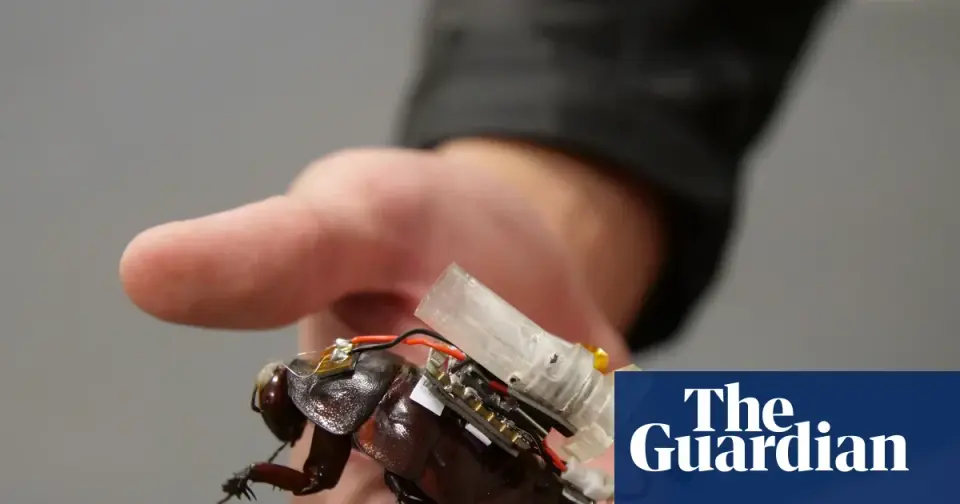
Australian scientists have developed 'paraborg' cockroaches equipped with cameras and syringes to deliver emergency medical aid to victims trapped in disaster zones. Using giant burrowing cockroaches from northern Queensland, researchers at the University of Queensland and UNSW created a hybrid system that combines insect agility with robotic precision. In proof-of-concept trials, these cyborgs achieved a 95% success rate for close-range injections and a 72% success rate for the full navigation-and-injection task. The technology aims to reach casualties in spaces too narrow or dangerous for human rescuers, with a goal of deploying autonomous swarms within five to ten years.
Key points
- Researchers at the University of Queensland and University of New South Wales developed 'paraborgs' using the giant burrowing cockroach (Macropanesthia rhinoceros).
- The cyborgs are fitted with lightweight electronics, cameras, and remotely activated auto-injection systems to deliver emergency medical care.
- Proof-of-concept testing showed a 95% success rate for injections within 15cm of a target and a 72% success rate for the complete navigation and injection task.
- The insects are anaesthetised during the fitting of electrodes and microchips but are reported to live as long as normal cockroaches once the harnesses are removed.
- The long-term vision involves deploying swarms of specialized cyborg insects to perform complementary roles in search and rescue operations.
Background
Recent major disasters, such as the 2026 earthquake in Colombia and the Lake Kariba ferry tragedy in Zimbabwe, have highlighted the critical need for advanced search and rescue capabilities in collapsed structures and remote areas. While these events involved human-led rescue efforts, the development of cyborg insects offers a potential solution for accessing victims in environments where human rescuers cannot safely operate.
How outlets are covering it
The Guardian and The Sydney Morning Herald both report on the same core findings from the University of Queensland and UNSW, confirming the 95% and 72% success rates in trials. However, The Sydney Morning Herald provides additional context on the broader field of biorobotics, noting that other international teams have trialled similar technology. Specifically, it mentions that ten cyborg Madagascan hissing cockroaches were deployed in Myanmar following a 2025 earthquake, and that researchers have also developed 3D-printed diving suits for cockroaches to operate underwater. While The Guardian focuses on the medical injection aspect, The Sydney Morning Herald emphasizes the potential for fully autonomous paramedic teams and the logistical advantages of using insects over robots, such as longer battery life and better agility in complex environments.
Why it matters
This technology represents a significant step forward in disaster response, potentially saving lives in situations where human access is impossible. By combining the natural abilities of insects with robotic precision, these cyborgs could provide timely medical aid to victims trapped in rubble or caves, bridging the gap between detection and treatment in critical emergencies.
What to watch
Researchers aim to deploy swarms of specialized cyborg insects within five to ten years. Future developments may include fully autonomous teams that can independently search for victims, relay information, and deliver medication. Additionally, other teams are exploring aquatic versions of these cyborgs for flood rescue and even deep ocean or space exploration.
- Cyborg cockroaches with tiny syringes designed to join search and rescue teams in major disasters The Guardian
- Roaches to the rescue: Australian scientists develop cyborg cockroaches for medical missions Reuters
- Giant cyborg cockroaches could bring supervised care to people trapped beyond rescuers' reach Tech Xplore
- Scientists make giant cyborg cockroaches that can fire drug-filled syringes SMH.com.au
- Cyborg cockroaches could crawl to the rescue Fassifern Guardian
Want the full story? Read the original reporting
Read on The Guardian