
Misidentified 'Fox' Head Revealed as Rare Extinct Tasmanian Tiger
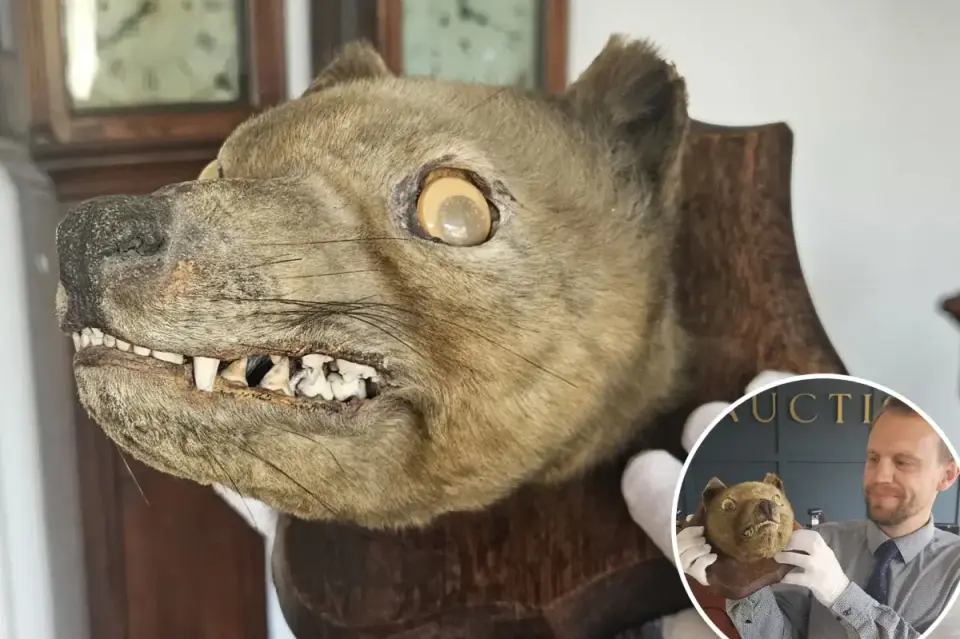
A UK collector identified a taxidermied head listed as a fox as an extinct Tasmanian tiger, selling it for over $85,000. X-rays confirmed the specimen contains a pristine skull, making it one of only two known complete head mounts of the species.
Key points
- James Cranfield, a natural history dealer, recognized the specimen as a thylacine by counting eight upper incisors, unlike the six found in foxes.
- The head sold at Auctioneum in Bristol for £62,600 (approx. $85,000) after a bidding war, despite an initial estimate of £30-£50.
- X-rays and CT scans confirmed the mount contains a complete, uncut skull, validating its authenticity.
- The specimen is the second known complete thylacine head mount, with the other held by a private collector in Australia.
- Scientists plan to extract DNA from the teeth to aid genetic research and potential de-extinction efforts.
Background
The thylacine, or Tasmanian tiger, is a carnivorous marsupial that went extinct in 1936. Our archive notes ongoing efforts to understand extinct species through new evidence, including DNA analysis and fossil discoveries, which aligns with the current scientific interest in this specimen.
How outlets are covering it
The New York Post and The Times of India emphasize the dramatic price increase and the collector's expertise in identifying the species. ScienceAlert provides detailed scientific context, noting that the specimen has been added to the International Thylacine Specimen Database and that DNA sampling is underway. While all sources agree on the identification, ScienceAlert highlights the broader implications for de-extinction research, whereas the Post focuses on the auction surprise. The Solicitors Journal was irrelevant to this story.
Why it matters
This discovery provides a rare physical specimen for scientific study, potentially offering genetic data that could aid in understanding the species' biology and supporting de-extinction projects. It also highlights the value of careful examination in antique and taxidermy markets.
What to watch
Researchers will analyze the wood of the mount to determine its origin and extract DNA from the teeth. Cranfield plans to make the specimen available to institutions for non-destructive study.
- ‘Holy grail’: Antique ‘fox head’ bought at a flea market turns out to be an ancient extinct species valued at $85K New York Post
- Antique 'Fox Head' Bought at Auction Wasn't a Fox at All. It Was a Long-Extinct Species. ScienceAlert
- Looking beyond the label Solicitors Journal
- A UK collector paid £62,000 for a mounted 'fox' head; X-rays revealed the skull of an extinct thylacine hidden inside The Times of India
- It has been discovered that a 'weird fox head' that was won at auction was actually from an extinct animal, not a fox. GIGAZINE
Want the full story? Read the original reporting
Read on New York Post