
Genome Sequencing of 194-Year-Old Tortoise Jonathan Reveals Cellular Secrets
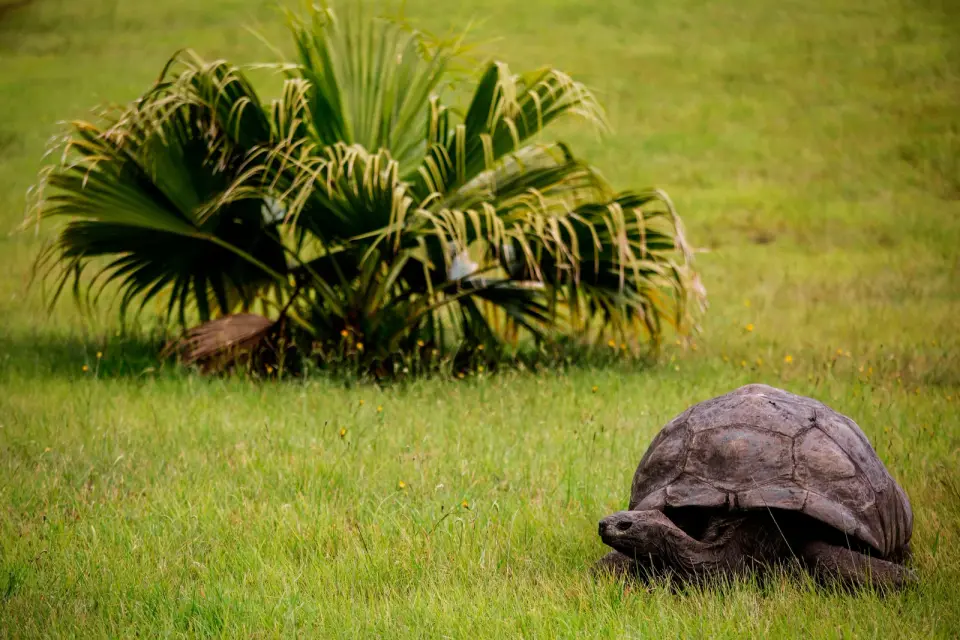
A new study published in Science Advances has sequenced the genome and epigenome of Jonathan, a 194-year-old Aldabra giant tortoise residing on St. Helena. Researchers identified 287 gene variants linked to DNA repair and inflammation reduction, noting that his mitochondrial health remains remarkably stable despite his age. While the findings offer potential insights for human anti-aging treatments, experts caution that the data from a single animal is limited and that the primary secret to his longevity is simply being a giant tortoise.
Key points
- Jonathan, estimated to be 194 years old, is the oldest known land animal and has resided on St. Helena since 1882.
- The study, led by researchers from the University of Cambridge and Vanderbilt University, found 287 gene variants associated with protecting against cellular damage.
- Jonathan's epigenome shows stable mitochondrial control, a trait usually deteriorating with age in other species.
- Researchers aim to translate these evolutionary insights into affordable human treatments, though they acknowledge the limitations of single-subject data.
- Jonathan's age is verified by an 1882 photograph, though he could potentially be older than 200 years.
Background
This development follows ongoing scientific interest in extreme longevity, particularly after the 2026 WWF report highlighted the recovery of green sea turtles and other species. While the archive notes broader biodiversity trends, the current focus is on the specific genetic mechanisms of individual long-lived animals like Jonathan, who has become a global symbol of resilience despite a viral hoax claiming his death earlier this year.
How outlets are covering it
Outlets like CNN and The New York Times emphasize the potential for human medical applications, citing researcher Stephen Clark’s goal to translate findings into clinical trials within two years. In contrast, Defector offers a skeptical view, arguing that the 'secret' is simply Jonathan's species and that headlines often overstate the direct applicability to humans. The Telegraph was inaccessible due to security restrictions. Critics, including Vincent J. Lynch, note that the computational methods used may produce false results, while others like Joao Pedro de Magalhaes view the study as a major breakthrough in understanding aging.
Why it matters
Understanding the genetic basis of extreme longevity could lead to new treatments for age-related diseases in humans. However, the study also highlights the ethical and scientific challenges of extrapolating data from a single, non-human subject to human medicine, sparking debate about the feasibility of 'anti-aging' technologies.
What to watch
Researchers plan to analyze more Aldabra tortoises to determine if Jonathan's traits are species-wide or individual. They also intend to pursue human clinical trials for drugs that improve mitochondrial health, though this remains a long-term goal.
- The Secret To Living 194 Years Is Being A Turtle Defector
- The secret to longer life? Scientists believe a 194-year-old tortoise could unlock clues CNN
- Study finds 194-year-old tortoise is ‘aging more slowly than you would expect’ NPR
- DNA from world’s oldest tortoise may hold key to human ageing The Telegraph
- At 194, Jonathan the Giant Tortoise Knows About Aging The New York Times
Want the full story? Read the original reporting
Read on Defector