
Tag

Aldabra Giant Tortoise

All articles tagged with #aldabra giant tortoise

China’s Giant Fungus Discovery and Global Conservation Milestones
science-and-environment1 month ago

China’s Giant Fungus Discovery and Global Conservation Milestones

A new fungal species, Dianjunus rex, was identified in China, featuring fruiting bodies up to 20 inches tall and dating back 65 million years. Meanwhile, the Aldabra giant tortoise population reached a record 180,000, and Cambodia designated a wetland to protect Siamese crocodiles. Australia’s Victoria state activated three new national parks, and a retired FBI agent continues saving heritage apple trees.
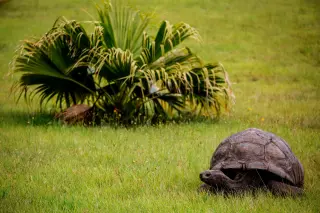
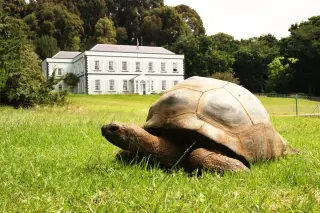
Genome Sequencing of 194-Year-Old Tortoise Jonathan Reveals Cellular Secrets
science1 month ago

Genome Sequencing of 194-Year-Old Tortoise Jonathan Reveals Cellular Secrets

A new study published in Science Advances has sequenced the genome and epigenome of Jonathan, a 194-year-old Aldabra giant tortoise residing on St. Helena. Researchers identified 287 gene variants linked to DNA repair and inflammation reduction, noting that his mitochondrial health remains remarkably stable despite his age. While the findings offer potential insights for human anti-aging treatments, experts caution that the data from a single animal is limited and that the primary secret to his longevity is simply being a giant tortoise.

Genetic Analysis of 194-Year-Old Tortoise Jonathan Reveals Stable Mitochondrial Gene Regulation
science1 month ago

Genetic Analysis of 194-Year-Old Tortoise Jonathan Reveals Stable Mitochondrial Gene Regulation

Researchers have analyzed the DNA and epigenome of Jonathan, the 194-year-old Aldabra giant tortoise, finding 287 unique gene variants that suppress aging. A key discovery is that chemical tags regulating his mitochondria remain as orderly as those in young tortoises, suggesting a feedback loop that maintains cellular energy production and DNA repair. Published in Science Advances, the study offers insights into extreme longevity, though experts note the findings require further validation to confirm causality.