
New Geophysical Data Suggests Hidden Chambers Behind Tutankhamun’s Tomb
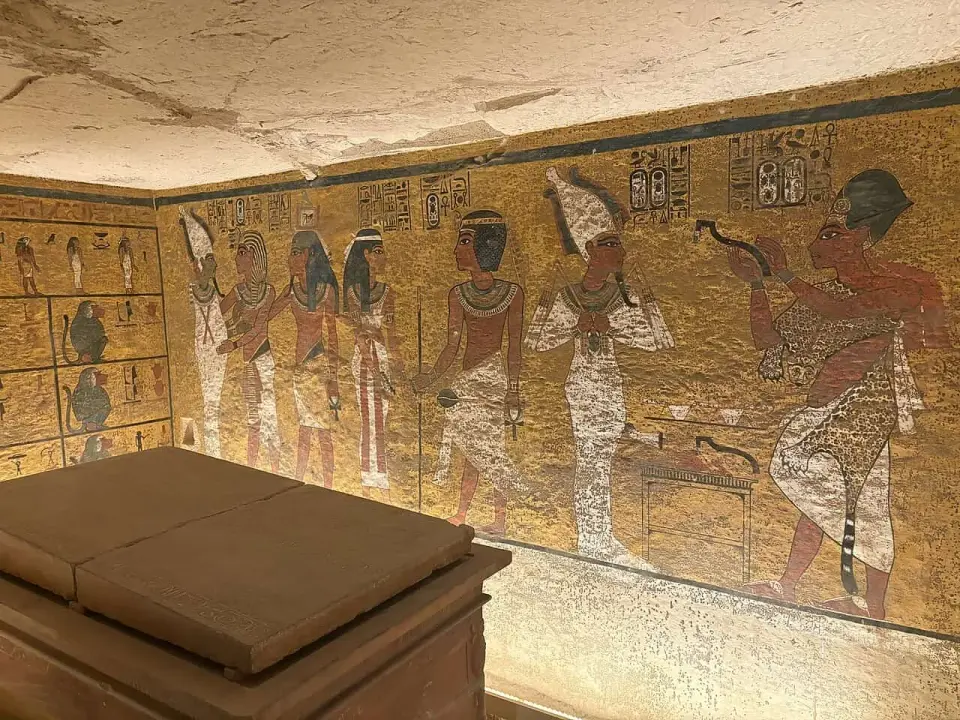
A new study combining radar, gravity, and electrical surveys suggests hidden chambers extend north of Tutankhamun’s tomb. Researchers believe these spaces may contain the burial of Nefertiti, though physical excavation remains prohibited.
Key points
- A new study published in the Occasional Papers of the Amarna Royal Tombs Project suggests hidden chambers extend 25 to 30 meters north of KV62.
- The research uses ground-penetrating radar, electrical surveys, and gravity measurements to map potential voids behind the tomb’s walls.
- British Egyptologist Nicholas Reeves argues KV62 was originally designed for a queen, likely Nefertiti, before being hastily adapted for the young pharaoh.
- Howard Carter’s 1932 investigation failed to find hidden rooms because he tested the wrong wall, according to Reeves.
- Physical excavation is forbidden in the Valley of the Kings, so researchers rely on non-invasive geophysical methods to confirm the findings.
Background
The search for Nefertiti’s tomb has been a major archaeological debate since 2015, when Nicholas Reeves proposed that KV62 was originally built for her. Previous radar surveys yielded mixed results, and a 2022 study claiming to find structures in the Great Pyramid was retracted for methodological errors. Our earlier coverage in September 2026 noted that while new analysis suggests a royal extension, the evidence remains non-definitive and geophysical methods are still debated.
How outlets are covering it
ZME Science and News.com.au both emphasize the potential for a major discovery, with News.com.au quoting former antiquities minister Mamdouh Eldamaty as calling it potentially the most transformative find since 1922. Popular Mechanics focuses on the scientific uncertainty, noting that ground-penetrating sensors are a young science prone to false positives. While ZME Science highlights the specific dimensions of the potential chambers, News.com.au provides broader historical context on Nefertiti’s life and the political erasure of her memory by Theban priests.
Why it matters
Confirming hidden chambers behind KV62 would resolve a decade-long debate about Nefertiti’s burial and provide new insights into the Amarna period. It would also validate the use of advanced geophysical techniques in archaeology, potentially changing how researchers approach other sealed ancient sites without invasive excavation.
What to watch
Researchers will likely continue refining geophysical data to build a more reliable model of the tomb’s structure. If the evidence becomes strong enough, authorities may consider limited, controlled excavation or further non-invasive testing to confirm the presence of a royal funerary complex.
- Hidden Chambers Near King Tut’s Tomb Could Lead to Nefertiti ZME Science
- King Tut’s Tomb Is Too Small for a Pharaoh. Scientists Say Something Is Hidden Behind Its Walls. Popular Mechanics
- Tutankhamun’s Tomb May Be Hiding Nefertiti’s, Researchers Believe People.com
- New scans point to possible hidden chambers beyond Tutankhamun’s tomb, supporting Nefertiti hypothesis Archaeology News Online Magazine
- King Tut theory could change everything News.com.au
Want the full story? Read the original reporting
Read on ZME Science