
Study Finds Earth’s Cryosphere Has Exited Its Safe Operating Space
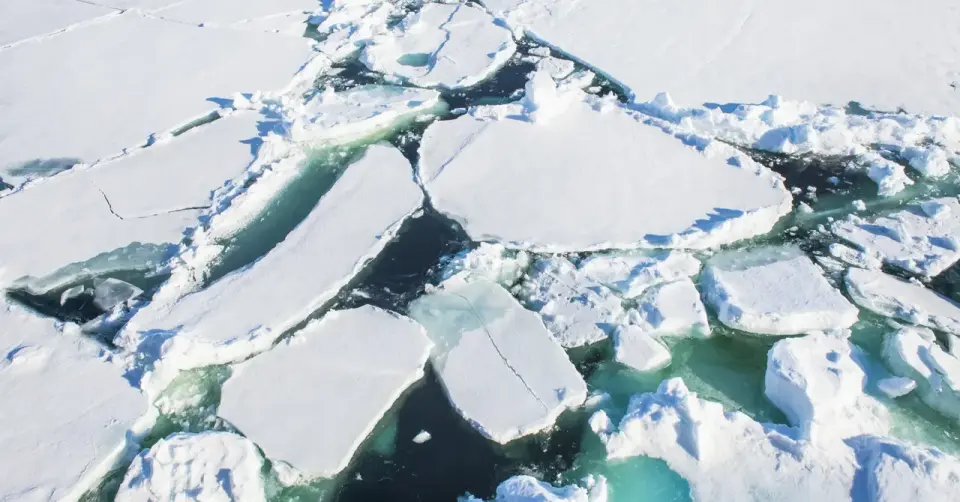
A new study in Science concludes that the world’s frozen systems, known as the cryosphere, have moved beyond their safe operating space. Researchers found that sea ice, snow cover, and permafrost have already crossed critical thresholds defined by the stable conditions of the past 12,000 years. While land ice remains within limits, it is on the brink of collapse. The findings warn that these changes are accelerating and partly irreversible, posing significant risks to global stability, sea levels, and carbon cycles.
Key points
- The study, led by the Stockholm Resilience Centre and involving over 30 scientists, analyzes four key variables: land ice volume, sea ice area, snow cover, and permafrost temperature.
- Sea ice and snow cover have already fallen outside their historical safe ranges, with losses equivalent to 7.8 and 6.8 times the size of California, respectively.
- Permafrost temperatures have risen 0.8 degrees Celsius beyond baseline variability, and committed future loss exceeds the baseline by 2.6 times the size of California.
- Land ice has not yet breached the threshold, but committed losses would push it beyond the Holocene baseline by a volume equivalent to 490 billion liters of water.
- The West Antarctic Ice Sheet is nearing irreversible decline, with potential to raise sea levels by 11 feet if it fully collapses.
- The findings coincide with COP31 in Antalya, Türkiye, where leaders are urged to prioritize rapid fossil fuel phase-outs to prevent further destabilization.
Background
This report arrives amid the UN Decade of Action for Cryospheric Sciences (2025–2034) and follows recent studies highlighting the West Antarctic Ice Sheet’s vulnerability to ocean warming. Earlier research also indicated that human emissions halted a natural glacial period that began 2,000 years ago, underscoring the profound impact of anthropogenic warming on Earth’s natural cycles.
How outlets are covering it
WIRED emphasizes the concept of a 'safe operating space' and the risk of triggering Earth system tipping points, noting that geoengineering proposals exist but do not address the root cause of fossil fuel use. Gizmodo highlights the specific metrics of loss, comparing them to the size of California, and stresses the urgency of cutting emissions to avoid irreversible impacts. The Potsdam Institute for Climate Impact Research (PIK) frames the cryosphere as a critical component of planetary boundaries, warning that its degradation threatens freshwater resources and global climate stability, and calls for precautionary policies at COP31. All sources agree that the cryosphere is in a state of accelerating decline, but they differ in emphasis: WIRED focuses on the irreversible nature of the loss, Gizmodo on the scale of the deviation, and PIK on the systemic risks to human civilization.
Why it matters
The cryosphere regulates Earth’s energy, water, and carbon cycles. Its destabilization threatens to release trillions of tons of carbon dioxide and methane, accelerating global warming. It also risks disrupting ocean currents, such as the conveyor belt that moderates European temperatures, and could lead to significant sea-level rise, affecting coastal communities worldwide. The findings underscore the need for immediate and decisive climate action to prevent further irreversible damage.
What to watch
Global leaders at COP31 are expected to debate strategies to rapidly phase out fossil fuels and cut greenhouse gas emissions. Some researchers are exploring geoengineering options, such as glacial blankets or cold water pumping, but these are not substitutes for emissions reductions. The study’s findings may influence future climate policies and the integration of cryosphere safety into the planetary boundaries framework.
- Climate Change Abolishes Ice WIRED
- Earth's Frozen Systems Have Crossed an Alarming Threshold Gizmodo
- Cryosphere decline beyond a planetary safe operating space, putting conditions for human society at risk Potsdam Institute for Climate Impact Research
- Melting ice: Safe operating space likely exceeded Table.Briefings
- Frozen Parts Of The Planet Degrading Beyond Safe Limits, Study Warns Yahoo
Want the full story? Read the original reporting
Read on WIRED