
MI5 Chief: State Threats Surpass Cold War Levels as AI and Foreign Espionage Escalate
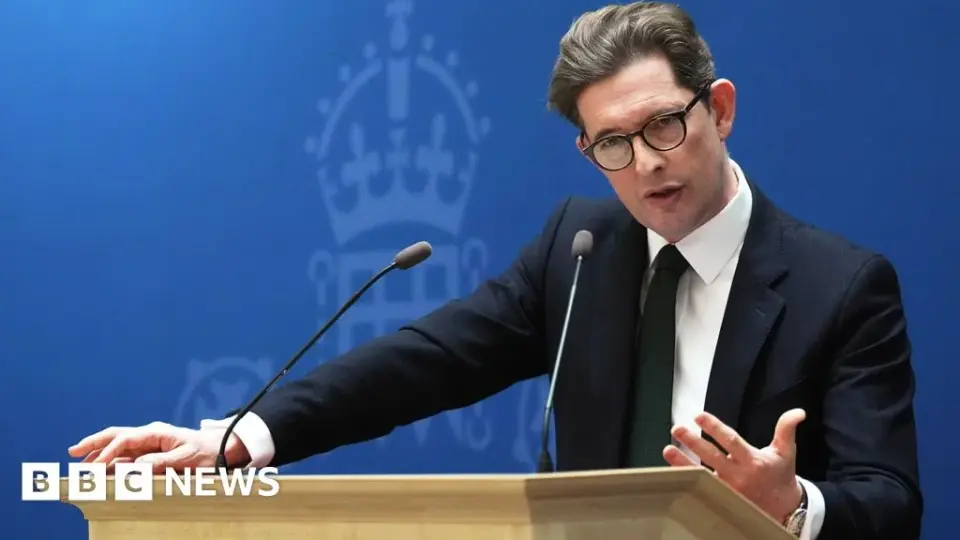
MI5 Director General Sir Ken McCallum stated that state threats have quadrupled in a decade, now matching terrorism in scale. He identified Russia as the primary aggressor, noting its reliance on paid proxies after UK expulsions. Iran is expanding hybrid campaigns, including 50 recent arrests. AI is emerging as a critical risk, particularly for bioweapons and radicalization, while the UK’s 2023 National Security Act is actively countering Chinese espionage.
Key points
- State threats have quadrupled over the last decade, now equaling terrorism in operational scale for MI5.
- Russia is labeled 'aggressor number one,' relying on paid criminals after nearly 1,000 spy expulsions from the UK.
- Iran-linked activities led to 50 arrests in the past year, targeting Jewish communities and military sites.
- AI is supercharging cybersecurity contests and enabling tailored propaganda, with concerns about AI-enabled bioweapons.
- The 2023 National Security Act is heavily utilized to counter threats from China, Iran, and Russia.
Background
In September 2026, McCallum warned that a 9/11-scale attack might be forming out of sight. In October 2026, MI5 issued a rare public alert regarding the China General Technology Research Institute, claiming it was a front for Chinese espionage in AI research, leading to calls for universities to sever ties. This follows broader geopolitical tensions where China dismissed AI safety warnings as Cold War tactics, while the UK raised its terrorism threat level to severe in April 2026.
How outlets are covering it
The BBC reports that MI5 is devoting more resources to state threats than during the Cold War, with McCallum emphasizing Russia's hybrid warfare and Iran's expansion. The secondary source from the U.S. Department of State is inaccessible, but its URL suggests a joint statement regarding Iran's involvement in an attempted attack at RAF Fairford, a detail McCallum did not explicitly confirm in his speech but acknowledged as part of broader Iranian aggression. The BBC highlights the use of the 2023 National Security Act against China, aligning with earlier MI5 alerts about Chinese espionage in AI research, whereas the archive notes China's dismissal of such warnings as fabricated or Cold War tactics.
Why it matters
The escalation in state threats and the integration of AI into espionage and terrorism pose significant risks to UK national security. The reliance on paid proxies by Russia and the expansion of Iranian hybrid campaigns indicate a shift in adversarial tactics. The potential for AI to enable bioweapons and tailored radicalization requires proactive measures from intelligence agencies and international cooperation to mitigate emerging threats.
What to watch
MI5 and other intelligence agencies will continue to monitor and counter state threats, particularly from Russia, Iran, and China. The UK may further utilize the 2023 National Security Act to address espionage and foreign interference. International cooperation, including with the AI Security Institute, will be crucial in addressing AI-related risks. The UK government may also review partnerships with foreign entities, particularly in AI and cybersecurity, to prevent espionage.
- MI5 tackling more state threats than during Cold War, warns intelligence chief BBC
- Iran and Russia ramping up hybrid campaigns in Britain, UK spy chief says Reuters
- MI5 Chief Warns of Growing Iranian and Russian Threats to U.K. The New York Times
- Joint Statement on the United Kingdom’s Attribution of Iran’s Involvement in Attempted Terrorist Attack at RAF Fairford U.S. Department of State (.gov)
- MI5 chief says Iran is targeting military sites and suspected plot at RAF Fairford is ‘not unique’ The Hill
Want the full story? Read the original reporting
Read on BBC