
UK Intelligence Warns Defense Firms of Russian Sabotage Threats
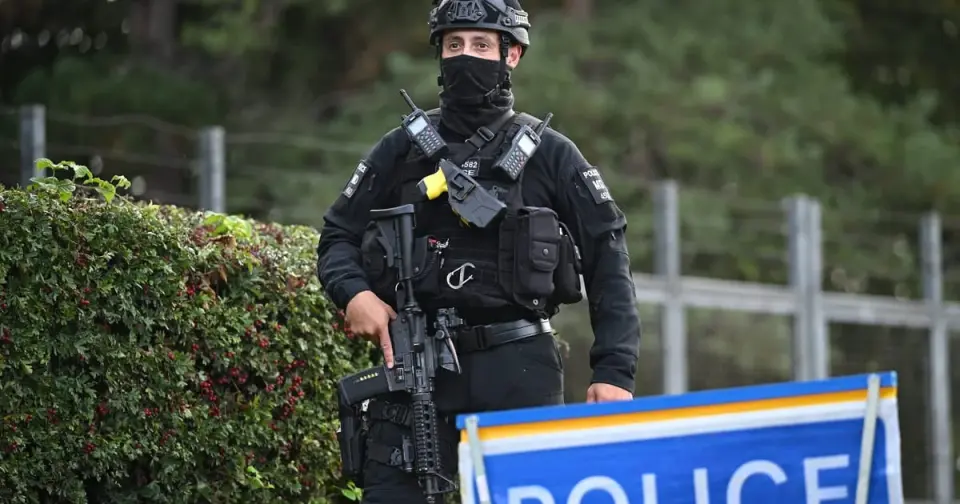
British intelligence agencies have issued a joint alert urging UK defense companies supporting Ukraine to immediately strengthen physical and digital security against Russian sabotage. The warning follows a surge in arson and espionage attempts across Europe targeting defense-related facilities. Officials advise firms to reduce their online footprint, secure site perimeters, and train staff to recognize suspicious activity, citing a goal by Moscow to undermine support for Kyiv.
Key points
- MI5's National Protective Security Authority (NPSA) and the Ministry of Defence issued a joint alert on November 24, warning that Russia has increased sabotage attempts against European defense facilities, primarily through proxies using low-sophistication methods like arson.
- The alert specifically targets companies providing material support or equipment to Ukraine's armed forces, advising them to remove unnecessary details about products, facilities, and staff roles from public websites and social media to hinder hostile reconnaissance.
- Officials recommended physical security measures, including visible CCTV, secure entrances, and robust access controls, while also urging staff to avoid predictable routines and remain alert to their surroundings to prevent targeting by Russian intelligence or proxies.
- The warning follows recent incidents, including a September charge against a British man accused of plotting with Russia's GRU to sabotage drone factories, and an August arson attack on an Estonian defense company. Estonia is set to close all border crossings with Russia on December 1 after disrupting another attack.
- The Associated Press has tracked over 210 Russia-linked sabotage incidents in Europe since the 2022 invasion, including arson, espionage, and cyberattacks. MI5 Director-General Ken McCallum warned in October that Russia is escalating hybrid warfare tactics that stop short of conventional conflict.
Background
This alert follows a broader trend of rising Russian hybrid threats in Europe, including a September 2026 plot in the UK involving a Swindon man accused of assisting Russia's GRU to sabotage drone factories. Swindon, dubbed the UK's 'drone capital,' hosts Europe's largest drone testing center and the British HQ of American drone maker Neros Technologies. In October 2026, MI5 chief Ken McCallum warned of escalating threats from Iran and Russia, noting that state threats have quadrupled in a decade. The UK government had also begun private briefings with defense CEOs in late September 2026, ahead of this public alert.
How outlets are covering it
While all sources confirm the NPSA and Ministry of Defence issued a joint alert on November 24, they differ in emphasis. POLITICO and BBC highlight the private meetings with CEOs and the specific advice to remove online information and avoid predictable routines. Breaking Defense focuses on the joint alert's PDF details, stressing the use of 'low-sophistication sabotage methodologies' like arson and the need for a 'security-conscious workforce.' AP News provides broader context, noting over 210 tracked incidents in Europe since 2022 and highlighting the Estonian border closure on December 1. BBC also includes a perspective from Gen Sir Richard Barrons, who called the threat 'significant but not new' and stated that while there is an 'uptick,' the UK is 'not expecting an epidemic' and the actions are 'not strategic' threats to Europe's security. Foreign Secretary Ed Miliband, however, warned that threats from Russia are aimed at deterring UK support for Ukraine and 'must not' succeed.
Why it matters
The alert underscores the escalating risk of Russian hybrid warfare in Europe, targeting the defense supply chain to undermine support for Ukraine. It highlights the vulnerability of critical infrastructure and the need for proactive security measures by private firms. The surge in incidents, including arson and espionage, signals a shift in Russian tactics that could have broader implications for European security and defense cooperation.
What to watch
The UK government is scheduled to hold closed-door threat briefings with critical national infrastructure and defense sector CEOs in Whitehall on Tuesday and Wednesday, November 24-25, 2026. Estonia is set to close all its border crossings with Russia on December 1, 2026, following the disruption of another attack on an Estonian defense company. Companies are expected to implement the recommended security measures, including reducing online footprints and enhancing physical security, in the coming weeks.
- MI5 warns UK defense firms they are target of Russian attacks POLITICO.eu
- UK warns of Russian sabotage threat to companies that supply Ukraine Reuters
- UK’s MI5 warns local defense firms of Russian sabotage risk Breaking Defense
- Businesses supporting Ukraine told to 'act now' to protect against Russian sabotage BBC
- British officials warn UK firms aiding Ukraine to brace for Russian sabotage attempts AP News
Want the full story? Read the original reporting
Read on POLITICO.eu