
China's Long March 7A fails in flight, raising concerns over shared YF-100 engine
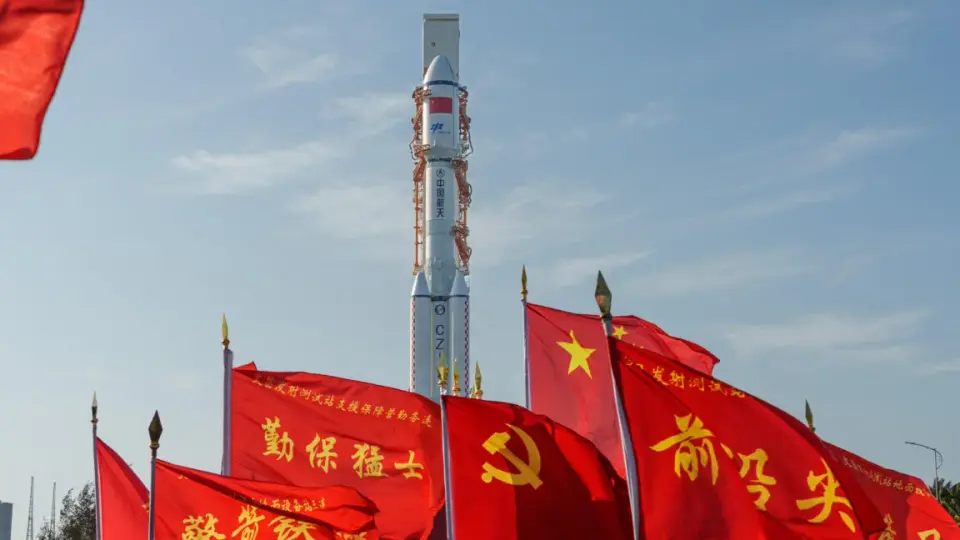
A Chinese Long March 7A rocket exploded approximately 85 seconds after liftoff from the Wenchang Space Launch Site on August 10, 2026. The failure occurred during the first-stage flight, likely near maximum dynamic pressure. While the payload is classified, it is believed to be a military communications satellite. The incident marks the second failure for this rocket variant and has raised concerns about the YF-100 engine, which powers multiple other Chinese launch vehicles.
Key points
- The Long March 7A exploded about 85 seconds after launch from Wenchang, Hainan, on August 10, 2026.
- The failure occurred during the first-stage flight, likely around the time of maximum dynamic pressure.
- The payload is classified but is believed to be a military communications satellite.
- This is the second failure for the Long March 7A, which has flown 18 times total.
- The YF-100 engine, which powers the Long March 7A, is also used in up to nine other Chinese rockets, including the Long March 5 and 8.
- A potential engine issue could delay the Chang'e 7 lunar mission, scheduled to launch on a Long March 5 rocket in about two weeks.
Background
China's state-operated launch industry has expanded significantly in the last five years, reaching 50 or more annual launches with only a handful of failures. The Long March 7A is a medium-lift rocket developed by the China Aerospace Science and Technology Corporation (CASC) and operated by the state's space agency. It is used for various tasks, including communications satellite launches and boosting the Tianzhou cargo spacecraft to the Chinese space station. The YF-100 engine, fueled by liquid oxygen and kerosene, has a thrust of 270,000 pounds at sea level and has powered the Long March 7 and 7A for the last decade. China has also been developing new rockets, such as the Long March 10, which use modified variants of the YF-100 technology.
How outlets are covering it
Ars Technica emphasizes the potential broader implications for China's space program if the failure is due to the YF-100 engine, noting that it powers up to nine other rockets and could delay the Chang'e 7 lunar mission. SpaceNews focuses on the loss of an unknown payload and the amateur footage confirming the explosion less than 90 seconds into flight. India Today highlights that this is only the second failure for the Long March 7A, giving it a relatively high success rate, and notes that the cause is under investigation. Aviation Week confirms the failure as a rare setback for China's launch operations and notes that the first stage is powered by two YF-100 engines.
Why it matters
The failure of the Long March 7A could have significant implications for China's space program, particularly if it is related to the YF-100 engine, which is widely used across multiple rocket types. A delay or failure of the Chang'e 7 lunar mission, which aims to explore the South Pole of the Moon, could impact China's competitive position against NASA in lunar exploration. The incident also highlights the inherent risks of orbital launch operations, even for mature rockets, and will likely lead to a closely watched investigation to prevent future failures.
What to watch
Investigators are expected to analyze telemetry and data from the vehicle to determine the cause of the failure. China's state officials have not yet commented on the explosion. If the issue is engine-related, it could delay the Chang'e 7 lunar mission, which is scheduled to launch on a Long March 5 rocket in about two weeks. The investigation will be closely watched by China's space industry as engineers seek to identify the cause and prevent a repeat during future Long March 7A missions.
- One of China's workhorse rockets just exploded in flight Ars Technica
- Chinese Long March 7A rocket explodes shortly after liftoff SpaceNews
- China says Long March 7A rocket launch failed after flight anomaly Reuters
- Watch: China's Long March 7A rocket explodes just 85 seconds after launch India Today
- China Long March 7A Suffers Launch Failure Aviation Week
Want the full story? Read the original reporting
Read on Ars Technica