
Total Failure of Russia's Second Rassvet Satellite Batch Highlights Starlink Rival's Deepening Crisis
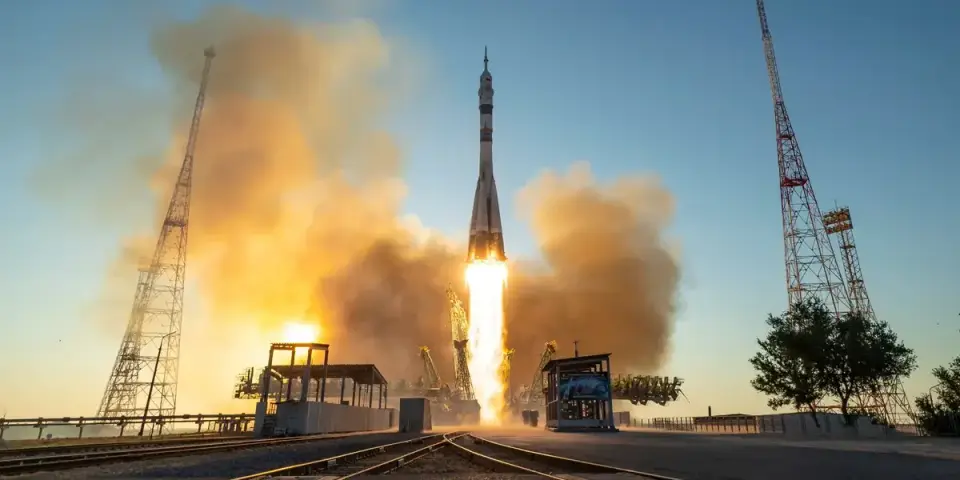
All 16 Rassvet-3 satellites launched by Russia in July failed to reach their intended operational altitude, marking a significant setback for Moscow's attempt to build a Starlink alternative. While the first batch saw partial success, the total failure of the second batch, combined with limited launch capacity and Ukrainian strikes on infrastructure, suggests Russia will face major delays in achieving stable satellite coverage for military use.
Key points
- The 16 Rassvet-3 satellites launched on July 19, 2026, failed to reach their target orbit of approximately 500-550 miles (800-870 km), instead remaining at 190-250 miles (300-400 km) or decaying.
- This total failure contrasts with the first batch of 16 Rassvet satellites launched in March, where 12 successfully reached and maintained an altitude of about 340 miles (550 km).
- The overall success rate for the Rassvet program is currently 37.5%, with only 12 of the 32 launched satellites reaching sustainable operational altitudes, compared to SpaceX's 3% failure rate for Starlink.
- Russia's reliance on the scarce Soyuz-2.1b rocket limits its launch capacity to roughly 6-8 missions per year, making it impossible to rapidly deploy the 200-250 satellites needed for stable coverage.
- Ukrainian strikes on the Progress Space Rocket Center and Plesetsk Cosmodrome in August 2026 have further threatened Russia's ability to produce and launch the necessary hardware.
Background
Russia's Rassvet program was accelerated after SpaceX cut off satellite internet service to Russian forces in February 2026. Previous coverage indicated that the first batch of Rassvet satellites also struggled to reach the original 800 km target, with most settling at lower altitudes. The current failure of the second batch confirms a pattern of technical and logistical challenges in building a viable alternative to Starlink's 11,000-satellite network.
How outlets are covering it
Business Insider and Kyiv Post emphasize the total failure of the second batch as a major setback, citing ISW analysis that Russia was unprepared for the accelerated deployment pace. Euronews highlights the strategic threat, noting that even a partially functioning constellation could allow Russia to conduct more precise drone strikes during limited connectivity windows. All sources agree on the critical bottleneck of the Soyuz-2.1b rocket and the impact of Ukrainian strikes on launch infrastructure. Business Insider provides specific altitude data (190-250 miles), while Euronews and Kyiv Post cite slightly different ranges (300-400 km), likely due to different tracking times or satellite subsets.
Why it matters
The failure of the Rassvet-3 batch underscores the difficulty Russia faces in replacing Starlink, a critical tool for its military operations in Ukraine. The limited launch capacity and technical failures mean Moscow may not achieve stable, around-the-clock satellite coverage for years, potentially impacting its ability to coordinate drone and missile strikes. This also highlights the vulnerability of Russia's space program to Ukrainian counter-strikes on its launch infrastructure.
What to watch
Russia will likely face further delays in deploying its Rassvet constellation, with ISW predicting that it may take more than two years to reach a minimum of 200 operational satellites, assuming all launches succeed. Ukrainian forces may continue to target Russian space infrastructure to further disrupt the program. The 12 operational satellites from the first batch will continue to provide limited connectivity windows for Russian forces, but a fully functional network remains out of reach.
- All 16 of Russia's latest satellites for its Starlink rival failed to reach their intended orbit Business Insider
- Russia's Starlink copycat has failed so far but still threatens Ukraine Euronews.com
- Russia's Rossvest Starlink Alternative Is Already Losing Satellites to Accidental Reentry Yahoo
- Russia’s Starlink Rival Falters as Entire Satellite Batch Misses Target Altitude Kyiv Post
- Russia’s Race to Replace Starlink Is Failing Newsweek
Want the full story? Read the original reporting
Read on Business Insider