
Xi Jinping Launches BRICS AI Open-Source Initiative at New Delhi Summit
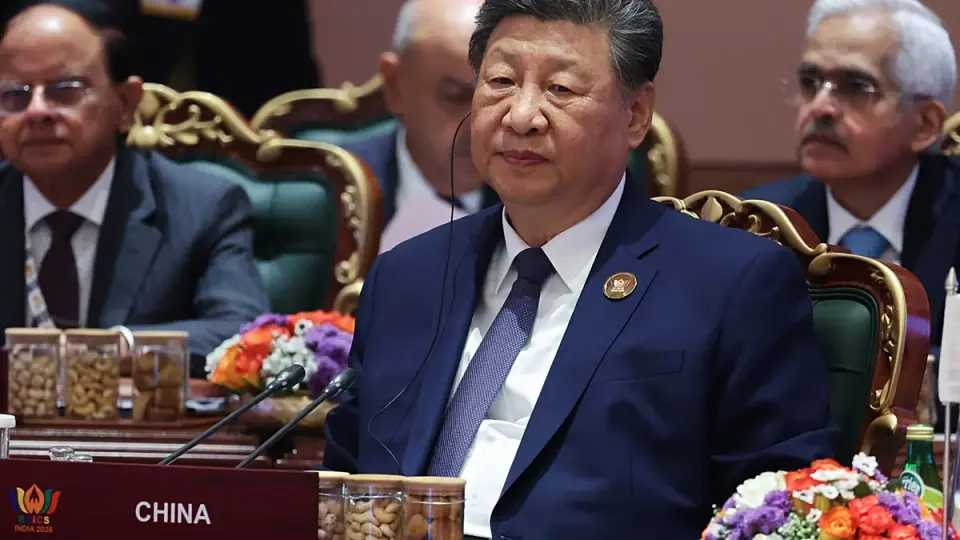
At the 18th BRICS Summit in New Delhi, Chinese President Xi Jinping announced a new initiative to establish an open-source AI zone for member nations. The plan includes creating a digital cloud platform, training programs, and a youth exchange alliance to foster technological cooperation among emerging economies. Xi framed this move as a counter to Western 'closed-door' approaches and supply chain decoupling, emphasizing inclusivity and shared development. While the proposal highlights China’s growing influence in AI, it notably omitted specific commitments to AI safety regulations, a topic currently dominating global discourse.
Key points
- Xi Jinping proposed a 'BRICS initiative of AI-empowered new industrialization' during the 18th BRICS Summit in New Delhi on September 12, 2026.
- The initiative includes establishing an open-source AI community, a digital ecosystem cloud platform, and specialized research and training centers for member states.
- China aims to support the development and application of large language models, positioning its open-source models as an alternative to US closed-door approaches.
- Additional proposals include a BRICS engineer cultivation alliance and a youth exchange program for scientific and technological innovation.
- Xi called for a consensus-based global AI governance framework, though he did not address current debates regarding AI safety risks or superintelligence concerns.
Background
BRICS, originally founded in 2009, has expanded to include 11 nations, including China, Russia, India, Brazil, South Africa, Egypt, Ethiopia, Indonesia, Iran, Saudi Arabia, and the UAE. The bloc seeks to challenge Western dominance in global institutions. Recent diplomatic efforts, including Xi’s first visit to India in seven years, have signaled a cautious thaw in India-China relations, despite ongoing border tensions. This summit marks the 20th anniversary of BRICS cooperation, with China set to assume the chairship next year.
How outlets are covering it
Euronews emphasized the contrast between China’s open-source AI models and US closed-door approaches, highlighting Xi’s call for a global governance framework. CNBC focused on the practical aspects of the proposal, including the digital cloud platform and training programs, while noting the absence of AI safety discussions. The Chinese Ministry of Foreign Affairs provided the full text of Xi’s speech, framing the initiative as part of a broader strategy to counter 'small yard, high fences' policies and promote multipolar global governance. All sources agree on the core proposals but differ in emphasis: Euronews and CNBC highlight the technological and geopolitical implications, while the official statement frames it as a moral and strategic imperative for the Global South.
Why it matters
This initiative signals China’s intent to lead global AI development through open-source collaboration, potentially reshaping the balance of power in technology. By offering an alternative to US-dominated closed systems, China may attract developing nations seeking affordable, adaptable AI solutions. However, the lack of focus on AI safety could raise concerns among Western observers. The move also reflects broader geopolitical shifts, as BRICS nations seek to reduce dependence on Western institutions and supply chains. For the US, this presents a challenge in maintaining technological leadership and influencing global AI standards.
What to watch
China is expected to take the BRICS chairship next year, hosting the 19th Summit. The implementation of the AI open-source zone and related programs will likely be a key agenda item. Xi is also scheduled to visit the United States this month for talks with President Donald Trump, where AI governance may be a central topic. The success of the initiative will depend on the willingness of BRICS members to adopt Chinese-led frameworks and the extent to which they can counter US technological influence.
- China's Xi Jinping proposes BRICS 'open-source AI zone' Euronews.com
- Xi says China will take lead to foster AI, tech cooperation among BRICS countries CNBC
- Xi-Modi Thaw at BRICS Masks Deep Divisions Between Asian Rivals Bloomberg.com
- Xi pushes 'Greater BRICS' economic ties to give bloc larger global role Reuters
- Jointly Shouldering the Responsibility of the Times and Striving to Be a Pioneering Force fmprc.gov.cn
Want the full story? Read the original reporting
Read on Euronews.com