
Pope Leo XIV Urges AI 'Disarmament' and Human Oversight at Vatican Conference
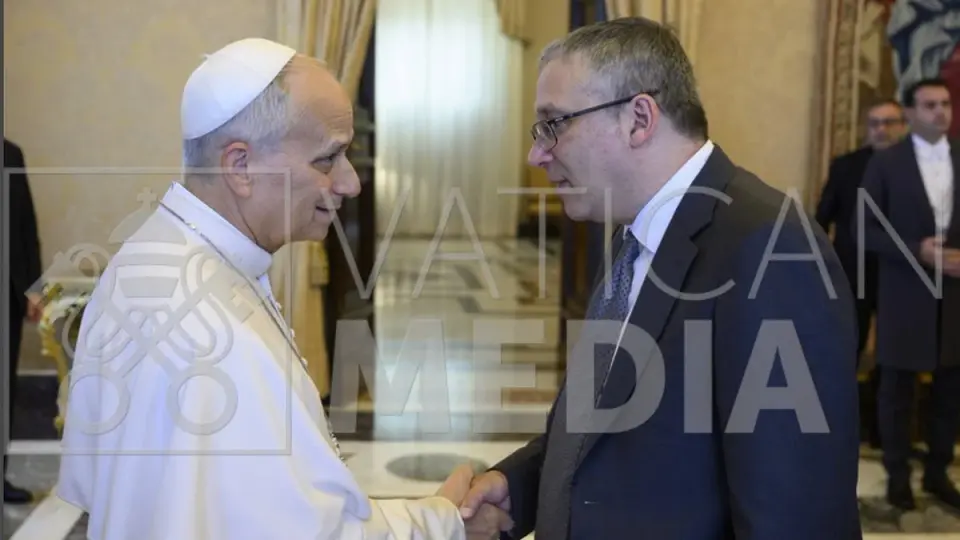
Pope Leo XIV addressed a Vatican conference on October 30, 2026, emphasizing that AI must remain a tool rather than a legal person. He called for the 'disarmament' of AI, specifically urging nations to ban lethal autonomous weapons at upcoming Geneva talks. The Pope stressed that AI development must serve the common good and be governed by international institutions to ensure human oversight, aligning with his encyclical 'Magnifica Humanitas.'
Key points
- Pope Leo XIV stated that AI systems are tools, not persons, and should not be granted legal personhood or rights, as this obscures human responsibility.
- The Pope called for the 'disarmament' of AI, urging states to take concrete steps toward banning lethal autonomous weapons during November meetings in Geneva.
- He emphasized that decisions affecting human life, freedom, and force must remain under effective human oversight, prioritizing reliability over raw power.
- Leo argued that AI development should serve the common good, ensuring equitable access to benefits rather than serving only privileged groups.
- The Pope called for robust international institutions with shared standards and accountability mechanisms to regulate AI development and usage.
Background
This address follows Pope Leo XIV's May 2026 encyclical 'Magnifica Humanitas,' which outlined ethical guidelines for AI. The Pope has previously warned against AI becoming an 'instrument of domination' and has continued the stance of his predecessor, Pope Francis, who called for a ban on autonomous weapons in 2024. The event was organized by the Pontifical Academy for Life and the Future of Life Institute, featuring discussions with scholars and industry figures.
How outlets are covering it
Gary Marcus, a cognitive scientist and Global Ambassador for the Pope’s encyclical, praised the Pope as the clearest thinker on AI among world leaders. Marcus argued that current AI systems are 'unequally skilled,' excelling at prediction but failing at reasoning and instruction-following. He compared unsafe AI agents to 'Ford Pintos' and urged a product recall, stating that the industry is on an 'untenable path.' Stuart Russell, a computer science professor, agreed that the current trajectory is dangerous, warning that super-development could lead to human extinction. Max Tegmark, a physicist, supported the Vatican’s moral leadership in steering AI toward a pro-human path. Conversely, President Donald Trump has taken a more optimistic stance, signing an executive order to replace 'AI' with 'super intelligence' in federal communications, reflecting a different view on the technology's potential.
Why it matters
The Pope’s intervention highlights a growing global debate over AI safety and regulation. His call for international institutions and a ban on lethal autonomous weapons adds moral weight to ongoing policy discussions, particularly ahead of the Seventh Review Conference of the Convention on Certain Conventional Weapons in Geneva. The event underscores the tension between rapid technological advancement and the need for ethical safeguards, influencing how governments and institutions approach AI governance.
What to watch
The Seventh Review Conference of the Convention on Certain Conventional Weapons is scheduled for November 2026 in Geneva, where states will discuss banning lethal autonomous weapons. The Vatican and its allies, including Gary Marcus and other scholars, will likely continue to advocate for international AI regulations and ethical standards. The AI industry may face increased pressure to address safety concerns, particularly regarding open-ended AI agents with internet access, as critics call for product recalls or stricter oversight.
- Report from the Vatican Marcus on AI | Substack
- Pope on AI: Decisions affecting human life must never be delegated Vatican News
- Pope Leo XIV: AI can never be a person; its future depends on our choices EWTN News
- Pope Leo says AI "must be disarmed" ahead of autonomous weapons talks Yahoo
- Pope Leo calls for the disarmament of AI: ‘Machines are tools, not persons’ The Verge
Want the full story? Read the original reporting
Read on Marcus on AI | Substack