
AI Decodes Napoleon's 1809 Cipher in Six Hours
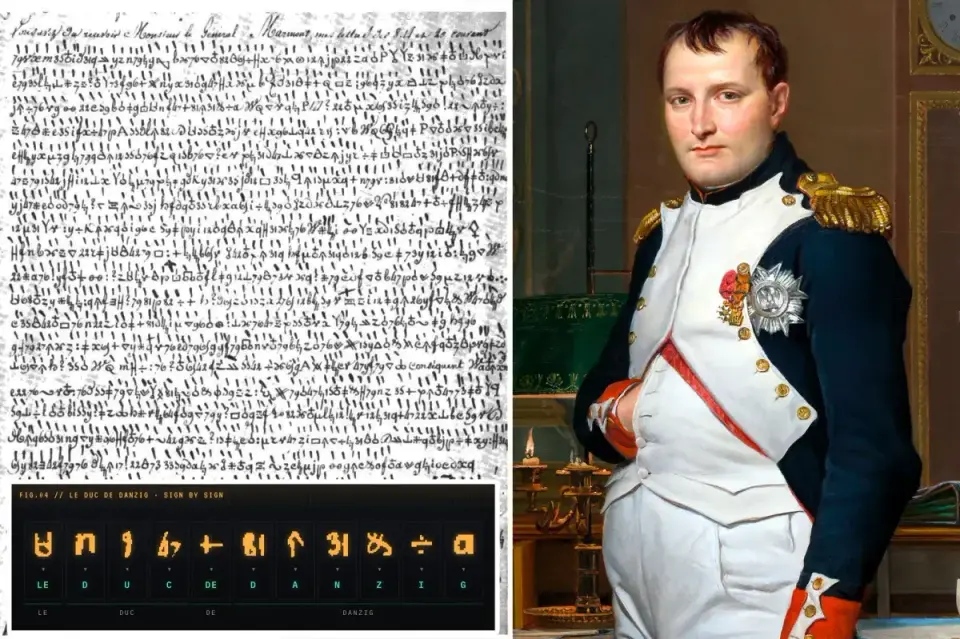
Carter Church, a cybersecurity engineer, used OpenAI's GPT-6 Astra to decipher a coded military letter from 1809 in six hours. The letter, sent by Napoleon's stepson to General Marmont, outlined troop positions and urged the general not to be intimidated by his isolation. Church published the solution and code on September 18, 2026, allowing others to verify the result. The decipherment confirms the letter's date and content, which had been lost for 217 years.
Key points
- Carter Church, an engineer at SentinelOne, used OpenAI's GPT-6 Astra to decipher a coded letter from 1809 in six hours.
- The letter was sent by Napoleon's stepson, Eugene de Beauharnais, to General Auguste de Marmont in March 1809.
- The letter outlined troop positions and urged Marmont not to be intimidated by his isolation in Dalmatia.
- Church published the solution and code on September 18, 2026, allowing others to verify the result.
- The decipherment confirms the letter's date and content, which had been lost for 217 years.
Background
This story follows our earlier coverage of AI's expanding applications in historical research and archival analysis. The use of AI to solve complex, long-standing historical puzzles highlights the technology's potential beyond modern tech sectors.
How outlets are covering it
The New York Post emphasizes the speed and ease of the decipherment, noting that the cipher itself was not particularly challenging. Euronews highlights the end-to-end workflow, including transcribing the image, analyzing the homophonic substitution cipher, and cross-referencing historical records. RuntimeWire focuses on the reproducibility of the result, noting that Church published the key, transcription, and script to allow others to check the proposed reading. The Telegraph was inaccessible due to a security issue.
Why it matters
This story demonstrates the expanding applications of AI in historical research and archival analysis. The ability to decipher a 217-year-old cipher in six hours highlights the technology's potential to solve complex, long-standing historical puzzles that eluded human cryptographers for over two centuries.
What to watch
The next step is for other researchers to verify the proposed solution using the published key, transcription, and script. The story also highlights the potential for AI to be used in other areas of historical research and archival analysis.
- Napoleon’s secret code deciphered after 217 years using AI to read emperor’s mysterious letter New York Post
- Napoleon’s 217-year-old coded message ‘cracked by AI’ The Telegraph
- Napoleon’s centuries-old code cracked by AI in six hours The Times
- AI decodes 217-year-old Napoleonic letter in 6 hours Euronews.com
- GPT-6 Astra helped decode a 217-year-old cipher letter to Napoleon's marshal RuntimeWire
Want the full story? Read the original reporting
Read on New York Post