
Mantis Enthusiast Fights AI-Generated 'Slop' on iNaturalist
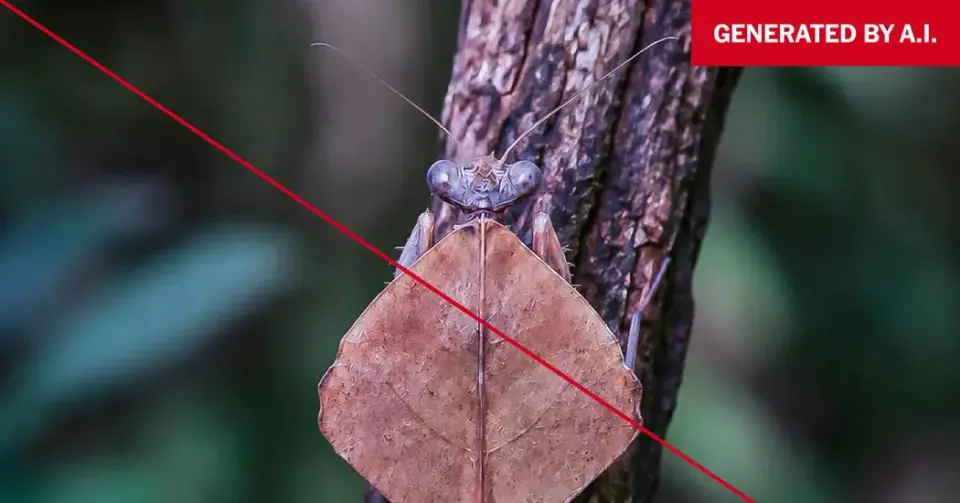
Kris Anderson, a Las Vegas-based mantis expert, spends hours daily reviewing thousands of user-submitted photos on the citizen science platform iNaturalist. While most uploads are low-quality images of common species, Anderson occasionally identifies rare behaviors or undocumented species. However, the platform is increasingly flooded with AI-generated 'slop,' making it difficult for volunteers to distinguish genuine biological data from synthetic fabrications.
Key points
- Kris Anderson, a director at a counseling center in Las Vegas, maintains a personal collection of thousands of pinned mantis specimens.
- Anderson dedicates two and a half hours each evening to reviewing 500 to 600 new mantis images uploaded to iNaturalist.
- The platform allows anyone to submit wildlife photos to help map global biodiversity, but the volume of submissions is overwhelming.
- Anderson notes that while most uploads are blurry or unremarkable, rare findings such as a mantis species on Aruba or unusual mating behaviors do emerge.
- The rise of AI-generated content, referred to as 'slop,' is complicating the verification process for citizen scientists.
- Synthetic images can mimic real specimens with high fidelity, such as a dead-leaf mantis with camouflage that appears too perfect, raising doubts about authenticity.
Background
This issue mirrors broader trends in other sectors where AI-generated content is degrading data quality. In September 2026, LinkedIn implemented filters to remove AI-generated professional posts, and arXiv capped monthly preprint submissions to manage a surge in AI-generated academic papers. These moves highlight a growing consensus that unchecked AI output threatens the integrity of user-generated knowledge platforms.
Why it matters
The infiltration of AI-generated 'slop' into citizen science platforms threatens the reliability of biodiversity data. If volunteers cannot distinguish between real and synthetic observations, the scientific value of crowdsourced datasets diminishes, potentially leading to false conclusions about species distribution and behavior.
What to watch
Citizen science platforms may need to develop new verification methods or AI-detection tools to filter out synthetic content. Volunteers like Anderson may face increasing challenges in validating data, potentially requiring stricter submission guidelines or automated screening processes to maintain data integrity.
Want the full story? Read the original reporting
Read on The New York Times