
Vigil in London Marks Jason Arday’s Death Amid Ongoing Media Debate
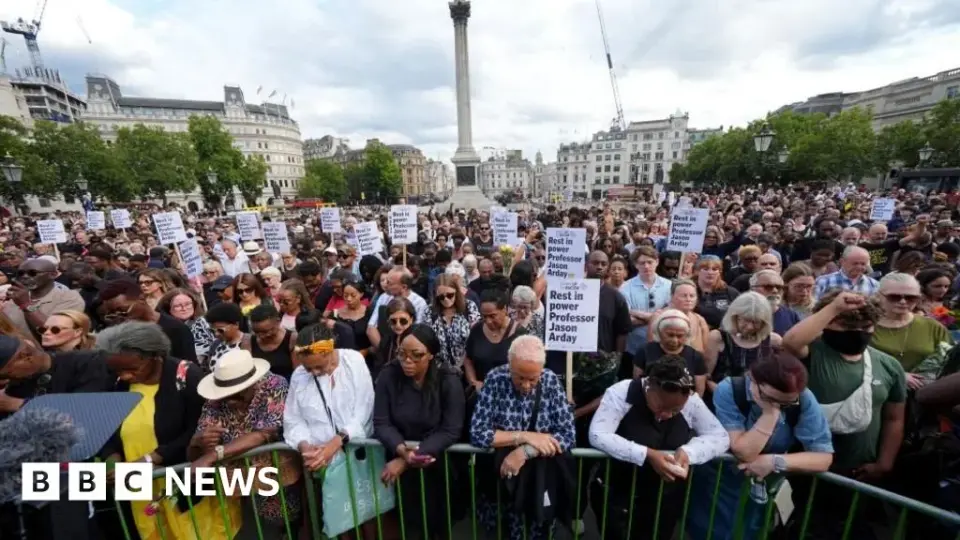
Jason Arday, Cambridge’s youngest Black professor, died at 41 after weeks of intense media scrutiny over plagiarism claims. A vigil in Trafalgar Square drew thousands, with speakers blaming a 'vicious' press campaign for his death. While supporters demand a public inquiry, critics argue his academic record was flawed. The family stated the 'public cruelty' was unbearable, and an inquest is pending to determine the cause of death.
Key points
- Arday was found dead in south London on August 14, two days after resigning from Cambridge amid plagiarism allegations.
- A vigil in Trafalgar Square drew an estimated 2,000 to 30,000 attendees, organized by Stand Up to Racism.
- Family members stated the 'public cruelty' was too much to bear, while supporters cited a 'witch hunt' by the media.
- Critics, including some academics and media figures, argued Arday’s claims were fraudulent and that his appointment was driven by diversity metrics.
- Downing Street declined to confirm a public inquiry, stating it is a 'moment for reflection,' while a coroner’s investigation is underway.
Background
Arday was appointed Cambridge’s youngest Black professor in 2023, a rare distinction given that only 1% of UK professors are Black. His appointment sparked immediate controversy from critics who alleged his rise was due to diversity initiatives rather than merit. Previous archive coverage noted widespread public grief and calls for accountability following his death, highlighting the polarized reaction to his academic career and personal history.
How outlets are covering it
Supporters, including Labour MPs Diane Abbott and Bell Ribeiro-Addy, described the media coverage as a 'vicious and bitter campaign' motivated by racism, arguing that Arday was 'hounded' to death. They cited the sheer volume of articles and the scrutiny of his personal life as evidence of a targeted attack. Conversely, critics like Julia Hartley-Brewer and The Spectator argued that Arday was a 'fraud' exposed by legitimate journalistic inquiry, dismissing the narrative of a racist witch hunt. The Atlantic highlighted the 'systemic dishonesty' in his claims, while The Guardian emphasized the failure of institutional duty of care. The family’s statement focused on the 'public cruelty' rather than the specific plagiarism details, seeking to preserve his legacy as a 'wonderful person.'
Why it matters
The case has intensified the UK debate over press ethics, racial discrimination in academia, and the role of diversity, equity, and inclusion policies. It highlights the potential psychological impact of sustained media scrutiny on public figures and has prompted calls for a public inquiry into the press's role in Arday’s death. The controversy also underscores the tension between academic integrity and the societal push for representation in higher education.
What to watch
A coroner’s investigation will determine the cause of death, potentially leading to an inquest. Downing Street has not confirmed a public inquiry but reiterated that 'usual processes' should conclude. The debate over Arday’s legacy and the media’s role is expected to continue, with supporters maintaining pressure for accountability and critics defending the scrutiny of his academic record.
- Jason Arday's family 'still coming to terms' with his death as vigil held BBC
- The debate over Jason Arday’s life continues – just as viciously – despite his death at 41 CNN
- Professor’s Death Leaves Behind Hard Questions for Cambridge on Race and Hiring The New York Times
- The Truths That Failed Jason Arday The Atlantic
- Tens of thousands pay tribute to Jason Arday at Trafalgar Square vigil The Guardian
Want the full story? Read the original reporting
Read on BBC