
Oxford Street goes car-free in major London overhaul
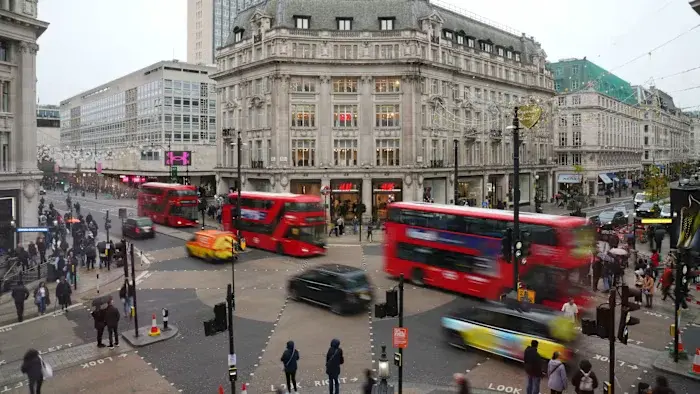
London’s Oxford Street has officially become pedestrian-only between Orchard Street and Great Portland Street, marking the end of a decade-long political battle. The 1km stretch is now closed to cars, buses, and taxis, with vehicles only permitted at specific cross-streets. London Mayor Sadiq Khan calls it the end of the street's 'managed decline,' while critics worry about displaced traffic and accessibility issues.
Key points
- The pedestrianisation covers nearly 1km of Oxford Street, closing it to all vehicular traffic except at four specific cross-streets (Duke, Davies, Vere, and Holles Streets).
- The project is part of a £150m scheme managed by the newly established Oxford Street Development Corporation, which took over planning powers from Westminster Council in January 2026.
- London Mayor Sadiq Khan describes the move as a 'momentous occasion' that will boost economic growth and end the street's decline, citing a projected £82m annual value increase.
- Westminster Council deputy leader Tim Barnes argues the scheme has unresolved issues, particularly regarding step-free access from Oxford Circus Tube and the displacement of 30-40 bus routes to residential areas.
- Initial reports indicate no major gridlock in surrounding streets, though cyclists are being asked to dismount, and police are still adjusting to the new access rules.
Background
The push to pedestrianise Oxford Street began in 2016 under Sadiq Khan’s first mayoral term. Previous attempts were blocked by Westminster Council, which controlled planning powers. The current scheme was enabled by the creation of the Oxford Street Development Corporation in January 2026, a move approved by then-housing secretary Angela Rayner. This follows a trend of low-traffic neighbourhoods in London, though Oxford Street is the first major high street to undergo such a permanent transformation.
How outlets are covering it
Supporters, including the Greater London Authority and business groups like New West End Company, view the change as essential for revitalising a high street that saw vacant shops quadruple post-pandemic. They cite data from Bond Street and New York’s Times Square, suggesting pedestrianisation leads to a 10% revenue uplift and increased footfall. The Guardian editorial supports the move, arguing it aligns with global trends of designing cities for people rather than cars, noting that London’s car usage is significantly lower than the national average. Conversely, Westminster Council and local residents in Marylebone express concern. They argue the scheme displaces traffic to residential streets like Wigmore Street and creates accessibility barriers for disabled users. Critics also note that while the street is closed, the full construction works are not expected to be completed until spring 2027, leaving the long-term impact uncertain.
Why it matters
This is the first major pedestrianisation of a primary UK high street, setting a precedent for urban planning in other cities. It represents a significant shift in how London manages its most iconic commercial space, potentially influencing national policy on high street regeneration and traffic reduction. The success or failure of this £150m project will determine whether similar schemes are adopted elsewhere in the UK.
What to watch
The initial phase is complete, but the full construction scheme, including trees, seats, and public squares, is expected to be finished by spring 2027. Authorities will monitor traffic patterns, accessibility, and economic impact over the next year to refine future phases. The Oxford Street Development Corporation will continue to engage with residents and businesses to address concerns raised during the first phase.
- London’s most famous shopping street bans cars in bid to revive its fortunes Financial Times
- Oxford Street’s pedestrian revolution is finally here Financial Times
- Khan’s Oxford Street pedestrianisation is ‘anti-democratic’ The Telegraph
- Oxford Street becoming pedestrian-only marks end of decline, says Sadiq Khan BBC
- The Guardian view on Oxford Street’s pedestrianisation: cities should be designed around people, not cars | Editorial The Guardian
Want the full story? Read the original reporting
Read on Financial Times