
Russian Daytime Barrage Kills Seven in Kyiv, Targeting Science Academy and Power Grid
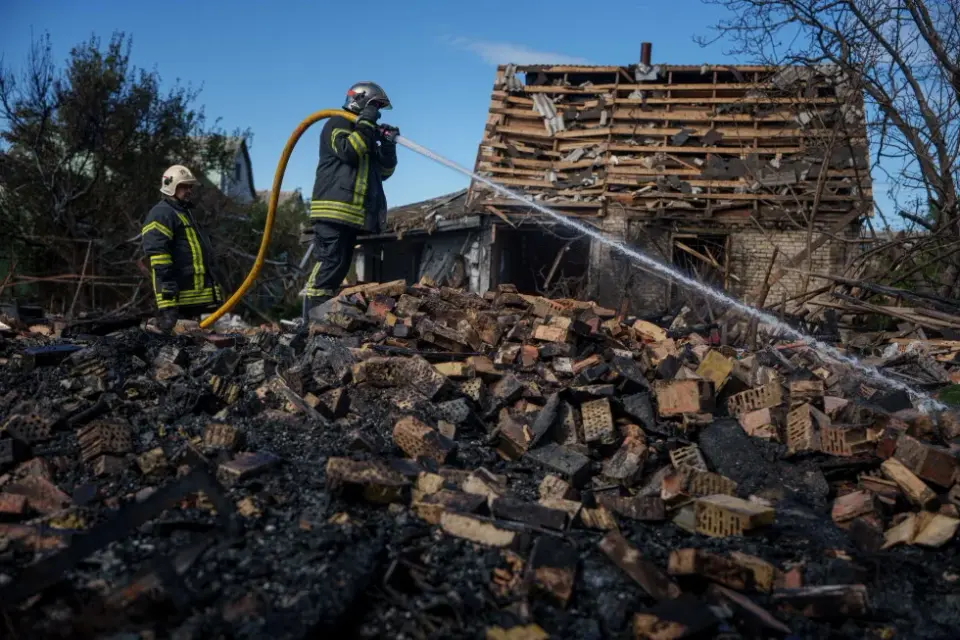
Russian forces launched a massive daytime aerial assault on Ukraine on September 28, 2026, killing at least seven people and wounding over 50. The strikes focused on Kyiv's energy grid, the National Academy of Sciences, and civilian areas, with President Zelenskyy calling it a 'difficult attack' that stretches Ukraine's air defenses. Moscow claimed hits on power plants and data centers, while diplomatic efforts at the UN stalled amid rising tensions.
Key points
- At least seven people were killed and more than 50 wounded in Russian strikes across Ukraine on September 28, 2026, according to AP and CBS News.
- A drone struck the National Academy of Sciences in Kyiv's Shevchenkivskyi district, killing a woman and injuring six, including three children, per CBS News.
- Russian forces targeted energy infrastructure in Kyiv, including a hydroelectric plant, thermal power plant, and substation, according to the Russian Defense Ministry.
- President Zelenskyy described the attack as a 'difficult attack' and urged foreign allies to provide more Patriot air defense missiles to counter ballistic threats.
- Kremlin spokesman Dmitry Peskov stated that Ukraine would 'pay a price' for recent actions, including attacks during Russian parliamentary elections, signaling a bleak outlook for peace talks.
- Ukraine's Third Army Corps claimed to have recaptured 68 square miles in the Donetsk region through Operation Vivaldi, using modified armored vehicles and ground robots.
Background
This escalation follows a week of stalled diplomatic efforts at the United Nations, where Russian Foreign Minister Sergey Lavrov accused Europe of blocking peace talks. It also comes after a September 21 announcement by Ukraine of a new turbojet interceptor to counter Russian Geran-5 drones, and a September 15 claim by President Trump that Kyiv and Moscow agreed to pause energy strikes, a deal Zelenskyy questioned. The current barrage marks a shift toward daytime strikes using faster, harder-to-intercept drones, as noted in earlier coverage from September 28.
How outlets are covering it
AP News emphasized the strain on Ukraine's air defenses and Zelenskyy's appeal for more Patriot missiles, framing the attack as a test of Western support. CBS News highlighted the civilian impact, detailing the strike on the National Academy of Sciences and the broader diplomatic fallout, including Peskov's warning that Ukraine would 'pay a price.' Both outlets reported the Russian Defense Ministry's claims of hitting energy and data infrastructure, but CBS provided more detail on the diplomatic context, noting Lavrov's accusations against Europe. AP focused on the military and defensive aspects, while CBS contextualized the strikes within the broader peace process and international relations.
Why it matters
The attack underscores the escalating intensity of the conflict, with Russia targeting civilian and cultural landmarks to pressure Ukraine. The strain on air defenses and the need for more Patriot missiles highlight the ongoing dependency on Western military support. The stalled diplomatic efforts and Peskov's warning suggest that peace talks are unlikely to progress in the near term, while the battlefield gains claimed by Ukraine in the Donetsk region indicate a shift in tactical approaches. The strikes on energy infrastructure also threaten to exacerbate food and energy shortages, with potential global repercussions.
What to watch
Ukraine is expected to continue requesting more air defense systems from Western allies, particularly Patriot missiles, to counter Russian ballistic and drone attacks. Diplomatic efforts at the UN may remain stalled, with Russia and Ukraine exchanging accusations over the failure of peace talks. On the battlefield, Ukraine's Operation Vivaldi may see further advances in the Donetsk region, while Russia may continue targeting energy and civilian infrastructure to pressure Kyiv. The situation in the Black Sea, with strikes on cargo ships, could impact grain exports and global food supplies.
- Russia pounds Ukraine with missiles and drones, killing 7 and targeting power grid, Zelenskyy says AP News
- Russian strikes kill 3 in Kyiv, prompt NATO to scramble aircraft in Poland, Romania ABC News - Breaking News, Latest News and Videos
- Trapped in inferno after Russian strike, Ukrainian scientist climbed to safety reuters.com
- Russian strikes on Ukraine kill at least 7, including woman at Kyiv's National Academy of Sciences CBS News
- How Ukrainians are coping with new, more deadly Russian attacks NPR
Want the full story? Read the original reporting
Read on AP News