
Putin Shifts to Winter Infrastructure Blitz as Frontline Gains Stall
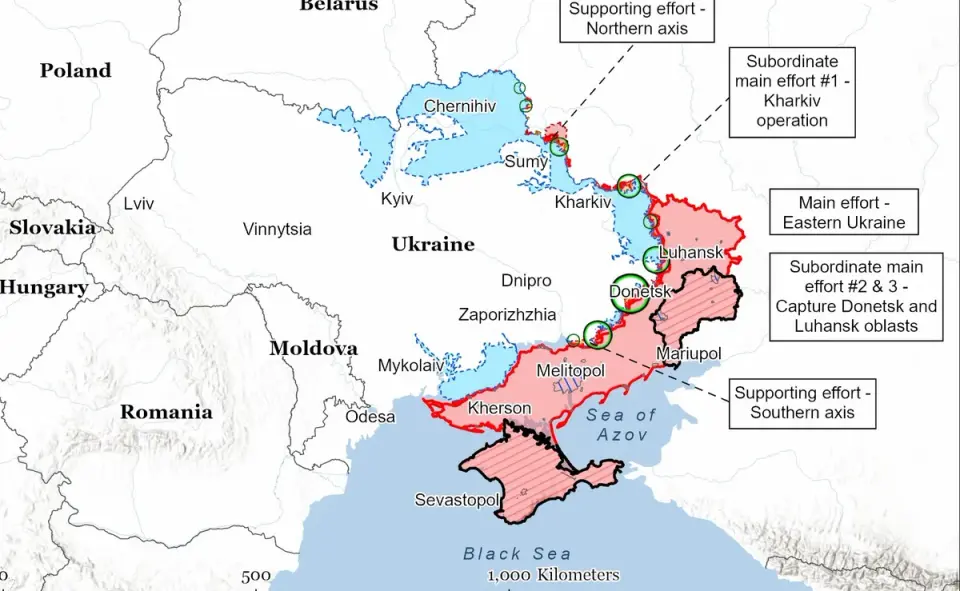
The Institute for the Study of War (ISW) reports that Russian President Vladimir Putin is pivoting to a massive winter strike campaign against Ukrainian civilian and critical infrastructure to force capitulation, as frontline gains in eastern Ukraine have slowed. Russian forces launched 108 drones against Ukraine overnight and repeatedly targeted the Southern Bridge in Kyiv to degrade its structural stability. Ukrainian officials confirm Moscow’s intent to target major cities during the Winter 2026-2027 period. Meanwhile, Ukrainian forces continue long-range strikes against Russian military assets and oil infrastructure to raise the cost of the war for Moscow. ISW notes that Russian jet-powered Geran drones maintain an advantage until Ukraine scales up interceptor production, and no territorial advances were recorded on October 2.
Key points
- ISW assesses that Putin’s new theory of victory relies on sustained long-range strikes to force Ukraine to surrender, compensating for slowed battlefield gains in the east.
- Russian forces conducted repeated drone strikes on the Southern Bridge in Kyiv on October 1 and 2 to degrade structural stability, though it remains unclear if they can sustain the intensity to make it unrepairable.
- Ukrainian President Volodymyr Zelensky stated on October 2 that Putin is focusing on massive strikes because Russian battlefield gains have slowed, aligning with ISW’s assessment.
- Ukrainian forces continued their long-range strike campaign against Russian military assets and oil infrastructure, aiming to make the war economically unaffordable for Moscow.
- ISW reports that Russian forces are likely teaching Chinese elements how to integrate advanced drone and counter-drone systems during the Center-2026 exercises.
Background
This development follows ISW’s September 2026 assessment that Russia’s offensive had stagnated, with limited territorial gains in the Donetsk Fortress Belt and high casualty rates. Previous reports indicated Moscow was adopting a strategy to exploit Ukrainian air defense shortages and energy vulnerabilities during the winter to force capitulation by spring 2027. The current shift to infrastructure targeting marks a transition from territorial attrition to a contest of national endurance.
How outlets are covering it
ISW emphasizes the tactical shift to infrastructure strikes and the potential for Russian forces to share drone integration techniques with China. Eurasia Review frames the conflict as a broader 'contest of national endurance,' where Russia aims to break Ukraine’s ability to function as a state while Ukraine targets Russian economic foundations to make the war unaffordable. Stanford University’s analysis suggests that Russian escalation is driven by a 'pressure-cooker' dynamic, where domestic political imperatives and battlefield failures push Moscow toward abrupt escalation despite external constraints favoring restraint.
Why it matters
The shift to winter infrastructure strikes signals a new phase of the war where the outcome may depend on economic and industrial resilience rather than territorial control. If Russia succeeds in degrading Ukraine’s capacity to function, it may force a negotiated settlement; if Ukraine can sustain its long-range strikes and external support, it may render the war unsustainable for Moscow. This dynamic increases the risk of strategic exhaustion without political resolution.
What to watch
Analysts will monitor whether Russian forces can sustain the strike intensity required to render the Southern Bridge unrepairable and whether Ukrainian forces can scale up interceptor drone production to neutralize the Geran advantage. The effectiveness of both sides' infrastructure targeting campaigns will determine the pace of the winter 2026-2027 escalation.
- ISW Russian Offensive Campaign Assessment, November 2, 2026 Kyiv Post
- Why Nobody Can End the War in Ukraine foreignpolicy.com
- Vladimir Putin only has two options in Ukraine: Total victory or endless war Atlantic Council
- REDS Seminar: Aleksandar Matovski — The Kremlin’s Pressure Cooker Stanford University
- Russia And Ukraine’s New Theories Of Victory? – Analysis Eurasia Review
Want the full story? Read the original reporting
Read on Kyiv Post