
Russian Drone Strikes on Kyiv Bridges Expose Critical Infrastructure Vulnerabilities
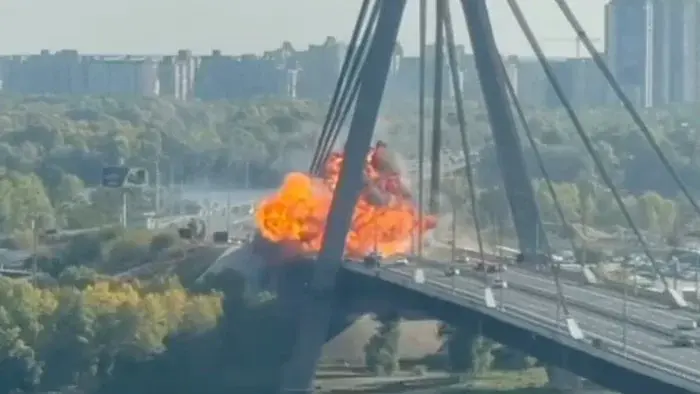
Russian jet-powered drones have struck three bridges over the Dnipro River in the past week, including two in Kyiv and one in Zaporizhzhia, injuring dozens and disrupting vital transport links. This marks a shift in Moscow’s air campaign from energy targets to civilian infrastructure, with at least 64 people killed in recent strikes. Ukrainian President Volodymyr Zelensky claims Putin ordered military leaders to abandon rules of war to crush morale before winter. While damage to Kyiv’s bridges is currently limited, experts warn sustained attacks could compromise structural integrity, forcing the government to consider alternative crossings like pontoon bridges.
Key points
- Russian jet-powered drones (Geran-4 and Geran-5) struck two bridges in Kyiv and one in Zaporizhzhia over the past week, injuring dozens and disrupting transport.
- At least 64 people were killed in recent Russian strikes on civilian infrastructure, including residential buildings, energy facilities, and a bus stop.
- Zelensky stated that Putin ordered military leaders to abandon rules of war, aiming to crush the economy and morale before winter.
- Kyiv’s eight bridges connecting its eastern and western banks are critical for nearly 4 million residents; damage to one bridge can severely disrupt civilian and military supplies.
- Ukraine’s air defenses intercepted just over half of Russia’s jet-powered drones, with domestic anti-drone systems expected to reach production lines by late October.
- The government is considering deploying pontoon bridges over the Dnipro to ease traffic, while businesses adapt with remote work and flexible schedules.
Background
This escalation follows a series of Russian military expansions in 2026, including a decree in September increasing the armed forces to 2.44 million personnel. Zelensky previously claimed in early October that Putin ordered a shift to targeting civilian infrastructure, including bridges and hospitals, to force residents to flee before winter. The current bridge strikes represent a significant shift from earlier attacks focused primarily on energy infrastructure.
How outlets are covering it
The Financial Times emphasizes the strategic shift in Russia’s air campaign from energy to transport infrastructure, highlighting the vulnerability of Kyiv’s limited bridge crossings. The Kyiv Independent focuses on the immediate impact of the strikes, including injuries in the Obolon district and Zelensky’s warning that Russian oil exports will fund further weapons production. CNN highlights the timing of the strikes coinciding with German Chancellor Friedrich Merz’s visit to Kyiv, framing it as a show of support amid escalating attacks. Ukrinform provides on-the-ground details, such as drone debris falling near a business center in Kyiv’s Dniprovskyi district, causing a car fire. While all sources agree on the intensity of the attacks, the Financial Times and CNN focus on the strategic implications, while the Kyiv Independent and Ukrinform emphasize the immediate human and logistical impact.
Why it matters
The strikes on Kyiv’s bridges expose the capital’s critical dependence on a handful of crossings for nearly 4 million residents. Damage to even one bridge can disrupt civilian and military supplies, complicate emergency services, and have significant socio-economic consequences. The shift to targeting transport infrastructure, combined with limited air defense capabilities, threatens to isolate parts of the city and exacerbate the economic and social strain ahead of winter. This escalation also underscores the broader risks of Russian oil exports funding the war, as warned by Zelensky.
What to watch
Ukraine’s government is considering deploying pontoon bridges over the Dnipro to ease traffic, though this could take weeks to assemble. Domestic efforts to develop anti-drone systems are expected to reach production lines by late October, but a reliable and scalable solution may remain months away. Businesses are adapting with remote work and flexible schedules, while residents are making contingency plans in case the city’s east and west sides are cut off. The situation may worsen if Russia continues to intensify strikes, as threatened by the Russian Ministry of Defense.
- Russia targets Ukraine’s bridges as Vladimir Putin expands air war Financial Times
- Loud explosions heard in Kyiv as city comes under daytime missile attack The Kyiv Independent
- Russian drone slams into Kyiv bridge in escalating campaign as Germany’s chancellor arrives to airsirens and explosions CNN
- Drone debris falls near business center in Kyiv, car catches fire Ukrinform
- Seven injured, including four children from one family, in Russian attack on house in Rivne Oblast Українська правда
Want the full story? Read the original reporting
Read on Financial Times