
Danube Gravel Workers Unearth Europe's Largest Iron Age Hoard
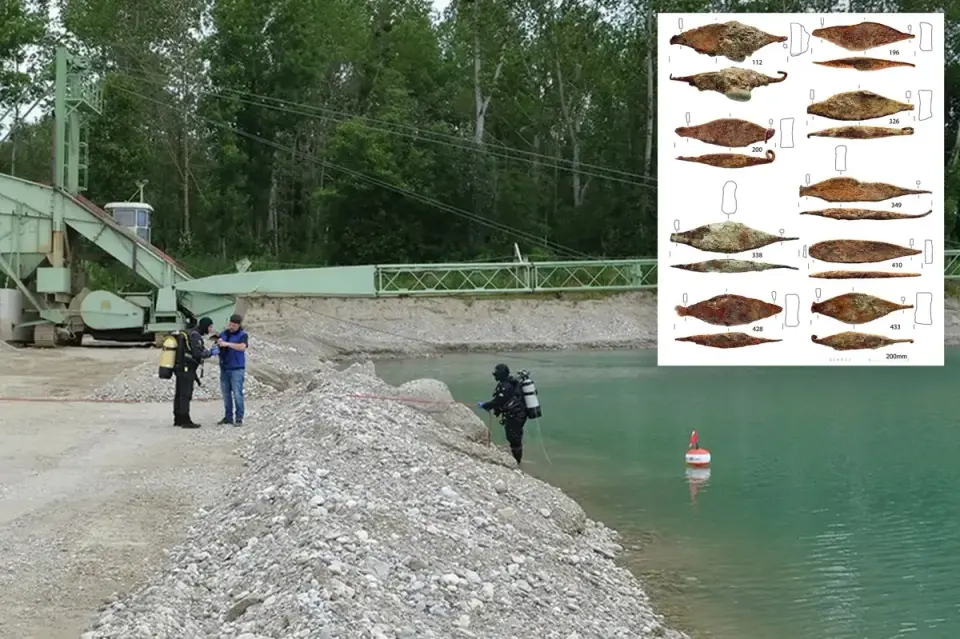
Gravel workers in Deinham, Austria, discovered over 500 Iron Age iron bars in an old Danube River channel, the largest such find in Europe. Dating to the 3rd or 2nd century BCE, the bars likely originated in Bavaria and were lost in a shipwreck. The discovery, reported to authorities rather than sold as scrap, highlights massive prehistoric iron trade networks.
Key points
- At least 500 iron bars were recovered from a silt-filled channel of the Danube River in Deinham, Austria, during gravel extraction work in 2019.
- The collection weighs more than one metric ton and is the largest known Iron Age iron find in Europe, roughly ten times larger than previous hoards from that period.
- Radiocarbon dating places the artifacts in the 3rd or 2nd century BCE, with researchers suggesting they were forged in Bavaria, Germany, before transport along the Danube.
- The iron could have been used to forge approximately 500 swords, each weighing between 3.3 and 4.4 pounds, though tools or jewelry are also possible uses.
- Researchers believe a shipwreck caused the loss, as no vessel remains were found and the bars show no signs of ritual destruction or intentional burial.
Background
This discovery builds on earlier reports from September 2026, which first identified the Deinham find as Europe's largest prehistoric iron hoard. Those initial reports noted the potential to produce 8,000 nails, while the latest analysis emphasizes the scale of trade networks in the La Tène period. The find contrasts with other recent Iron Age discoveries in Europe, such as a temple in Denmark and wagon remains in England, but stands out for its sheer volume of raw material.
Why it matters
The find provides rare, concrete evidence of large-scale iron production and trade in the Late Iron Age, a period where such data is usually scarce due to the difficulty of dating iron objects. It demonstrates that the Danube region had significantly increased iron production capacities by the 3rd and 2nd centuries BCE, reshaping understanding of prehistoric economic networks.
What to watch
The iron bars have been donated to a state museum collection. Researchers will continue analyzing the artifacts to determine their exact origin and trade routes, though the lack of ship remains limits further investigation into the specific cause of the shipwreck.
Want the full story? Read the original reporting
Read on New York Post