
Dhaka weighs joining Mecca pact to diversify security amid India tensions
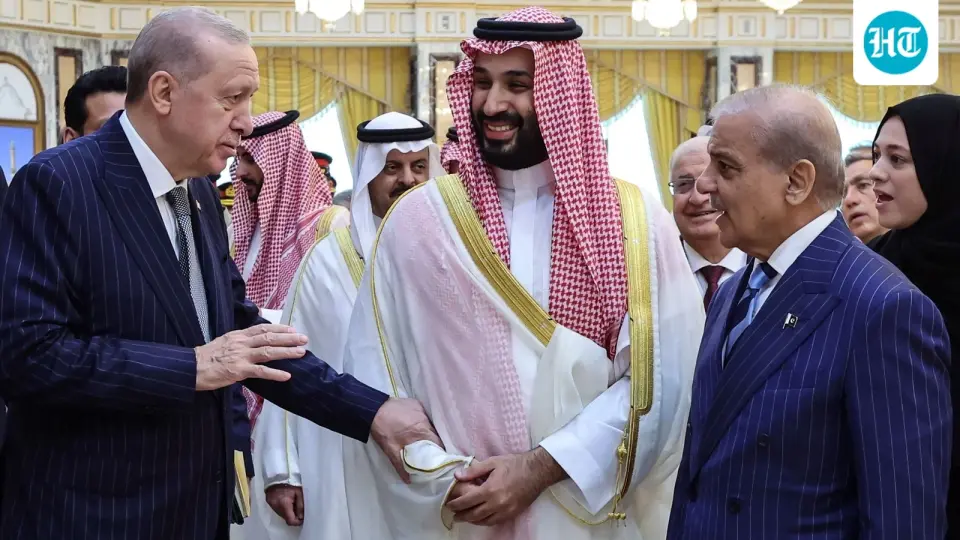
Bangladesh is evaluating membership in the Mecca Joint Defence Agreement, a mutual defense pact signed by Saudi Arabia, Pakistan, and Turkey on August 7. Dhaka’s interest is driven by a desire to diversify security partnerships, secure remittances from Saudi Arabia, and access defense technology from Turkey and Pakistan. This move reflects a shift in Bangladesh’s foreign policy under Prime Minister Tarique Rahman, who has pursued a 'Bangladesh First' stance and cooled relations with India. While the pact offers economic and strategic benefits, it poses domestic political risks due to historical tensions with Pakistan and requires careful balancing of ties with India and China.
Key points
- The Mecca Joint Defence Agreement, signed on August 7, includes a collective defense clause similar to NATO’s Article 5, where an attack on one signatory is treated as an attack on all.
- Bangladesh’s Foreign Affairs Adviser Humayun Kabir stated in mid-August that Dhaka has a 'positive approach' toward the pact, guided by national interest and the 'Bangladesh First' policy.
- Saudi Arabia is Bangladesh’s largest remittance source, contributing approximately $5.28 billion in the first 11 months of the 2025-26 financial year, representing 16% of total inflows.
- Turkey and Pakistan are already significant suppliers of military equipment to Bangladesh, including drones, frigates, fighter jets, and naval vessels, with the pact potentially expanding technology transfer and joint production.
- Bangladesh’s interest in the pact is partly driven by strained relations with India, including disputes over borders, water-sharing, and the extradition of former Prime Minister Sheikh Hasina, who resides in India.
- Challenges include potential backlash from secular groups in Bangladesh due to the 1971 war with Pakistan, the need to balance relations with India and China, and the unclear operational mechanisms of the Mecca pact.
Background
The Mecca Joint Defence Agreement was signed on August 7 by Saudi Crown Prince Mohammed bin Salman, Turkish President Tayyip Erdogan, and Pakistani Prime Minister Shehbaz Sharif. It follows a bilateral defense agreement between Saudi Arabia and Pakistan in September 2025 and has been described as a potential 'Islamic NATO.' The pact emerged amid regional tensions, including the US-Israel war on Iran and concerns over Iran’s military posture. Bangladesh’s interest in the pact reflects a broader shift in its foreign policy under Prime Minister Tarique Rahman, who has advocated for a 'Bangladesh First' approach and cooled ties with India. The pact also aligns with Bangladesh’s efforts to diversify its geopolitical ties amid regional uncertainty and domestic political transition.
How outlets are covering it
Hindustan Times emphasizes Bangladesh’s strategic and economic motivations for joining the Mecca pact, highlighting the importance of Saudi remittances, defense technology, and energy security. The Jerusalem Post questions the practicality of the pact, noting that its collective defense clause may be more symbolic than operational, and suggests that India and Israel should focus on strengthening their own strategic partnerships rather than forming a counter-alliance. Inkstick Media argues that the pact is not necessarily anti-Iran and could even benefit Iran by creating a more complex regional equilibrium, reducing Israel’s ability to focus solely on Tehran. The Week describes the pact as a 'tectonic shift' in Middle East geopolitics, marking a move away from US security dependence, but notes that it lacks the integrated command structure and budget of NATO. These perspectives highlight the ambiguity and potential limitations of the Mecca pact, as well as its broader implications for regional power dynamics.
Why it matters
Bangladesh’s potential membership in the Mecca Joint Defence Agreement signals a significant shift in its foreign policy, moving away from its traditional alignment with India and toward a more diversified security strategy. This move could strengthen Bangladesh’s defense capabilities, secure vital economic interests, and enhance its geopolitical influence. However, it also poses domestic and international challenges, including potential backlash from secular groups, the need to balance relations with India and China, and the unclear operational mechanisms of the pact. The Mecca pact itself represents a new security architecture in the Middle East, potentially reducing reliance on the US and reshaping regional power dynamics. Its success or failure will depend on how its signatories define threats, manage internal and external pressures, and navigate the complex geopolitical landscape.
What to watch
Bangladesh has not yet formally announced a decision to join the Mecca Joint Defence Agreement, but its interest signals a possible shift in its foreign policy. The next steps will likely involve further diplomatic discussions with the signatory countries, as well as internal deliberations on the potential benefits and risks of membership. The pact’s operational mechanisms and membership criteria remain unclear, and any decision by Bangladesh will need to balance its relations with India, China, and other regional powers. The broader implications of the Mecca pact will depend on how its signatories manage regional tensions, including those with Iran and Israel, and whether the pact can evolve into a more integrated security framework.
- Bangladesh exploring ‘Islamic NATO’: Why joining Pakistan-Turkey-Saudi Arabia's Mecca pact may make sense to Dhaka | World News Hindustan Times
- Implications of Mecca defense pact for Israel, India The Jerusalem Post
- Despite US War on Iran, This Pact Could Reshape the Middle East Inkstick Media
- The Mecca accord: an Islamic Nato for the Middle East? The Week
- Mecca Pact: India's Gulf Advantage Runs Deeper Than Any New Military Agreement NDTV
Want the full story? Read the original reporting
Read on Hindustan Times