Ousted Bangladeshi leader Sheikh Hasina plans to return from India on Dec. 16, but Dhaka insists she must be extradited as a convicted fugitive, not flown home on a national airline.
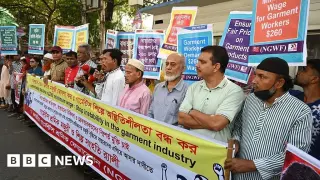
Bangladesh’s garment industry faces a severe production halt as 147 factories remain closed due to labor unrest over minimum wage increases. Factory owners have threatened to withdraw from government-led wage negotiations unless security is restored, while unions urge workers to return to jobs pending a January pay raise. Experts criticize the current ad-hoc negotiation model, calling for a permanent, data-driven wage commission to replace street protests.
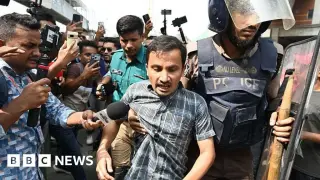
Hundreds of garment factories in Bangladesh have shut down following days of violent protests by workers demanding a minimum wage increase to 30,000 taka. The unrest, which has resulted in clashes with police and factory closures across Dhaka and surrounding industrial hubs, threatens the country’s $40 billion export sector. While the government has formed a wage board to address the crisis, workers remain skeptical, citing rising inflation and the lack of immediate relief.
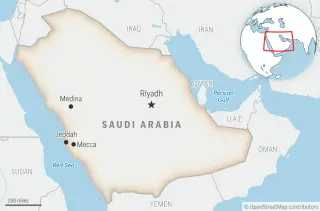
Saudi Arabia executed two Bangladeshi nationals, Nazrul Islam Abdul Basir and Siti Akhtar, in the Makkah region on October 14. Dhaka was not informed until after the fact. The executions followed convictions for an 'indecent act' in a mosque, though records show separate initial charges.
Saudi Arabia executed two Bangladeshi nationals in Mecca on October 14 for 'indecent acts' in a mosque, but Dhaka claims it was not notified beforehand. Bangladesh is demanding details on the legal proceedings and the nature of the offenses, while Saudi authorities have not provided further information. The incident has raised concerns about the welfare of over three million Bangladeshis working in Saudi Arabia.
Saudi Arabia executed two Bangladeshi nationals in Mecca on October 14 for 'indecent acts' in a mosque, but Dhaka claims it was not notified beforehand. Bangladesh's foreign ministry is seeking details on the legal proceedings and the nature of the offenses, while Saudi authorities have not provided further information. The incident has raised concerns about the welfare of over three million Bangladeshis working in Saudi Arabia.
Saudi Arabia executed two Bangladeshi nationals in Mecca on October 14 for 'indecent acts' committed inside a mosque. Bangladesh has lodged a formal protest, alleging it received no prior notification of the executions and demanding details regarding the legal proceedings. The incident has heightened diplomatic tensions between Dhaka and Riyadh, raising concerns for the welfare of over three million Bangladeshi workers in Saudi Arabia.
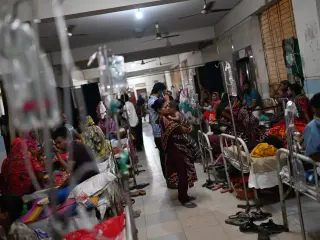
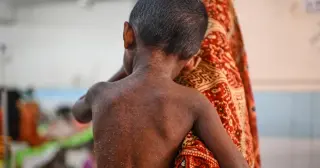
Bangladesh is facing the world's worst measles outbreak, with over 214,000 suspected cases and 1,201 deaths since March 2026. The crisis stems from a drop in vaccination coverage below the 95% threshold needed for herd immunity, exacerbated by political turmoil in 2024-2025 that disrupted routine immunization programs. Despite an emergency drive vaccinating over 20 million children, gaps in data and outreach left millions unprotected, particularly in remote areas. Experts warn this serves as a critical lesson for other nations, including Canada, which recently lost its measles elimination status due to similar declines in immunization rates.
Saudi Arabia executed two Bangladeshi nationals, Nazrul Islam Abdul Basir and Siti Akhtar, on October 14 for 'indecent acts' inside a mosque in Mecca. Dhaka claims it was not notified before the executions and has demanded official details from Riyadh. The incident has raised concerns about the welfare of over three million Bangladeshis working in Saudi Arabia, though both nations emphasize the importance of respecting local laws.
Saudi Arabia executed two Bangladeshi nationals in Mecca on October 14 for 'indecent acts' in a mosque, but Dhaka claims it was not notified beforehand. The execution has sparked diplomatic friction, with Bangladesh demanding details on the legal proceedings and the nature of the offenses, while Saudi authorities cited the sanctity of the mosque as justification for the death penalty.
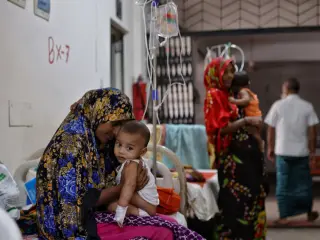
Bangladesh has recorded over 1,000 deaths from a measles epidemic since March 2026, despite administering nearly 20 million vaccine doses. Experts attribute the high mortality to initial underestimation of the target population, uneven local coverage, and a surge in cases among infants too young for routine vaccination.
A severe measles outbreak in Bangladesh has resulted in 999 deaths and over 166,000 suspected cases since the start of 2026. The crisis stems from significant disruptions to the national vaccination program, including missed campaigns and supply shortages, which have left a large portion of the child population unprotected. While an emergency drive with international partners is underway, coverage remains insufficient to halt transmission, and hospitals are overwhelmed with severe complications.
Bangladesh has recorded over 1,000 child deaths from measles, marking the world’s largest ongoing outbreak. A nationwide vaccination drive failed to reach four million children, leaving hospitals overwhelmed by both measles and dengue cases.
Hundreds of Rohingya refugees protested in Cox’s Bazar, Bangladesh, on the ninth anniversary of the 2017 military crackdown in Myanmar, demanding justice and safe repatriation. Over 1.2 million stateless Rohingya remain stranded in Bangladeshi camps as international aid declines, with the 2026 Joint Response Plan cut by 26 percent. Despite ongoing legal cases at the International Court of Justice and International Criminal Court, no final rulings or indictments have been issued, leaving the population without a durable solution.
Bangladesh is evaluating membership in the Mecca Joint Defence Agreement, a mutual defense pact signed by Saudi Arabia, Pakistan, and Turkey on August 7. Dhaka’s interest is driven by a desire to diversify security partnerships, secure remittances from Saudi Arabia, and access defense technology from Turkey and Pakistan. This move reflects a shift in Bangladesh’s foreign policy under Prime Minister Tarique Rahman, who has pursued a 'Bangladesh First' stance and cooled relations with India. While the pact offers economic and strategic benefits, it poses domestic political risks due to historical tensions with Pakistan and requires careful balancing of ties with India and China.