
Satellite Data Reveals Iran Rebuilding Missile Infrastructure Underground Amid US Strikes
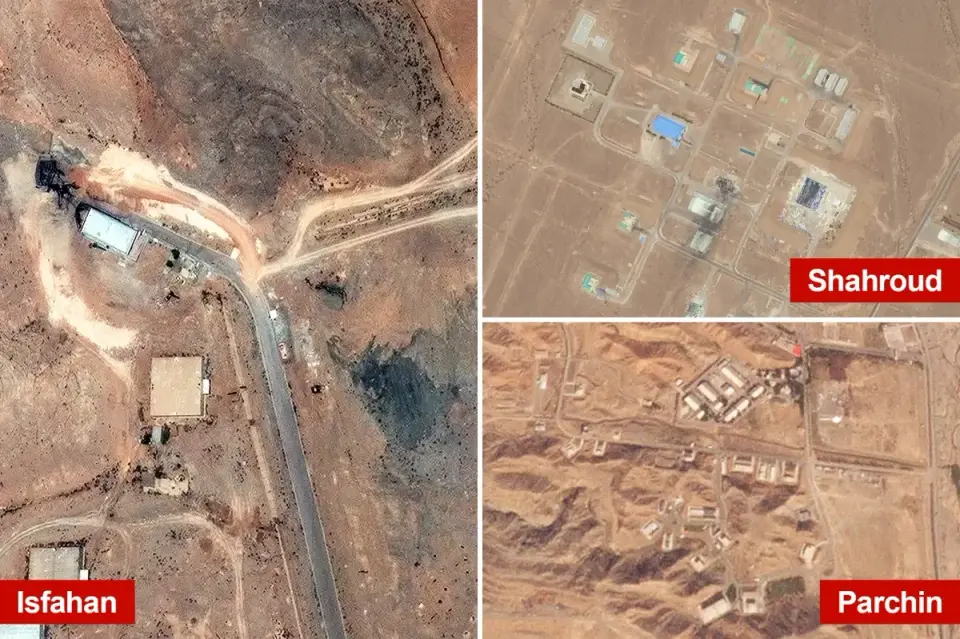
Satellite imagery from November 2026 shows Iran rapidly reconstructing missile bases and moving facilities underground after months of US and Israeli airstrikes. Analysts note Tehran is prioritizing military resilience over economic recovery, despite Washington claiming 90% of Iran’s industrial base was destroyed.
Key points
- MAIAR analysts identified new construction and digging at the Garmdareh base in Karaj and the Shahroud base, with at least 12 other military sites showing repair signs.
- The US and Israel have conducted airstrikes on Iran since February 2026, with the Pentagon claiming 90% of Iran’s drone and missile industrial base was destroyed.
- Iran is moving infrastructure underground to protect assets from future strikes, a strategy that also obscures operational capabilities from foreign observers.
- Construction activity suggests Tehran is bracing for renewed attacks, particularly after the US paused strikes before the midterm elections.
- Iranian state media claims it retains large missile stockpiles and has resumed liquid-propellant ballistic missile production, contradicting US assessments.
Background
This development follows an eight-month US-Israeli campaign that began in February 2026, which the Pentagon estimated cost $47.1 billion. Previous reports indicated Iran’s strikes on US bases caused $15 billion in damage, forcing Washington to withdraw assets from the Gulf. The current reconstruction effort occurs as the US paused strikes before the midterm elections, with experts noting Trump has a limited window to resume operations before a potentially Democratic-controlled Congress restricts war powers.
How outlets are covering it
The New York Post and BBC both cite MAIAR and other analysts to confirm the scale of Iran’s reconstruction, emphasizing the shift to underground facilities. However, they frame the strategic implications differently: the Post highlights the political pressure on Trump to 'finish the job' before Congress changes, while the BBC focuses on the military rationale for underground construction to evade detection. Both sources note the contradiction between the Pentagon’s claim of 90% destruction and Iran’s state media assertions of retained stockpiles and resumed production. The BBC also notes that analysts believe the construction is not a deception tactic but a genuine effort to rebuild capability, whereas the Post emphasizes the urgency of Iran’s actions in the context of the midterm election results.
Why it matters
The reconstruction of missile infrastructure indicates Iran is prioritizing military resilience over economic recovery, potentially prolonging the conflict. The shift to underground facilities complicates future US and Israeli targeting, while the timing of the rebuild—after a pause in strikes—suggests Tehran is preparing for renewed hostilities. This development also underscores the limitations of the US’s claimed 'total destruction' of Iran’s military capabilities and the political constraints facing the Trump administration post-midterms.
What to watch
Analysts expect Iran to continue moving facilities underground and repairing damaged bases, particularly at sites like Parchin and Kermanshah. The US may resume strikes after the midterm elections, but a new Democratic-dominated Congress could limit Trump’s war powers. Iran’s diplomatic efforts and regional threats may aim to delay US action, while the US will likely reassess its strategy based on the extent of Iran’s reconstruction.
- Alarming satellite images show construction near Iran missile bases: report New York Post
- Iran says it has lifted its self-imposed limit on missile ranges, and other Mideast news AP News
- IRGC claims a self-imposed limit on ballistic missile range ‘has been lifted’ The Times of Israel
- Iran’s IRGC says building underground sites for weapons production, storage Al Jazeera
- Major construction ongoing near Iran missile bases, satellite images suggest BBC
Want the full story? Read the original reporting
Read on New York Post