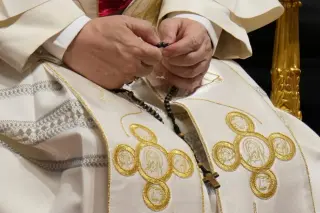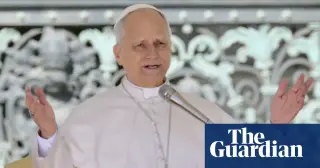
Pope Leo XIV denounced the 'delusion of omnipotence' behind the U.S.-Israel war in Iran and urged political leaders to pause hostilities and pursue peace negotiations, following a vigil for peace at the Vatican.
Pope Leo XIV condemned warfare in a social media post, saying God does not bless conflicts and that lasting peace comes from dialogue rather than military action. The message, seen as a rebuke of religious rhetoric surrounding the US-Israel strikes on Iran, follows ongoing criticism of the war and echoes his previous calls to avoid invoking faith to justify violence.
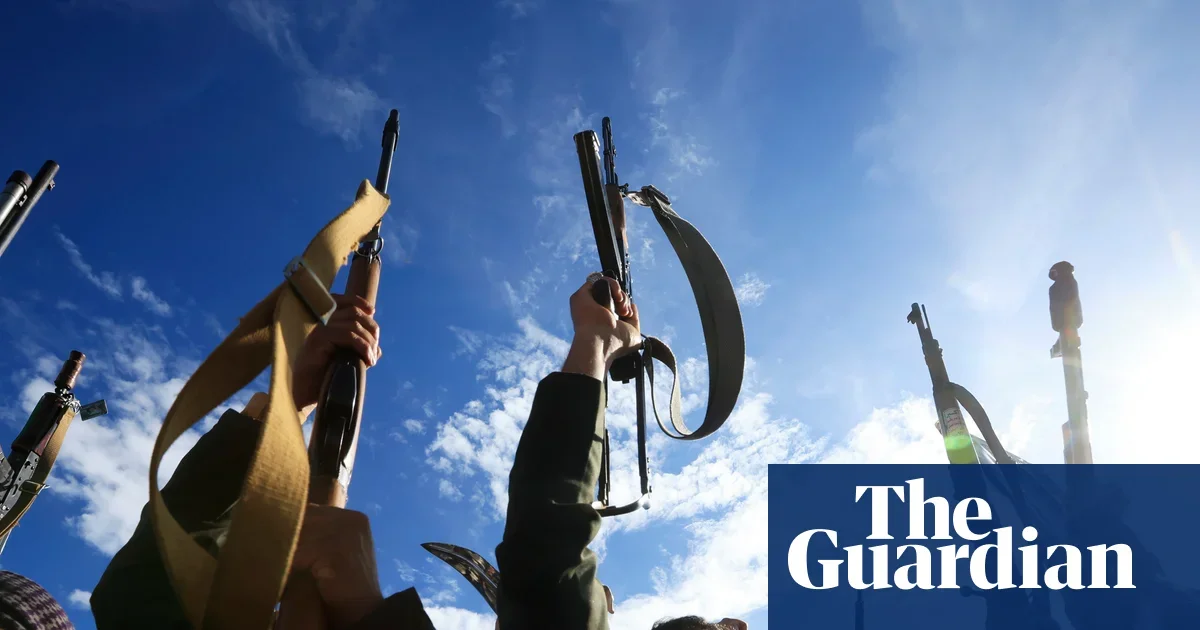
Houthis, allied with Iran, claim ballistic missiles hit sensitive Israeli military sites, expanding the US-Israel campaign against Iran; Israel says it intercepted one missile; the conflict threatens Red Sea and Hormuz chokepoints and global trade, with attacks also hitting a Saudi airbase and Kuwait’s radar. Pakistan hosts a regional meeting with Saudi Arabia, Turkey and Egypt to seek de-escalation, while Ukraine-UAE defense ties and reported US cluster-munition use add to the volatility and the risk of broader regional escalation.
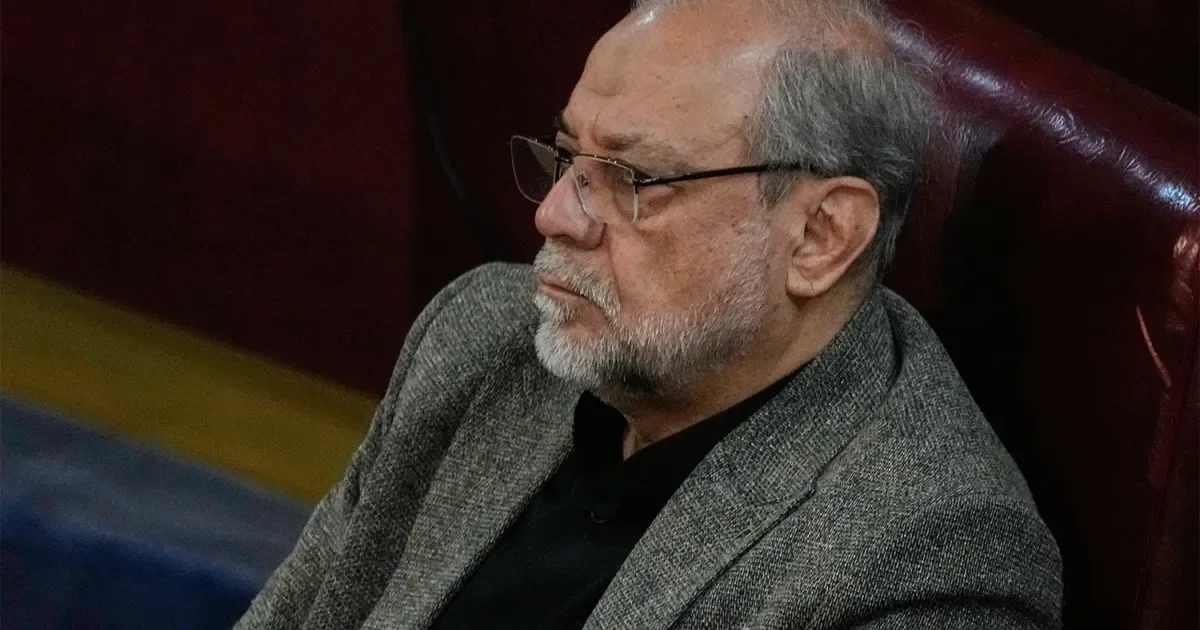
Iran appointed Mohammad Bagher Zolghadr, a veteran IRGC commander and former Expediency Council secretary, as head of the Supreme National Security Council to steer security policy amid external pressure from the US-Israel war and internal unrest; his appointment fills the void left by the late Ali Larijani and signals a shift toward stronger military leadership in Iran's security decisions and potential involvement in future negotiations.
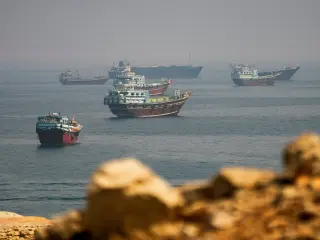
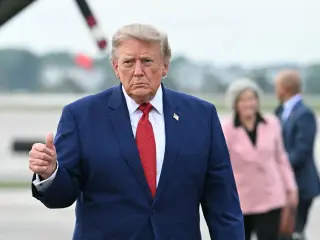
Iran said non-hostile ships may transit the Strait of Hormuz under safety regulations and in coordination with Iranian authorities, as maritime traffic remains well below pre-war levels. The stance comes amid the US-Israel war on Iran and broader energy-market volatility, with officials warning prices could rise if the strait stays largely closed. President Trump said talks to end the conflict are underway.
Escalating US-Israel strikes on Iran have triggered regional turmoil from Lebanon to the Gulf, with Iran vowing to continue fighting and Pakistan offering to host talks between the US and Iran. The White House cites potential negotiators like JD Vance as a possible US envoy, while countries such as the Philippines declare energy emergencies as the Strait of Hormuz becomes a critical flashpoint for global oil supplies and diplomacy circulates amid a rapidly shifting security landscape.
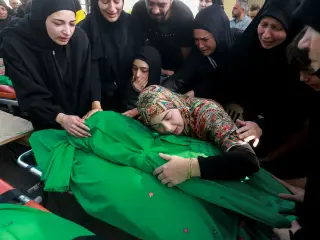
HRANA’s Day 23 briefing on the Iran conflict reports 206 attacks across 112 incidents in 15 provinces, with at least 4 casualties in the last 24 hours. Since Feb 28, civilian fatalities total 1,407 (including at least 214 children), military fatalities 1,167, and 657 unclassified, with children making up about 15% of total casualties. Tehran Province accounts for the largest share of attacks (39%), followed by Hormozgan (19%) and Isfahan (10%), as 21 targets—including airbases and naval bases—were hit or damaged. Official statements cite around 210 killed among children and over 1,510 injured, with damage to medical facilities and other critical infrastructure; the situation remains fluid and subject to revision as new information emerges.
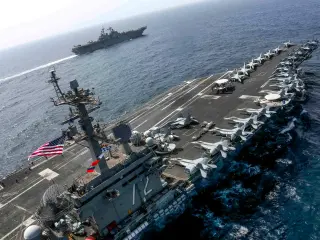
Week four of the US-Israel confrontation with Iran saw Iranian missiles strike Tel Aviv, Israel respond with strikes on Beirut, and Tehran deny any talks despite Trump praising discussions and extending a deadline to reopen the Hormuz strait. The US said it would keep attacking Iran but pause on energy targets during the talks, while EU officials urged negotiations as the global energy situation becomes critical. Reports circulated of potential talks in Islamabad, with regional security moves continuing, alongside fuel-shortage measures in Slovenia and New Zealand’s cash-relief for affected families, as markets react to the crisis.
Amid escalating US-Israel–Iran hostilities, Iran said the Strait of Hormuz will stay open to shipping except vessels tied to its enemies and signaled it would cooperate with the IMO on maritime safety, even as President Trump threatened to obliterate Iran’s power plants if Hormuz isn’t fully reopened within 48 hours. The confrontation has spurred regional attacks and disruptions, weighing on Gulf economies and tourism, and prompting further strategic recalibration by Israel and Gulf states.
Live coverage shows a deepening US-Israel-Iran confrontation: Trump threatens to obliterate Iran’s power plants if Tehran does not fully reopen the Strait of Hormuz within 48 hours, prompting Iranian vows to strike US energy infrastructure; Iranian missiles wounded about 100 in southern Israel, while Israel says it will strike Tehran. Iran also fired long-range missiles at Diego Garcia; Saudi and UAE report attacks. The conflict has killed more than 1,500 in Iran, 1,000+ in Lebanon, and 13 US troops, with millions displaced in Lebanon and Iran. The IAEA says the Negev site is undamaged and Israel is investigating air-defense failures.
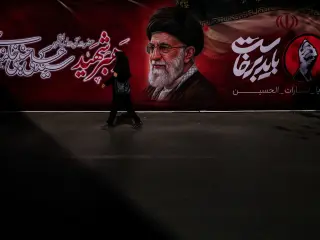
In a Nowruz message aired on Iranian TV, Supreme Leader Mojtaba Khamenei said Iran’s enemies were being defeated as the US and Israel pressed attacks, praising national unity and denying that Iran or its allies were behind attacks on Turkiye and Oman (calling those incidents false flags). He urged closer ties with Afghanistan and Pakistan and offered to help, while President Masoud Pezeshkian said Iran does not seek nuclear weapons and proposed a regional security framework to stabilize the region amid ongoing tensions.
On day 21 of the US-Israel campaign, Iran warns of 'zero restraint' if energy facilities are hit again after the South Pars strike, while Netanyahu hints at a ground component; the conflict widens to Haifa and Ras Laffan, Qatar's LNG output is hit (~17%), and oil/gas prices rise as civilian casualties mount in Iran. Western capitals warn against targeting bases; Trump’s remarks frame the evolving crisis as the US weighs options on Iranian crude to ease prices, with spillovers continuing in Lebanon and Iraq.
On day 20 of the US-Israel war on Iran, Israel strikes Iran’s South Pars gas field; Iran retaliates against Gulf energy facilities including Ras Laffan in Qatar (with some strikes intercepted in Saudi Arabia and the UAE); Qatar expels Iranian diplomats as tensions rise, and Saudi Arabia/UAE warn of further options. Bahrain reports missiles/drones intercepted; Kuwait foils a Hezbollah-linked terror cell; Lebanon and Iraq see ongoing clashes and displacement. Domestically, US intelligence debates swirl around Tulsi Gabbard’s Senate testimony on Iran, while a 60-day Jones Act shipping waiver aims to ease energy costs amid the turmoil.
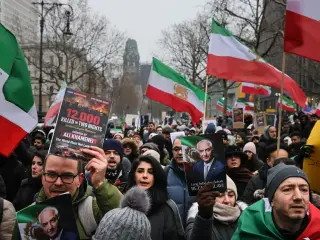
Iran has executed three people convicted of killing police during January unrest and allegedly aiding the United States and Israel, as the country fights a widening war now in its 20th day. Official tallies say 3,117 people were killed in anti-government protests, while rights groups note higher figures and ongoing investigations, all amid heavy internet restrictions and a broader crackdown on alleged foreign-backed dissent.
Iran’s Foreign Minister Abbas Araghchi says the killing of Ali Larijani will not destabilize Iran, stressing a strong, institution-based political system that can replace leaders as needed; he also accuses the United States of starting the US-Israel war and calls for accountability, noting Iran has endured past shocks to its leadership.