
Albania’s Student Uprising Escalates into Nationwide Violence
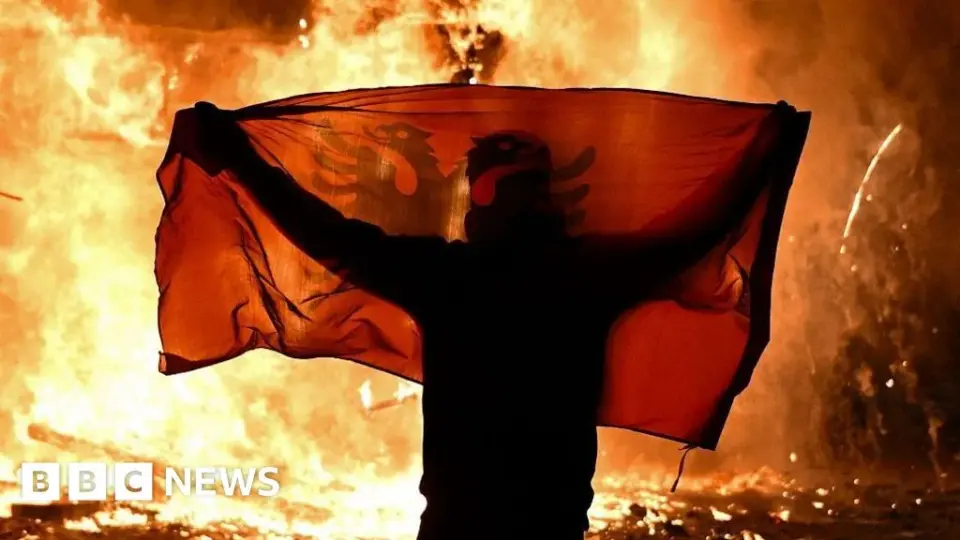
Albania has experienced its most severe unrest in decades as student-led protests turned violent in Tirana and other major cities. The demonstrations, which began over education costs and corruption, have merged with the broader anti-government 'Flamingo' movement. Prime Minister Edi Rama has refused to resign, blaming opposition leader Sali Berisha and foreign interference, while the EU urges dialogue. The crisis threatens Albania's EU accession timeline and tourism sector.
Key points
- Violent clashes erupted in Tirana, Durrës, Shkodër, Lezhë, Vlora, Gjirokastër, and Korçë, involving stone-throwing protesters and police using tear gas and batons.
- The unrest began as a student movement demanding action on education costs and living expenses but quickly merged with the summer-long 'Flamingo' protests against a Kushner-linked luxury resort.
- Prime Minister Edi Rama rejected calls to resign, stating his duty is to address legitimate concerns while maintaining Albania's EU path, and blamed opposition leader Sali Berisha for instigating chaos.
- Government buildings, including the Education Ministry, were set on fire, and parliament cancelled its session as violence spread through the capital.
- The EU mission to Albania called for constructive dialogue, while the UK government advised tourists to avoid demonstrations and large gatherings.
Background
This escalation follows months of peaceful 'Flamingo' protests that began in July 2026 over a luxury development project on the Adriatic coast linked to Jared Kushner. Previous clashes in September saw police block a 100-day march, but the current violence is described as a new, more radical phase. The unrest also coincides with similar student activism in France, though Albanian protests are driven by distinct local issues of corruption and EU accession.
How outlets are covering it
BBC and NBC News agree on the scale of the violence and the merger of student and Flamingo movements. However, they differ on the narrative of responsibility. BBC highlights the government's accusation that foreign powers and Berisha are manipulating the unrest, while NBC focuses on the protesters' grievances regarding corruption and education, noting Rama's refusal to resign. Both sources confirm the EU's concern but differ in emphasis: BBC notes the 'eyes of Europe' watching, while NBC highlights the EU mission's call for dialogue. Neither source provides evidence to confirm the foreign interference claims, leaving them as unverified allegations from the government.
Why it matters
The unrest threatens Albania's status as a leading candidate for EU membership, with accession potentially as early as 2028. The violence damages the country's tourism image and raises questions about the stability of Rama's government. It also reflects broader regional tensions in the Balkans and the impact of external political figures on local governance.
What to watch
The government is expected to continue its stance of refusing to resign while attempting to address 'legitimate concerns.' The opposition may seek to capitalize on the unrest, and the EU will likely monitor the situation closely to ensure it does not derail accession negotiations. The violence may continue to spread or subside depending on government response and police tactics.
- Albanian protests turn violent: What we know BBC
- Albania’s leader defies calls to resign as student protesters rampage in capital NBC News
- ‘Boiling point’: Why students are protesting against Albania’s Edi Rama Al Jazeera
- Tear gas, fires and clashes as anti-government unrest escalates in Albania, in photos AP News
- Thousands march in Albanian capital as anti-government protests spread Reuters
Want the full story? Read the original reporting
Read on BBC