
US-Iran Standoff Deepens as Shipping Attacks Surge and Carrier Presence Peaks
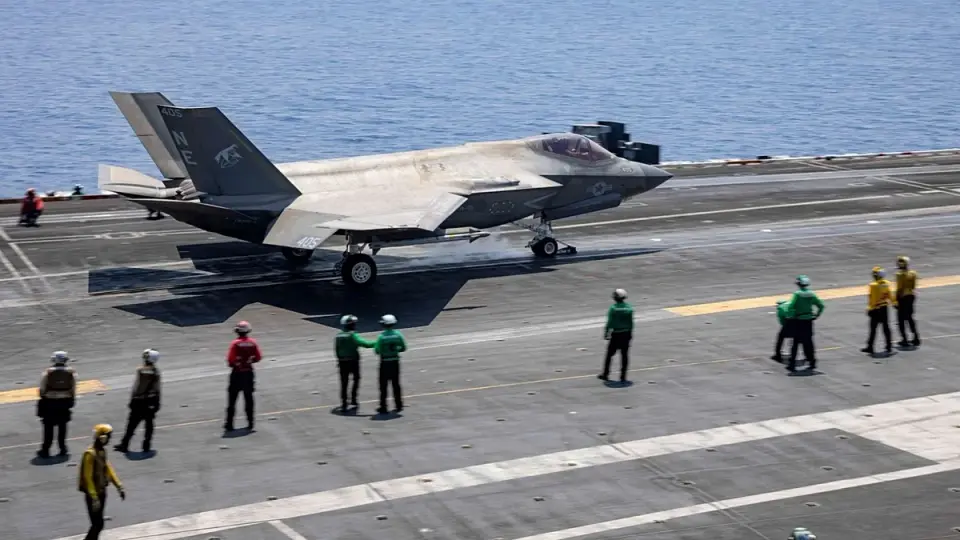
The US-Iran conflict remains in a high-tension stalemate, with Iran intensifying attacks on commercial shipping in the Strait of Hormuz while the US maintains a naval blockade and deploys additional carrier groups. Analysts warn that while the US has degraded Iranian military capabilities, Tehran's asymmetric tactics continue to disrupt global energy flows, leaving diplomatic resolution unlikely before the November US midterm elections.
Key points
- Iran targeted at least 24 commercial vessels near the Strait of Hormuz in two weeks, according to the Institute for the Study of War, with UK Maritime Trade Operations reporting seven additional incidents recently.
- The US has deployed the aircraft carriers George Washington and George HW Bush to the Arabian Sea, with the USS Theodore Roosevelt carrier strike group also en route, potentially raising US personnel in the region above 20,000.
- Iranian officials, including IRGC deputy commander Mostafa Izadi, have warned of readiness for major operations, while US President Donald Trump suggested intensified strikes could occur after the November 3 midterm elections.
- Global oil prices remain elevated at approximately $104 per barrel, up from $72 pre-war, as shipping through the Strait of Hormuz has dropped to its lowest levels this month despite US naval escorts.
- Military analysts note that the US has depleted critical munitions, including over 1,000 Tomahawk missiles, with full restoration of pre-war inventory potentially taking until 2030, limiting options for sustained air campaigns.
Background
The current escalation follows a June ceasefire that collapsed over control of the Strait of Hormuz, which previously carried 20% of global crude and LNG supplies. Earlier in October, reports indicated the US was sending approximately 9,000 troops and sailors to the region. The conflict, which began in late February with US and Israeli strikes on Iran, has resulted in over 1,000 Iranian civilian deaths and 21 US service member fatalities, according to Council on Foreign Relations analysis.
How outlets are covering it
Euronews emphasizes the immediate military buildup, highlighting the simultaneous presence of two US aircraft carriers and increased tanker sorties, while noting that Iran has adapted its naval tactics using small boats to bypass damaged radar systems. Al Jazeera focuses on the strategic deadlock, arguing that the US naval blockade is the most likely course of action but that Iran's asymmetric attacks on shipping create significant economic pressure. The Council on Foreign Relations frames the situation as a 'victory of asymmetry,' noting that Iran's control of the Strait has forced the US into costly defensive postures and potentially accelerated a long-term drawdown of US regional influence. Responsible Statecraft argues that Trump's pursuit of a decisive 'win' is counterproductive, suggesting that a minimalistic ceasefire is the only realistic exit, as regime change or major concessions are unlikely given the current political dynamics in Tehran.
Why it matters
The ongoing standoff threatens to destabilize global energy markets and accelerate a realignment of Middle Eastern security alliances. As the US depletes its missile stockpiles and faces rising domestic opposition to the war, the inability to achieve a decisive victory may lead to a prolonged conflict that undermines US credibility in the region and encourages other nations to seek alternative security arrangements or nuclear capabilities.
What to watch
Watch for potential US strikes on Iranian targets after the November 3 midterm elections, as suggested by President Trump. Monitor shipping incidents in the Strait of Hormuz for further escalation, and track diplomatic efforts via Pakistan and Qatar, though recent proposals have been rejected by Washington. The arrival of the USS Theodore Roosevelt in the Arabian Sea will be a key indicator of whether the US is preparing for a larger operation or maintaining a defensive posture.
- Military signals building: Is the US-Iran war about to escalate? Euronews.com
- US-Iran stalemate: What are Trump’s next military options? Al Jazeera
- By pursuing a big 'win' in Iran, Trump is destined to lose Responsible Statecraft
- The Victory of Asymmetry in the Iran War Council on Foreign Relations
- US and Israel dominate Iran's skies, but still can't force it to surrender Ynetnews
Want the full story? Read the original reporting
Read on Euronews.com