
Nepal PM Demands Climate Justice at UN Amid Post-Flood Crisis
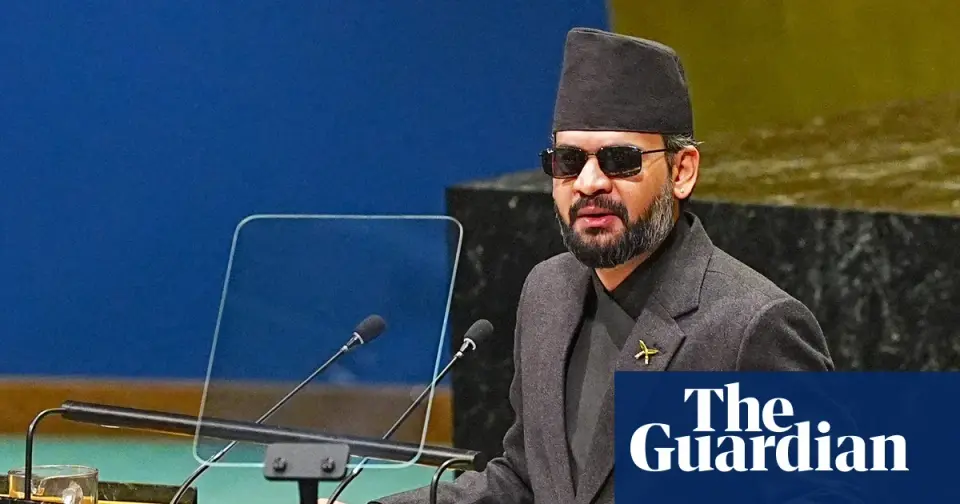
Nepal’s Prime Minister Balendra Shah addressed the UN General Assembly on September 24, 2026, demanding that wealthy nations provide grant-based support rather than loans for climate disaster recovery. He cited the August flash floods, which killed at least 1,400 people, as a 'warning to the world' about the inequity of climate impacts. While Nepal contributes less than 0.1% of global greenhouse gas emissions, it faces reconstruction costs estimated at 10% of its GDP. Shah criticized the current international aid system as too bureaucratic, urging a shift toward 'responsibility, reparation, and resilience' for vulnerable nations.
Key points
- Prime Minister Balendra Shah stated that the August flood was a 'warning to the world' and asked leaders if they had truly heard it.
- Nepal estimates recovery needs at approximately 10% of its gross domestic product, with over 6,000 people still missing.
- Shah argued that vulnerable countries should not be forced to take on additional debt to rebuild from climate-driven disasters.
- The US announced $31 million in new aid, bringing its total financial help to $36 million, which Nepal views as insufficient.
- Shah called for a Himalayan mechanism to share satellite data and monitor glacial lakes across borders.
Background
The August disaster followed a partial glacier collapse near Langtang Lirung, triggered by melting permafrost and unstable slopes potentially weakened by a 2015 earthquake. Earlier reports indicated the flood killed at least 1,050 people and damaged 10% of Nepal’s hydropower capacity. Scientists have since confirmed that human-caused climate change intensified the cascade of events, including record warmth and rapid meltwater flow. Nepal had previously appealed to the UN loss and damage fund for $20 million in damages, highlighting the gap between immediate needs and available international support.
How outlets are covering it
The Guardian and NBC News both report on Shah’s speech, emphasizing his critique of the international financial system as 'bureaucratic' and inadequate. The New York Times focuses on Shah’s personal background, noting his status as a former rapper and engineer, and his distinctive appearance in dark sunglasses and a traditional hat. While all outlets agree on the death toll of at least 1,400, NBC News highlights the US’s historical emissions compared to Nepal’s, noting the US has emitted 1,500 times more carbon over 75 years. The Guardian notes that Shah did not request a specific aid amount but criticized the structure of existing funds. Foreign Minister Shisir Khanal, cited by both the Guardian and NBC, described the disaster as a 'development emergency' and a 'justice crisis,' contrasting with the more personal tone of Shah’s address.
Why it matters
This speech highlights the growing tension between high-emitting nations and vulnerable countries regarding climate finance. As glaciers in the Himalayas destabilize, the risk of similar catastrophic floods increases, threatening water supplies for 2 billion people in Asia. The demand for grant-based support rather than loans signals a shift in how developing nations view international climate responsibility, potentially influencing future negotiations at UN climate summits.
What to watch
Nepal is expected to continue seeking rapid funding from the UN loss and damage fund. The World Bank has made $170 million in emergency financing available, but recovery operations are ongoing with thousands still missing. Shah’s call for a Himalayan data-sharing mechanism may lead to new regional cooperation frameworks between Nepal, India, and China to improve early-warning systems.
- Nepal’s PM says flash flood was ‘warning to world’ as he scolds leaders at UN over climate change The Guardian
- Why Nepal’s Prime Minister Balen Shah Wears Sunglasses nytimes.com
- Nepal’s leader, at U.N., says recent floods serve as a ‘warning to the world’ about climate change NBC News
- Is Nepal's flood a harbinger of what's to come in the Himalayas? NPR
- Nepal seeks grants, not loans, for flood recovery after deadly glacier disaster Reuters
Want the full story? Read the original reporting
Read on The Guardian