
Pope Leo XIV Criticizes Milei’s Austerity and Urges Democratic Restraint in Buenos Aires
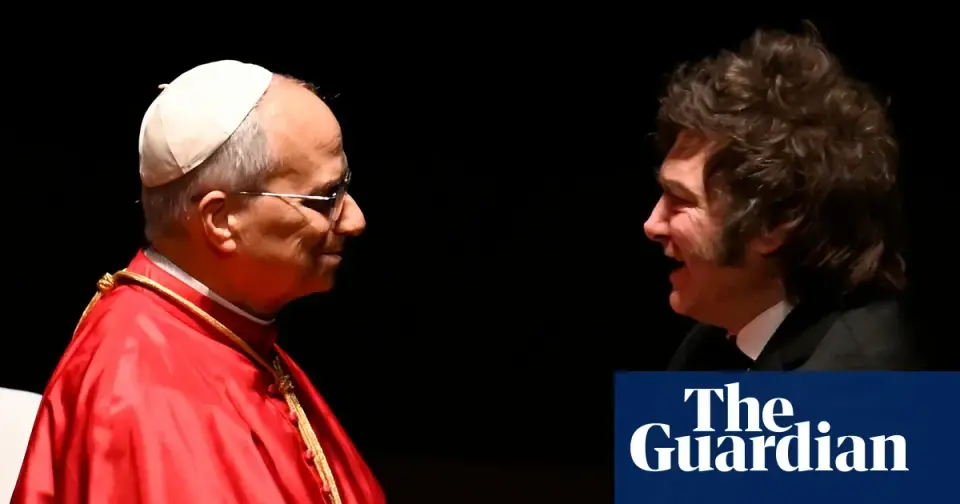
Pope Leo XIV arrived in Buenos Aires on Sunday, November 8, to begin the second leg of a 12-day South American tour. In his first public address, he criticized President Javier Milei’s austerity measures, arguing that economic policy must serve the people rather than the reverse. The pontiff urged leaders to safeguard democracy through careful language and a willingness to listen, drawing applause from a divided audience. This visit marks the first papal trip to Argentina in nearly four decades, following a stop in Uruguay where Leo addressed secularization and family faith. The trip highlights tensions between the Vatican’s social justice agenda and Milei’s libertarian reforms, which have reduced poverty rates but cut welfare spending.
Key points
- Pope Leo XIV arrived in Buenos Aires on November 8, marking the first papal visit to Argentina since 1987.
- Leo criticized Milei’s austerity policies, stating that the economy must serve the people and emphasizing support for the poor, pensioners, and those with disabilities.
- The pope urged political leaders to safeguard democracy by using words carefully, listening to opponents, and acting with prudence.
- Leo’s 12-day tour includes stops in Uruguay and Peru; he previously celebrated Mass for 50,000 people at Uruguay’s national shrine.
- Milei, a close ally of US President Donald Trump, has faced criticism for cutting social services and restricting protest rights, though he maintains support for reducing inflation.
- The visit aims to unite a polarized nation, with 57.7% of Argentines identifying as Catholic, a significant drop from 90% in the 1960s.
Background
Pope Leo XIV, 71, is on a 12-day tour of Latin America, beginning in Uruguay and concluding in Peru, just three weeks after undergoing lung cancer surgery. His predecessor, Pope Francis, the first Argentine pontiff, never visited his home country during his 12-year papacy, a decision some attributed to the country’s polarized political climate. Milei, who took office promising to tame inflation by shrinking the welfare state, previously insulted Francis but later apologized and praised him as the most important Argentine in history. The current visit follows a period of rising poverty, which reached 32.3% in September, and ongoing debates over the role of the state in social services.
How outlets are covering it
The Guardian and CNN emphasize the sharp ideological clash between Leo’s social justice teachings and Milei’s libertarian austerity. The Guardian notes the pope’s specific defense of disability assistance, which Milei’s government has cut, while CNN highlights the pope’s call for democratic restraint and careful language, contrasting with Milei’s combative rhetoric. OSV News focuses on the spiritual dimension of the tour, detailing Leo’s homily in Uruguay about maintaining faith in families despite secularization, and his consecration of Uruguay to the Virgin Mary. Vatican News provides a neutral account of the ceremonial aspects, such as the wreath-laying at the San Martín monument. While all sources agree on the high attendance and the political significance of the visit, they differ in emphasis: The Guardian and CNN frame the event as a political confrontation, whereas OSV News and Vatican News highlight the religious and ceremonial traditions. Milei’s supporters view his reforms as necessary for economic stability, while critics, including the local Catholic church, argue that social services should not be treated solely as budgetary constraints.
Why it matters
The visit serves as a litmus test for the Catholic Church’s influence in a rapidly secularizing region, where Catholic identification has dropped from 90% to 57.7%. It also highlights the global tension between religious social justice and neoliberal economic policies. The pope’s direct criticism of Milei’s rhetoric and austerity measures may influence public opinion in a deeply divided country, potentially affecting future policy debates on welfare, disability support, and democratic norms. Additionally, the visit underscores the Vatican’s role in mediating political conflicts and promoting social cohesion in Latin America, a region that is becoming increasingly secular but remains culturally Catholic.
What to watch
Pope Leo XIV will remain in Argentina until November 11, visiting a federal prison, a care center for people with disabilities in Claypole, and celebrating three open-air masses, including one at the Basilica of Our Lady of Luján. The church expects 7 million attendees across all events. Following Argentina, Leo will travel to Peru, where he spent two decades as a missionary, to visit Zaña and relics of St. Turibius of Mogrovejo. Milei’s government will likely respond to the pope’s criticisms, potentially intensifying the debate over austerity measures and democratic freedoms. The outcome of the visit may influence the political landscape in Argentina, particularly regarding support for social welfare programs and the role of the church in public life.
- Pope Leo delivers stinging rebuke of Milei’s austerity measures during Argentina visit The Guardian
- Pope Leo urges President Milei, a Trump ally, to ‘safeguard democracy’ on arrival in Argentina CNN
- A Missionary Pope Faces a Chain Saw-Wielding Populist in Argentina WSJ
- Pope Leo shares advice for Catholic parents whose children left the faith at Uruguay’s national shrine OSV News
- Pope Leo XIV visits San Martín monument in Buenos Aires Vatican News
Want the full story? Read the original reporting
Read on The Guardian