President Javier Milei has unveiled a 'golden passport' program to attract foreign wealth and generate hard currency. The scheme offers Argentine citizenship in exchange for a non-refundable contribution or a long-term government bond investment, aiming to offset significant foreign-currency debt obligations due in 2027.
Argentina is set to introduce a citizenship-by-investment program by the end of 2026, allowing foreign buyers to obtain passports through a $350,000 donation or an $800,000 government bond purchase. The initiative aims to generate approximately $2.5 billion over five years to help service $29 billion in dollar-denominated debt due between now and 2027. While the government emphasizes rigorous security vetting, the move faces potential political backlash ahead of next year's presidential elections.
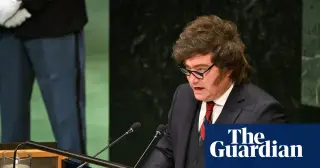
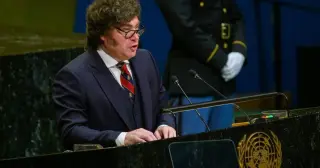
Argentine President Javier Milei delivered a scathing address to the UN General Assembly, declaring the organization 'useless' and warning that Buenos Aires will act unilaterally regarding the Sea Lion oil project near the Falkland Islands. He rejected the principle of self-determination for the islands, citing a 1976 UN resolution, and announced new sanctions against over 60 entities linked to the energy development. While the UK reaffirmed its support for the islands' status, the US remains formally neutral despite recent diplomatic discussions.
Official data released on Thursday shows Argentina’s poverty rate rose to 32.3% in the first half of 2026, up from 28.2% in the previous six months. Extreme poverty increased to 7.5% from 6.3%. Children aged 14 and under were most affected, with 44.5% classified as poor. The rise follows a period of significant reduction in poverty under President Javier Milei, who previously cut the rate from a peak of 52.9% in early 2024. The recent increase coincides with a rebound in inflation at the start of the year, although inflation fell to 1.7% in August. Economists attribute the rise to job insecurity, informal work, and the impact of opening the economy to foreign competition, which has led to job losses in manufacturing and retail.
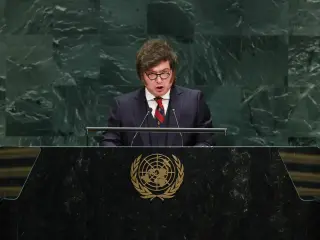
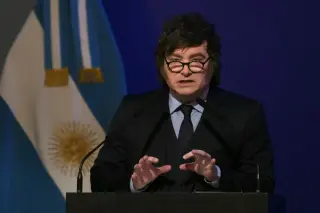
Argentine President Javier Milei delivered a scathing critique of the United Nations during the 81st General Assembly in New York on September 23, 2026. He labeled the organization 'useless' and accused its staff of being 'fatally arrogant parasites.' Milei argued that the UN fails to enforce its own resolutions, particularly regarding the Falkland Islands, and criticized its handling of human rights, pandemic policies, and geopolitical conflicts. His address echoed previous criticisms from 2024 and drew praise from Israel’s UN ambassador, while contrasting with calls for multilateralism from other world leaders.
Argentina’s President Javier Milei used his address to the UN General Assembly to reject the body’s neutrality on the Falkland Islands, declaring that Buenos Aires will pursue its claim through 'legal and economic action' rather than waiting for international consensus. While Milei framed this as a 'peaceful' defense, he simultaneously dismissed the democratic will of the islanders, arguing that self-determination does not apply to a population 'implanted' by an occupying power. The UK responded by reaffirming its sovereignty and support for the islanders' right to self-determination, while the US, despite recent hints of a policy shift, remains formally neutral in the dispute.
Argentine President Javier Milei accused the UN of ignoring the Falkland Islands sovereignty dispute during a speech at the General Assembly. He warned Argentina may act unilaterally regarding the Sea Lion oil project, which he deems illegal. Milei also launched a broad attack on the UN’s effectiveness, calling it a 'useless organization' filled with 'arrogant parasites.'
Argentine President Javier Milei overplays President Trump's hints about revisiting the US stance on the Falklands to bolster Argentina's sovereignty claim, while threatening sanctions on the Sea Lion oil project and funding a southern naval base; analysts say a genuine US policy shift is unlikely, but Milei could gain leverage amid a broader UK–US rift over Iran ahead of Argentina's 2027 elections.
Argentine President Javier Milei uses a national address to push the Falklands claim and rally support, as Donald Trump signals the US may re-evaluate its position. The shift comes as Milei seeks Washington backing ahead of elections and as oil exploration plans near the Sea Lion field spur urgency, highlighting a potential reshaping of U.S.–UK–Argentina dynamics amid the longstanding dispute.
Argentine President Javier Milei is pulling the Falklands dispute back into the political spotlight, leveraging a thaw with London and recent US rhetoric to bolster his leadership as Argentina’s economy softens and his popularity wanes. He plans a televised address to outline “diplomatic progress” on the islands, while Trump’s comments suggesting a possible US policy shift provide a timely prop for Milei against his Peronist opponents who accuse him of softening the claim. Despite renewed dialogue, concrete steps—such as direct flights or arms talks—have stalled, and the Falklands’ oil development adds urgency to defending Argentina’s sovereignty. The controversy unfolds amid nationalist sentiment, protests, and broader tensions between the UK, US and Argentina.
Trump hinted the US position on the Falkland Islands is under review and may not back Britain if Argentina invades, while Argentina's Milei vows to defend its claim; Downing Street says the UK's stance remains unwavering on the islands.
Argentine President Javier Milei announced a national broadcast to press Argentina’s claim to the Falkland Islands, vowing to defend sovereignty tooth-and-nail, while the UK reiterated its commitment to the islanders’ self‑determination. The escalation comes as reports surface that Donald Trump could review the US position on the Falklands, drawing swift responses from British officials and opposition figures.
Argentina’s President Javier Milei angered Brazil by insulting Brazilian officials during a Sao Paulo visit, prompting Brazil to recall its ambassador. Milei accused Lula da Silva of being a thief and Supreme Court minister Alexandre de Moraes of being trash, triggering backlash from Argentine leaders and raising concerns about regional ties with a key trading partner.
Flavio Bolsonaro formally kicked off his 2026 presidential bid, securing endorsements from right-wing leaders Javier Milei and Benjamin Netanyahu, but polls show him trailing Lula da Silva. The launch drew limited attendance, with Bolsonaro’s father appearing only via an AI-generated video. Milei framed the race as a fight against socialism, while Netanyahu offered support in a short video message. The campaign faces domestic headwinds over foreign meddling concerns, including visa denials to Trump officials seeking meetings with Brazil’s election authorities.
Argentina's President Javier Milei faced the resignation of his cabinet chief, Manuel Adorni, amid a spiraling corruption scandal. Adorni was scrutinized for lavish private travel and real estate purchases, and he admitted to buying dollars on the black market and hiding $500,000 in savings—claims he says are earned legitimately, including cryptocurrency investments. The fate of his replacement remains unclear.